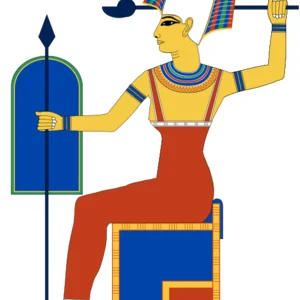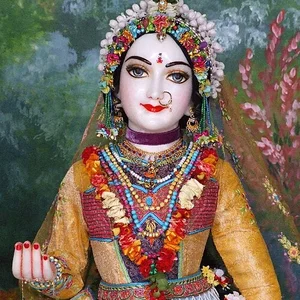

A central figure in Hindu tradition, Radha is the divine companion of Krishna and the embodiment of pure, absolute love (bhakti). Rooted in Vedic culture and popularized through medieval Sanskrit texts, she symbolizes the human soul seeking union with the divine. Her legend, passed down primarily through oral tradition before being set in writing in texts such as the Gita Govinda (12th century), lies at the heart of Vaishnava spirituality.
Radha
Radha
9 min read
Frequently asked questions
Famous Quotes
« "Radha's love for Krishna is like a river flowing toward the ocean — irresistible and eternal." (saying attributed by the bhakti tradition, not historically verified)»
Key Facts
- Radha is mentioned in the Brahmavaivarta Purana, a Sanskrit text estimated to have been composed between the 8th and 12th centuries
- The Gita Govinda by the poet Jayadeva (12th century) is the first major work to celebrate the love of Radha and Krishna in written literary form
- In the Vaishnava tradition of Bengal (the Gaudiya movement, 16th century), Radha is elevated to the status of supreme deity, equal to or above Krishna
- Her legend is transmitted primarily through oral tradition, devotional songs (bhajans), and classical Indian dance forms (Bharatanatyam, Manipuri)
- Radha is venerated in numerous temples across India, most notably in Vrindavan (Uttar Pradesh), the mythic setting of her relationship with Krishna
Works & Achievements
A Sanskrit lyric poem in twelve cantos narrating the love of Radha and Krishna with unparalleled mystical and poetic intensity. This foundational work established Radha as the central figure of Vaishnavite spirituality and went on to influence all subsequent Indian devotional literature.
A Puranic text that develops the theology of Radha as Krishna's divine shakti, elevating her to a cosmic status beyond her narrative role. This text is essential for understanding Radha's place in Hindu cosmology.
A section of the Bhagavata Purana describing the cosmic Rasa Lila dance, in which Radha holds a central place even though she is not explicitly named. This passage is one of the most revered sources in the Vaishnavite tradition.
A vast collection of devotional poems in Braj Bhasha, the vernacular language of the Mathura region, celebrating Radha and Krishna. The blind poet Surdas's work brought the myth of Radha to millions of devotees who had no knowledge of Sanskrit.
A theological treatise of the Gaudiya Vaishnava tradition that codifies Radha's love for Krishna as the supreme model of pure devotion (bhakti). This text has profoundly shaped Vaishnavite spirituality worldwide, including contemporary movements such as ISKCON.
A series of miniatures from the workshops of Kangra (Himachal Pradesh) illustrating scenes from the Gita Govinda and the pastimes of Radha and Krishna. These works represent one of the most refined artistic expressions of the Radha myth in classical Indian art.
Anecdotes
Radha is often described as a young cowherd girl (gopī) from Vrindavan whose love for Krishna transcends all social conventions. According to the Gita Govinda, she abandons her daily duties to join Krishna in the forests of Vrindavan, symbolizing the surrender of the ego in favor of divine love.
In the circular dance of the Rasa Lila, during which Krishna dances simultaneously with all the gopīs, Radha holds the central and most privileged place. Vaishnava tradition teaches that Krishna multiplied his form to be with each dancer, yet Radha alone shared his complete presence — illustrating the uniqueness of their bond.
In some versions of the myth, Radha is portrayed as a woman married to another man, which deepens the transgressive and absolute nature of her love for Krishna. Vaishnava theologians interpret this detail as a metaphor: the human soul, bound to the material world, must leave everything behind to unite with the divine.
The name "Radha" is etymologically linked to the Sanskrit root rādh, meaning "prosperity" or "success." In the Gaudiya Vaishnava tradition founded in the 16th century by Chaitanya Mahaprabhu, Radha is elevated to the rank of supreme goddess, regarded as the very power (shakti) of Krishna himself.
According to the oral tradition of Braj (the region around Mathura), festivals known as Radhastami are celebrated each year to mark Radha's birth. These centuries-old celebrations include devotional songs (bhajans), theatrical performances (Rasa Lila), and processions — testament to the enduring vitality of Radha's worship in Indian popular culture.
Primary Sources
"O Madhava, how shall I abandon this pride? When your flute sings in the forest of Vrindavan, my heart rushes toward you like a river toward the sea."
"Radha is the eternal shakti of Krishna, without whom he cannot manifest his glory in the world. She is the source of all devotion and the supreme path to liberation."
"Radha's love for Krishna is the perfect model of bhakti: it is motivated neither by fear nor by desire for reward, but by pure and unconditional love."
Devotional songs transmitted orally in the Mathura-Vrindavan region, celebrating Radha as the mistress of Vrindavan (Vrindavaneshvari) and describing her beauty, devotion, and divine pastimes with Krishna.
"Radha's beauty illuminates the three worlds; her love is the light that guides the soul through the darkness of ignorance."
Key Places
The main site of Radha and Krishna's divine play (lilas) according to tradition, Vrindavan is today a holy city with over five thousand temples, several dedicated exclusively to Radha. It is the living heart of Radha's worship in the world.
According to the Braj tradition, Barsana is Radha's birth village. Every year, the Lathmar Holi festival draws thousands of pilgrims who celebrate the playful encounters between Radha and Krishna in an atmosphere of joy and devotion.
Krishna's birthplace and a major center of Vaishnava pilgrimage, Mathura is inseparable from the legend of Radha. Its ghats along the Yamuna River are associated with the meetings between Radha and Krishna in the oral tradition of Braj.
A sacred pond considered the holiest site in the Gaudiya Vaishnava tradition, directly associated with Radha. According to tradition, this pond appeared miraculously as a result of an act of devotion by Radha.
The birthplace of the Gita Govinda, composed by Jayadeva at the Jagannath Temple in Puri in the 12th century. This foundational text, which established the legend of Radha, is still sung daily in this temple to this day.
Typical Objects

Krishna's reed flute is the emblematic object of their relationship: according to tradition, when Krishna plays, Radha cannot resist the call of the divine music and rushes to him, abandoning all her tasks. The flute symbolizes the voice of the divine calling to the human soul.

Flower garlands, especially of jasmine and lotus, adorn Radha and are used in ritual offerings. The exchange of garlands between Radha and Krishna symbolizes their divine union in iconographic representations.

As a gopī, Radha is often depicted carrying a pot of water or milk on her head, a daily activity of women in the Braj region. These pots have become iconic in depictions of the lives of the cowherding women of Vrindavan.

In medieval poetry and iconography, Radha adorns herself before a mirror before going to meet Krishna — a scene symbolizing the soul's self-awareness before its union with the divine. This motif is common in miniature paintings of the Kangra school.

The colors traditionally associated with Radha are blue (the color of Krishna) and saffron yellow or red, symbols of devotion and auspiciousness in the Hindu tradition. Her garment reflects her mystical union with Krishna.

Diyas, small clay oil lamps, are used in devotional rituals dedicated to Radha-Krishna. Lighting a diya before their image is one of the most widespread daily devotional acts in Vaishnavism.
School Curriculum
Vocabulary & Tags
Key Vocabulary
Tags
Daily Life
Morning
At dawn, Radha performs her ritual ablutions in the Yamuna River alongside the other gopīs (cowherds) of the village of Braj. She then prepares flower and incense offerings for the morning worship, before tending to the milking of the cows and making the clarified butter (ghee) used in religious rituals.
Afternoon
In the afternoon, Radha and her companions head to the forests of Vrindavan to tend the cattle. It is in these natural surroundings, among the flowering kadamba trees and along the banks of the Yamuna, that their meetings and playful pastimes (lilas) with Krishna unfold, blending pastoral work with spiritual communion.
Evening
At dusk, Radha returns to the village carrying water and milk, then lights the oil lamps and prepares the family meal. The evening is devoted to devotional songs (bhajans) with the other gopīs, and sometimes to the great circular dance of the Rasa Lila under the full moon.
Food
Radha's diet reflects the agricultural and pastoral culture of Braj: fresh milk, yogurt, butter, ghee, grains (rice, millet), and garden fruits and vegetables, prepared according to Vedic traditions. Food offered to Krishna (prasad) is then shared and eaten by the community as blessed nourishment.
Clothing
Radha wears a silk or cotton sari in bright colors, traditionally deep blue or saffron red, embroidered with floral patterns and gold thread. She is adorned with numerous ornaments: gold and gemstone necklaces, bracelets, and earrings, a flower in her hair, and ankle bells whose soft jingling accompanies her dance steps.
Housing
Radha lives in a typical earth-and-wood house of the pastoral village of Braj, with an inner courtyard where the cows are kept. The home is simply furnished, with woven mats, earthen pots, and a domestic sacred space where an oil lamp and incense sticks burn perpetually before an image of Krishna.
Historical Timeline
Period Vocabulary
Visual Style
Style des miniatures classiques indiennes des écoles Kangra et Pahari, avec des couleurs vives et intenses, des ornements élaborés et une nature luxuriante symbolisant l'abondance divine.
Sound Ambience
Une atmosphère mystique et bucolique mêlant la musique de la flûte de roseau, le chant des gopīs, le murmure de la Yamuna et les sons de la nature luxuriante de Vrindavan au crépuscule.
Liens externes & ressources
Références
Œuvres
Gita Govinda (Jayadeva)
vers 1180
Brahmavaivarta Purana
entre le IXe et le XIIIe siècle
Rasa Panchaadhyaya (Bhagavata Purana, chant X, chapitres 29-33)
vers IVe-Ve siècle
Sur Sagar (Surdas)
XVIe siècle
Bhakti Rasamrita Sindhu (Rupa Gosvami)
1541
Peintures de l'école de Kangra représentant Radha-Krishna
XVIIIe siècle