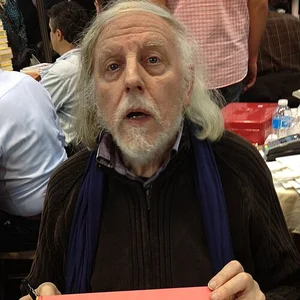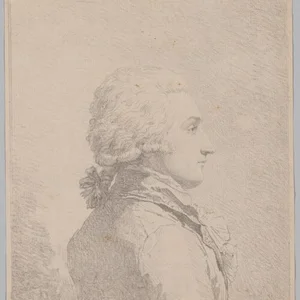

Jean-Marc Reiser (1941-1983) was a French comic-strip artist and caricaturist, a major figure of the satirical press. With a sharp, ferocious style, he embodied the rebellious spirit of Hara-Kiri and then Charlie Hebdo, leaving a lasting mark on French graphic humour.
Reiser(1941 — 1983)
Jean-Marc Reiser
France
5 min read
Frequently asked questions
Key Facts
- Born in 1941 in Réhon (Meurthe-et-Moselle) into a modest background
- Co-founded the newspaper Hara-Kiri in 1960 with Professor Choron and Cavanna
- Took part in the launch of Charlie Hebdo in 1970 after Hara-Kiri Hebdo was banned
- Created the provocative character Gros Dégueulasse in the 1970s
- Died prematurely in 1983 of cancer, at the age of 41
Works & Achievements
His debut with the “dumb and nasty newspaper,” where he forged his sharp style and freedom of tone.
Reiser became one of the leading pens of the satirical weekly born from the banning of Hara-Kiri Hebdo.
A satirical collection lampooning consumer society, now a classic of French graphic humor.
An album featuring a grotesque and provocative character, denouncing vulgarity and social hypocrisy.
A series of comic pages about nature and holidays, tinged with irony about human behavior.
A collection of gags about relations between men and women, blending provocation with a critical eye on society.
A satirical album continuing his fierce and uncompromising portrayal of human failings.
Anecdotes
Reiser left school at 15 and drifted through odd jobs: delivery boy, clerk, label illustrator. It was by sending his drawings to a newspaper that he was spotted, at 18, by a certain Georges Bernier — the future Professor Choron — who would go on to found the Hara-Kiri gang with him.
His style is instantly recognizable: a quick, nervous line, seemingly almost slapdash, yet formidably effective. Reiser drew fast and without second-guessing, which gave his pages a raw energy that influenced generations of French cartoonists.
In 1970, after the death of General de Gaulle, the newspaper Hara-Kiri Hebdo ran the headline “Tragic Ball at Colombey: 1 dead” as a nod to a recent news item. The paper was banned; the team, including Reiser, hit back by relaunching it under a new name: Charlie Hebdo was born.
Reiser created characters that became cult figures, such as “Gros Dégueulasse” (Big Disgusting), an outrageous caricature of vulgarity and human misery. Behind the provocation, he denounced social hypocrisy, stupidity, and the taboos of French society.
Stricken with bone cancer, Reiser kept drawing almost until the very end, publishing pages about his own illness. He died in 1983 at just 41, leaving behind an immense body of work despite a relatively short career.
Primary Sources
“Tragic ball at Colombey: 1 dead” — a parodic headline published a week after the death of General de Gaulle, which led to the newspaper being banned.
A collection of Reiser's satirical gags sketching the failings, fads and absurdities of 1970s consumer society.
An album gathering the strips of Reiser's iconic character, a grotesque embodiment of vulgarity meant to shock and to denounce.
A series of strips in which Reiser observes human behaviour with irony through an animal lens.
Key Places
Reiser's birthplace in 1941, in an industrial region of eastern France. He spent a modest childhood there.
Reiser settled in Paris, where he spent his entire career as a press cartoonist, at the heart of French satirical publishing life.
The Paris offices where the team of the “dumb and nasty newspaper” worked, a place of creative and rebellious ferment.
The village where General de Gaulle lived, target of the 1970 parody headline that led to the banning of Hara-Kiri Hebdo.
Typical Objects

The cartoonist's basic tool, the pen dipped in India ink gave Reiser his lively, spontaneous line. He drew fast, with a striking economy of means.

Reiser also used markers and pens for speed of execution. His simple tools reflected his taste for drawing from life, without frills.

The medium through which his work reached the public: printed weeklies sold at newsstands. The cheap paper and black-and-white printing suited his direct line.

The tilted work surface where Reiser created his pages. That is where his gags and characters came to life in a few quick strokes.

Bound collections gathering his pages published in the press, such as On vit une époque formidable or Gros Dégueulasse. They secured the lasting legacy of his work.
School Curriculum
Vocabulary & Tags
Key Vocabulary
Daily Life
Morning
As a press cartoonist bound to the rhythm of the weekly deadline, Reiser often began his day by reading the newspapers and keeping up with the news. There he looked for material for his gags — a news item or an absurdity of the moment to sketch.
Afternoon
The afternoon was devoted to the drawing board. Reiser worked fast, sketching his ideas with a nervous line, churning out drawings to meet the newsroom's tight deadlines.
Evening
In the evening, newsroom life often carried on in an atmosphere of camaraderie and cheerful provocation with Cavanna, Choron and the others. They would talk, put the world to rights and prepare the next issue.
Food
Reiser shared the ordinary daily life of a Parisian during the postwar boom years: simple meals, brasserie coffees, snacks grabbed between two drawings. The Hara-Kiri crowd had a taste for the convivial, boisterous table.
Clothing
Far from high society, Reiser wore the casual attire of an artist and newspaperman: a shirt, plain trousers, with no concern for bourgeois elegance, in keeping with his nonconformist spirit.
Housing
He lived and worked in Paris, in the world of apartments and newsrooms of the press district. His setting was that of the intellectual, rebellious bohemia of the post-1968 era.
Historical Timeline
Period Vocabulary
Liens externes & ressources
Références
Œuvres
Collaboration à Hara-Kiri
années 1960
Charlie Hebdo (dessins de presse)
à partir de 1970
On vit une époque formidable
1975
Gros Dégueulasse
1982
La Vie au grand air
années 1970
Vive les femmes !
1978