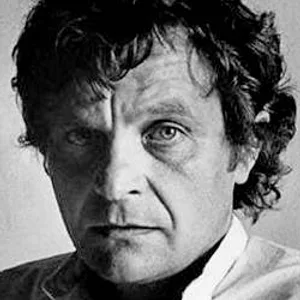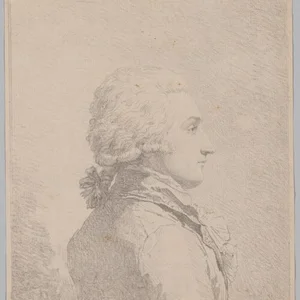

Roland Topor (1938-1997) was a French cartoonist, writer, painter, and filmmaker, a major figure of dark humor and the absurd. Co-founder of the Panic Movement alongside Jodorowsky and Arrabal, he was also the graphic creator of the television series “Téléchat.”
Roland Topor
Roland Topor
6 min read
Frequently asked questions
Key Facts
- Born in 1938 in Paris into a Jewish family of Polish origin, hidden in Savoie during the Occupation
- Co-founded the Panic Movement in 1962 with Alejandro Jodorowsky and Fernando Arrabal
- Published his novel “The Tenant” (Le Locataire chimérique) in 1964, adapted for the screen by Roman Polanski in 1976
- Created the graphic universe of the television series “Téléchat” in 1983 with Henri Xhonneux
- Died in 1997 in Paris, leaving behind a prolific body of work blending drawing, literature, theater, and film
Works & Achievements
A novel of dread about a man sinking into madness; a major literary work by Topor, adapted for cinema by Polanski.
An artistic movement co-founded with Jodorowsky and Arrabal, championing humour, terror and euphoria against all dogma.
A feature film by René Laloux for which Topor designed the graphic universe; awarded at the Cannes Film Festival.
A parody of a television news broadcast for children, created with Henri Xhonneux; a cult work with an absurd and poetic tone.
A puppet film co-written with Henri Xhonneux, loosely inspired by the Marquis de Sade imprisoned in the Bastille.
Numerous albums of black-humour drawings that brought Topor international fame.
A dark comedy for the stage, showcasing Topor's talent for the theatre of the absurd and the grotesque.
Anecdotes
In 1962, Roland Topor founded the “Panic” movement together with filmmaker Alejandro Jodorowsky and playwright Fernando Arrabal, a nod to the Greek god Pan. Far from being a rigid school, it was above all an art of joyful provocation, of the absurd and of black humour, refusing any artistic dogma.
His novel *The Tenant* (1964) was adapted for the screen by Roman Polanski in 1976 under the title *The Tenant*, with Polanski himself in the leading role. The story of a man who slowly slides into madness in his Paris apartment bears all the hallmarks of Topor's signature dread.
In 1983, Topor created the graphic world of *Téléchat*, a parody of a television news programme hosted by a cat named Groucha and an ostrich named Lola. This series, blending puppets and everyday objects that talk, left its mark on a whole generation of children with its poetic strangeness.
Topor drew the poster for and took part in the animated film *Fantastic Planet* (1973) by René Laloux, which was honoured at the Cannes Film Festival. His visual world, peopled with unsettling creatures, finds there a full and fascinating expression.
A compulsive worker, Topor turned his hand to everything: drawing, novels, theatre, song, posters, opera set design, cinema. He liked to say that he made no distinction between the genres, seeking everywhere to jolt the viewer awake through grating laughter and unease.
Primary Sources
“Trelkovsky realized that he had become someone else.” The man ends up believing he is inhabited by the previous tenant, sliding into an irreversible madness.
The Panic Movement embraces confusion, humor, terror and euphoria, rejecting any fixed definition of art.
“Hello, this is Téléchat, the TV news broadcast that keeps you informed about events in the world of objects and animals.”
Key Places
Topor's birthplace and the heart of all his artistic activity, from drawing to theatre. He was born there in 1938 and died there in 1997.
Region where the Topor family took refuge during the Occupation to escape antisemitic persecution. These war years left their mark on his childhood.
Institution where Topor studied drawing in the 1950s. There he refined his line before rejecting academicism.
An emblematic venue of Parisian theatrical creation, symbol of the stage where Topor deployed his work as a playwright and set designer. His plays blended the absurd with provocation.
Typical Objects

Topor's favorite instruments for his drawings with fine, swarming lines, where dark humor arises from meticulous details. The deep black of the ink served his taste for unease.

A medium favored by Topor for theater, cinema, and publishing, spreading his disturbing imagery through public spaces. His posters have become collector's items.

The characters of the series, including Groucha the cat and Lola the ostrich, were puppets designed in Topor's graphic spirit. They brought to life a world of objects gifted with speech.

The tool of Topor the writer for his novels, short stories, and plays. It accompanied his literary work, as prolific as his drawn œuvre.

Periodicals like “Hara-Kiri” where Topor published his provocative drawings. These “dumb and nasty” papers embodied the rebellious spirit of the 1960s.
School Curriculum
Vocabulary & Tags
Key Vocabulary
Daily Life
Morning
A night owl artist, Topor often started his day late, at his Parisian work table cluttered with sheets of paper and ink. Mornings were devoted to drawing, an activity he practiced with surprising discipline despite his image as a provocateur.
Afternoon
Afternoons blended meetings with publishers, work sessions for theatre or television, and discussions with his artistic accomplices. A glutton for projects, he readily moved from one medium to another within the same day.
Evening
In the evening, Topor frequented Parisian cafés and artistic circles, a brilliant conversationalist with a thunderous laugh. These evenings of conversation nourished his work as much as his solitary labour did.
Food
A bon vivant, Topor loved good food, wine and long, lively discussions over a meal. His generosity and appetite for life contrasted with the darkness of his art.
Clothing
He wore the casual attire of post-war Parisian artists, with no concern for high-society elegance. His bearded silhouette and mischievous gaze made him unmistakable among all.
Housing
Topor lived and worked in Paris, in apartments in the capital where books, drawings and works in progress piled up. The city and its buildings, moreover, fed the oppressive atmosphere of *The Tenant*.
Historical Timeline
Period Vocabulary
Liens externes & ressources
Références
Œuvres
Mouvement Panique
1962
La Planète sauvage (film d'animation)
1973
Téléchat (série télévisée)
1983
Panic (recueils de dessins)
années 1960-1990
Vinci avait raison (pièce de théâtre)
1977