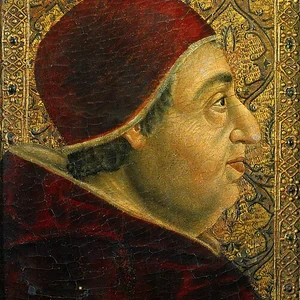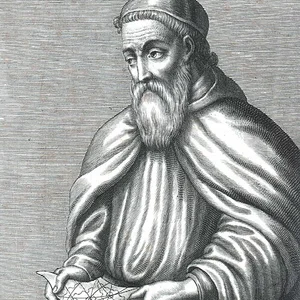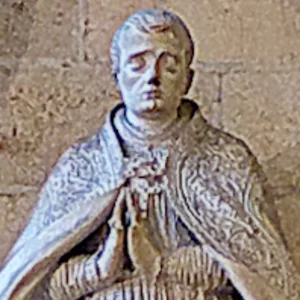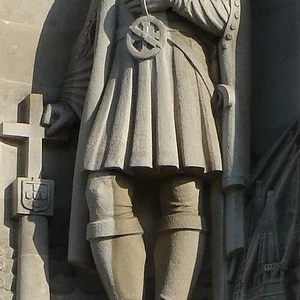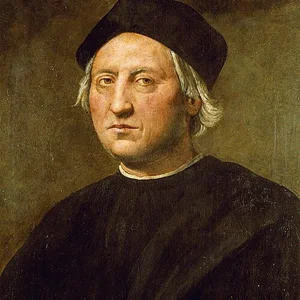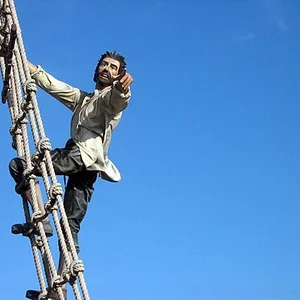

Spanish sailor aboard the Pinta during Christopher Columbus's first voyage. He was the first European to sight the shores of the Americas on October 12, 1492, crying "Tierra!" at dawn.
Rodrigo de Triana(1469 — 1535)
Rodrigo de Triana
couronne de Castille
7 min read
Frequently asked questions
Key Facts
- October 12, 1492: first European to sight the New World from the crow's nest of the Pinta
- He shouted 'Tierra!' alerting Columbus's crew to land
- Columbus allegedly denied him the promised reward (10,000 maravedis a year) by claiming he himself had spotted a light earlier
- His real name is believed to have been Juan Rodríguez Bermejo, from Lepe or Molinos
Works & Achievements
From the crow's nest of the Pinta, Rodrigo de Triana was the first European to spot the lands of the New World, triggering an event that would forever transform the course of human history. This simple yet decisive act remains his sole — but immense — contribution to History.
As a sailor aboard the Pinta, Rodrigo de Triana took part in the crossing of the Atlantic, one of the most daring maritime ventures of the 15th century, which opened the way for the European presence in the Americas.
Anecdotes
At dawn on October 12, 1492, around two in the morning, Rodrigo de Triana, keeping watch from the crow's nest of the *Pinta*, spotted a dark mass on the horizon and shouted “Tierra! Tierra!” This cry ended more than five weeks of anxious sailing from the Canary Islands and made him the first European to set eyes on the Americas.
The Catholic Monarchs had promised an annual pension of ten thousand maravedis to the first sailor to sight land. But Christopher Columbus claimed he himself had glimpsed a suspicious light on the horizon the previous evening, thereby claiming the reward for himself. Rodrigo de Triana, the undisputed first witness, never received that money — much to the outrage of part of the crew.
Rodrigo de Triana was not his real name: sources also refer to him as Juan Rodrigo Bermejo. His nickname comes from the working-class neighborhood of Triana, in Seville, on the banks of the Guadalquivir — a district of sailors and fishermen from which many crews set out for the great voyages of discovery.
A tradition reported by 16th-century chroniclers holds that Rodrigo’s frustration ran so deep that he converted to Islam and settled in North Africa after returning to Spain. While this story remains difficult to formally verify, it illustrates the depth of the injustice felt by this sailor whom History long overlooked in favor of Columbus.
Primary Sources
At two hours after midnight the land was sighted, at a distance of about two leagues. […] The sailor who first saw the land was named Rodrigo de Triana, although the Admiral, at ten o'clock in the evening on the sterncastle, had thought he saw a light.
Rodrigo de Triana, a sailor aboard the Pinta, was the first to sight land; but the Admiral had claimed to have spotted a light the previous night and was declared the first to have seen it, thereby claiming the reward for himself.
A sailor on the Pinta named Rodrigo de Triana first sighted land, although the Admiral, the previous night, while standing on the sterncastle, had thought he saw a light.
Their Highnesses promise and grant to Don Christopher Columbus […] one tenth of all merchandise, and furthermore a reward to the first person to sight land.
Key Places
A coastal Andalusian town often cited as the probable birthplace of Rodrigo de Triana, and a major supplier of sailors for the Atlantic expeditions of the 15th century.
A working-class neighborhood of sailors and craftsmen on the right bank of the Guadalquivir, from which many crews set off toward the Atlantic. It is from this neighborhood that Rodrigo takes his nickname.
The Andalusian port from which Columbus's three caravels departed on August 3, 1492. Rodrigo de Triana boarded the Pinta here for the voyage that would change the history of the world.
The first land sighted by Rodrigo de Triana on the night of October 11–12, 1492, most likely the island now known as San Salvador in the Bahamas archipelago. This was the first official contact between Europe and the American continent.
Typical Objects

A small circular platform fixed at the top of the main mast, from which the lookout scanned the horizon. It was from the crow's nest of the Pinta that Rodrigo de Triana spotted the shores of Guanahani on the night of October 11–12, 1492.

An instrument for measuring the height of stars, used to calculate latitude at sea. The navigators of the Pinta relied on the astrolabe to find their bearings during weeks of Atlantic crossing with no coastal landmarks in sight.

Indispensable for holding course in the open ocean, the compass was checked several times a day by the helmsmen. Without it, the Atlantic crossing would not have been possible.

Used to measure time and calculate the ship's speed. Lookouts like Rodrigo de Triana relieved one another every half hour, a rhythm marked by the turning of the hourglass.

Twice-baked bread — hard, dry, and preservable for several months — that formed the staple food on board. Columbus's crew took hundreds of kilograms of it to sustain them through weeks of non-stop sailing.

A light, fast vessel with mixed rigging, particularly well suited to deep-sea navigation. The Pinta, commanded by Martín Alonso Pinzón, was reputed to be the swiftest of the expedition's three ships.
School Curriculum
Vocabulary & Tags
Key Vocabulary
Daily Life
Morning
At dawn, the sailors of the Pinta relieved their watch-mates after a night of alternating shifts. Rodrigo de Triana would sometimes climb to the crow's nest to scan the horizon, eating his cold meal — hard sea biscuit, a few onions and some garlic — before taking his post. The day began with a brief communal prayer on deck.
Afternoon
The afternoon was devoted to ship maintenance: caulking seams, repairing sails, checking the rigging, and tarring the wood. In calm weather, some sailors fished with a line to supplement their rations. The officers took navigational readings with the astrolabe or compass, and the results were recorded in the ship's log.
Evening
In the evening, as night fell, the crew gathered for prayer — singing the *Salve Regina*, a tradition among Spanish sailors. Rodrigo slept on the bare deck or under a canvas shelter, before being roused for his night watch, eyes fixed on the Atlantic darkness in search of a glimmer of light or a dark shape.
Food
Food on board was sparse: rock-hard sea biscuit, salted sardines and anchovies, dried legumes (chickpeas, lentils), cheese, dried meat, and garlic. Fresh water was strictly rationed, and wine mixed with water served as the daily drink. After a few weeks at sea, the fresh provisions were gone and rations were cut.
Clothing
Spanish sailors of the 15th century wore simple, sturdy clothes: a linen shirt, wide breeches, stockings, and a tar-coated canvas jacket to protect against sea spray. A wool cap covered the head during cold Atlantic nights. Shoes were often abandoned on the slippery deck in favor of thick leather socks.
Housing
Aboard the Pinta, a caravel of roughly 18 meters, sailors had no cabins: they slept on deck or in the hold, wrapped in their woolen blankets. Only Captain Pinzón and a few officers had any sheltered space. Crowding, noise, and smells were the norm throughout the five weeks of the Atlantic crossing.
Historical Timeline
Period Vocabulary
Liens externes & ressources
Références
Œuvres
Cri de « Tierra ! » — première observation européenne des Amériques
12 octobre 1492
Participation au premier voyage transatlantique de Christophe Colomb
août-octobre 1492