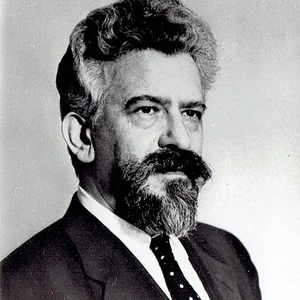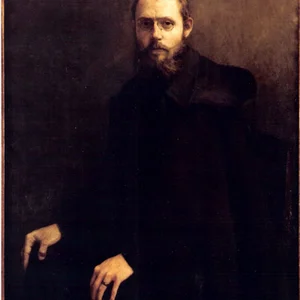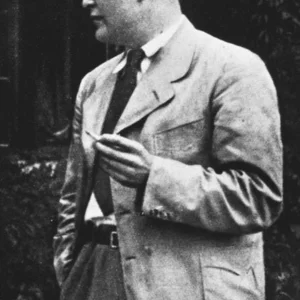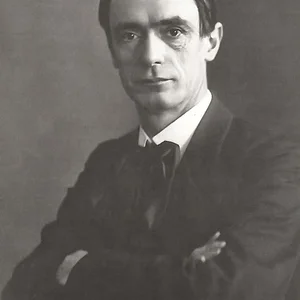

Austrian philosopher and esotericist (1861–1925), founder of Anthroposophy. He developed a spiritual vision of the world based on inner knowledge, and created Waldorf education as well as biodynamic agriculture.
Rudolf Steiner(1861 — 1925)
Rudolf Steiner
Suisse, Autriche, Croatie, empire d'Autriche
9 min read
Frequently asked questions
Famous Quotes
« Freedom is the capacity of the human being to obey his own inner law.»
« Education is an art that must be founded on knowledge of the human being.»
Key Facts
- 1861: Born in Kraljevec (Austro-Hungarian Empire)
- 1894: Publication of 'The Philosophy of Freedom'
- 1902: Steiner becomes Secretary-General of the German Theosophical Society
- 1912–1913: Foundation of the Anthroposophical Society
- 1919: Opening of the first Waldorf school in Stuttgart
- 1925: Death in Dornach (Switzerland)
Works & Achievements
A foundational philosophical work in which Steiner argues that genuine human freedom is achievable through pure intuitive thinking. This book forms the epistemological bedrock of all his subsequent thought.
A practical guide to the anthroposophical path of initiation, describing the meditative and moral exercises through which a direct knowledge of spiritual realities can be developed — accessible to any human being who engages with it seriously.
A presentation of Steiner's evolutionary cosmology: the spiritual history of humanity and the Earth from its origins to its future, including a description of the planetary spheres and the hierarchies of spiritual beings.
Steiner's landmark educational achievement, which gave rise to a worldwide educational movement centred on the artistic, imaginative, and moral development of the child, organised around seven-year cycles of development.
A series of eight lectures that founded biodynamic agriculture, a forerunner of organic farming. Steiner describes the farm as a living organism integrated into the cosmic rhythms of the moon and planets.
An unfinished autobiography dictated by Steiner in his final years, tracing his intellectual and spiritual journey from childhood in Austria to the founding of anthroposophy.
Anecdotes
From childhood, Steiner claimed to have had extrasensory perceptual experiences: he recounted seeing the spirit of a deceased female relative asking him for help at a train station, while he was still a young boy. This early experience reportedly convinced him of the existence of an invisible spiritual world, which he would spend his entire life seeking to explore and describe with rigor.
Before becoming the founder of anthroposophy, Steiner was recognized as a distinguished Goethe scholar: from 1882 to 1897, he worked in Weimar on the poet's scientific writings for the major national edition of his complete works. This rigorous philological work shaped his mind and nourished his vision of a science that does not separate spirit from nature.
On New Year's Eve 1922–1923, the first Goetheanum — a monumental wooden building designed by Steiner in Dornach, Switzerland — was destroyed by arson. Steiner, who was giving a lecture inside when the fire broke out, watched helplessly as his masterwork of architecture was consumed by flames, then immediately resolved to rebuild a second Goetheanum in reinforced concrete.
In 1919, in Stuttgart, Steiner inaugurated the first Waldorf school for the children of workers at the Waldorf-Astoria cigarette factory. His pedagogy, based on the artistic and moral development of the child through seven-year cycles, is today practiced in more than 1,000 schools around the world.
During the winter of 1924, gravely ill, Steiner continued to give lectures from his study at the Goetheanum and dictated his final autobiographical texts until his last weeks. He died in March 1925, leaving behind an encyclopedic body of work comprising more than 350 volumes of writings and transcribed lectures.
Primary Sources
The question of the freedom of the human will is one of the most controversial in philosophy. [...] I want to show that the questions a person asks about their own nature lead, when examined deeply, to the question of freedom.
In every human being there are dormant faculties through which they can acquire knowledge of higher worlds. [...] The path that leads there is that of self-knowledge and rigorous, patient inner work.
This book aims to describe a part of the supersensible domain of existence. [...] Whoever wishes to acquire knowledge of the spiritual world must first recognize that such knowledge is possible, and then prepare for it through inner discipline.
If we want to understand the organism of the farm, we must first understand that the earth itself is a living organism, of which plants are like the organs. The farm constitutes an individuality, a whole that sustains itself.
My childhood unfolded in an environment that acquainted me early with the realities of nature. [...] Around me were forests, fields, gardens, and a simple rural life; and within my soul, an inner world that I knew to be as real as the outer world.
Key Places
Birthplace of Rudolf Steiner on February 27, 1861, in what was then the Kingdom of Hungary within the Austro-Hungarian Empire. The rural region and surrounding nature left a deep impression on his childhood sensibility and his relationship with the natural world.
Steiner worked here from 1890 to 1897 as editor of Goethe's scientific writings for the national edition of his complete works. This immersion in Goethean thought proved decisive in shaping his own philosophy of nature and knowledge.
Steiner lived here from 1897 to 1913, editing literary journals, delivering his first major esoteric lectures, and founding the German section of the Theosophical Society before establishing the Anthroposophical Society.
The world center of anthroposophy, built to Steiner's own designs on a hill overlooking Dornach. The first building was destroyed by fire in 1922–1923; the second, in reinforced concrete, was completed after Steiner's death in 1928. It was here that he lived and died in 1925.
The first Waldorf school opened on September 7, 1919, founded at the initiative of Emil Molt and under Steiner's pedagogical direction. It initially welcomed the children of workers at the Waldorf-Astoria cigarette factory, regardless of social class.
Typical Objects

During his lectures, Steiner would create chalk drawings on large blackboards, producing cosmic diagrams and representations of spiritual forces. Some of these boards have been preserved and stand as a form of graphic art in their own right.

An architectural model designed by Steiner for his anthroposophical cultural center in Dornach, featuring organic forms and two interlocking domes symbolizing the soul and the spirit. The building was intended to embody the spiritual principles of anthroposophy in physical form.

A cow horn filled with manure and buried over winter, then diluted and dynamized to fertilize the soil according to the principles of biodynamic agriculture. An iconic object of the farming method founded by Steiner in 1924, connecting earthly forces with cosmic forces.

Long flowing robes and colored veils used in the practice of eurythmy, an art of movement created by Steiner in which every gesture expresses a sound, a letter, or a musical note. The color and shape of the costumes vary according to the spiritual nature of the exercise being performed.

Steiner gave approximately 6,000 lectures transcribed by stenographers, covering subjects ranging from cosmology to pedagogy, and from medicine to agriculture. These transcriptions make up the bulk of his published work, spanning more than 350 volumes.

The mathematical symbol for infinity, frequently used by Steiner to represent the polar forces that interpenetrate one another in nature and in the human being — between life and death, matter and spirit. He incorporated it into his lecture drawings and decorative sculptures.
School Curriculum
Vocabulary & Tags
Key Vocabulary
Tags
Daily Life
Morning
Steiner rose early and began his day with meditation and inner spiritual exercises, which he also prescribed to his students. He then devoted his mornings to writing — articles, books, correspondence — working at his desk with remarkable concentration despite a perpetually overloaded schedule.
Afternoon
Afternoons were often given over to meetings with architects, artists, physicians, or educators working to apply anthroposophy in their respective fields. During his frequent lecture tours across Europe, he traveled by train and prepared his presentations from handwritten notes.
Evening
Evenings were frequently taken up with public lectures or esoteric courses for members of the Anthroposophical Society. Steiner slept little — around four to five hours a night — and often worked late into the night on his texts or drawings.
Food
Steiner was a vegetarian and advocated a simple, balanced diet, in keeping with his spiritual principles on the purification of the physical body. He avoided stimulants and alcohol, believing that clarity of spiritual perception required a degree of bodily hygiene and regular habits.
Clothing
Steiner dressed plainly, in the manner of a cultivated European intellectual of his era: dark suit, tie, overcoat. He attached no particular importance to appearance, preferring to distinguish himself through the quality of his speech and thought rather than his attire.
Housing
In Dornach, Steiner lived and worked at the Goetheanum, the architectural complex he had designed on the hill. His simply furnished office was adjacent to the main lecture hall; he traveled frequently and stayed in hotels or with members of the anthroposophical community across Europe.
Historical Timeline
Period Vocabulary
Liens externes & ressources
Références
Œuvres
La Philosophie de la liberté (Die Philosophie der Freiheit)
1894
Comment acquiert-on des connaissances des mondes supérieurs ?
1904
La Science de l'occulte (Die Geheimwissenschaft im Umriss)
1910
Fondation de la première école Waldorf, Stuttgart
1919
Cours aux agriculteurs (Koberwitz)
1924
Ma vie (Mein Lebensgang) — autobiographie
1923-1925