 flip
flipKnäckebröd — crispy rye crispbread
Knäckebröd — crispy rye crispbread
Why this dish? Before becoming a novelist, Selma was a schoolteacher in Landskrona and traveled widely. Knäckebröd, the flat, dry bread that keeps for months, had always accompanied Swedes on journeys and filled the winter stores of Värmland farms.
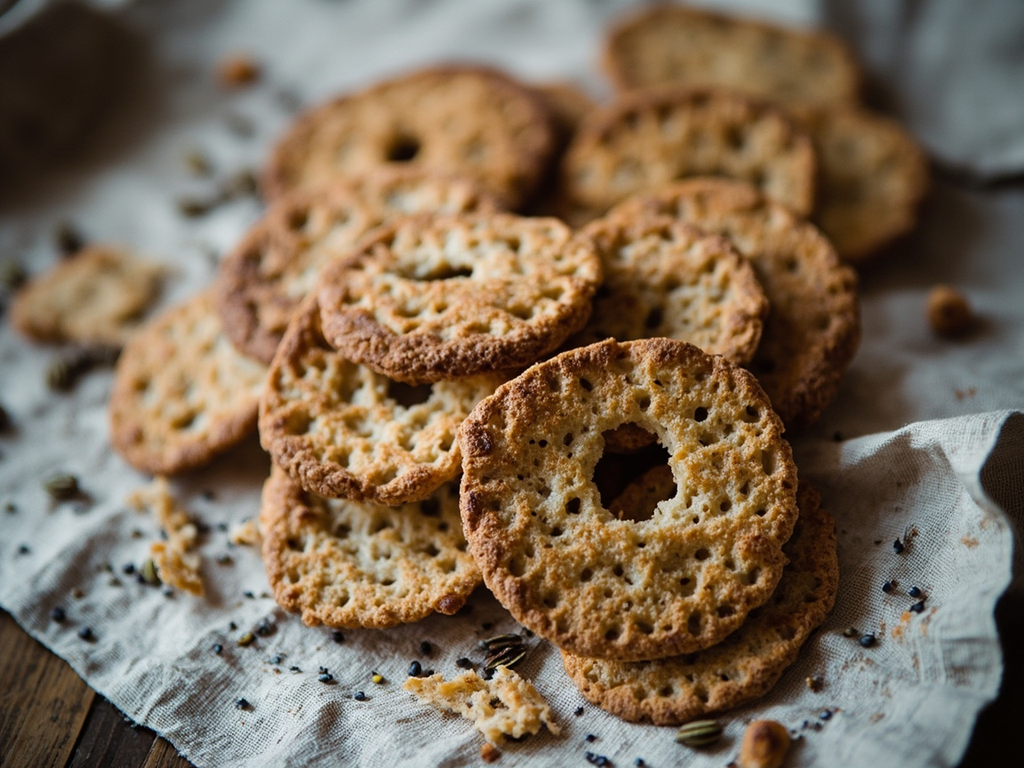
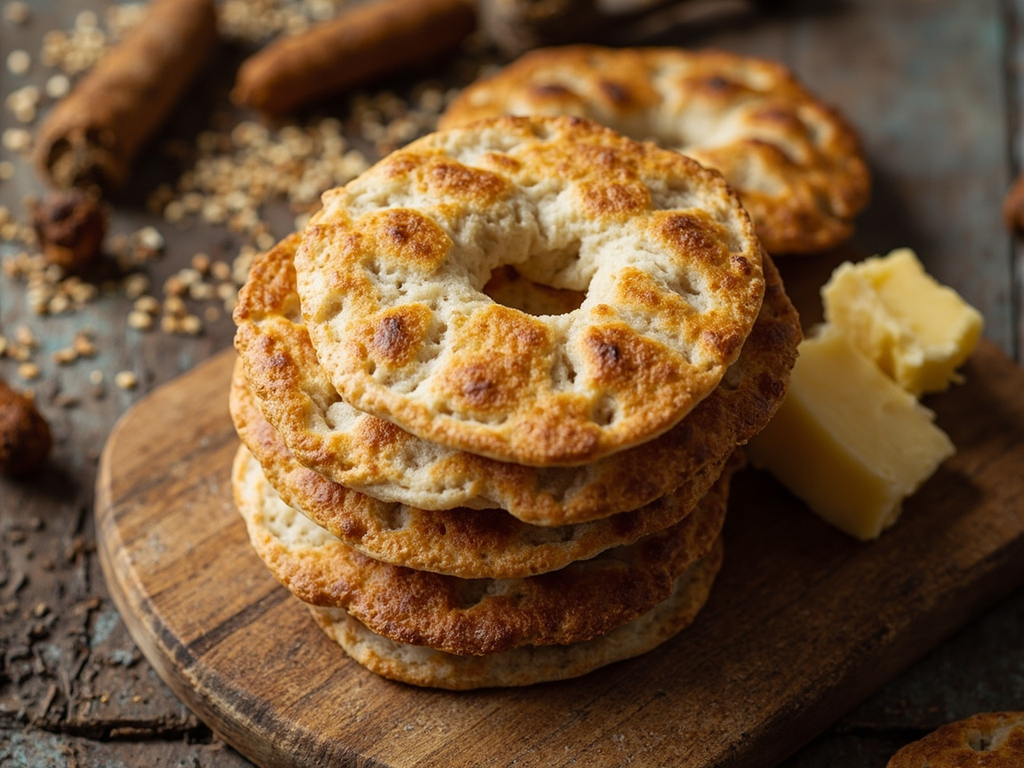
A flat, hard, crispy bread made from rye flour, with a central hole for threading onto a pole to dry. Rustic and slightly bitter from the rye, it is spread with butter and cheese and keeps almost indefinitely.
Hard bread was baked twice a year, in large batches, and threaded through the central hole onto long poles under the kitchen ceiling, where it dried all winter. You needed good teeth, indeed, but this bread never mouldered and followed us everywhere, in the cart and in the schoolbag. A slice, a little butter, a shard of cheese: that was enough to last a morning's journey on the frozen roads of Värmland. Simple things are often the most faithful.
- •Rye flour — the base (northern grain)
- •Wheat flour — a little (structure)
- •Water — as needed (binding)
- •Salt — a pinch (seasoning)
- •Yeast or sourdough — a piece (light leavening)
Knäckebröd — crispy rye crispbread
A flat, hard, crispy bread made from rye flour, with a central hole for threading onto a pole to dry. Rustic and slightly bitter from the rye, it is spread with butter and cheese and keeps almost indefinitely.
Why this dish? Before becoming a novelist, Selma was a schoolteacher in Landskrona and traveled widely. Knäckebröd, the flat, dry bread that keeps for months, had always accompanied Swedes on journeys and filled the winter stores of Värmland farms.
Hard bread was baked twice a year, in large batches, and threaded through the central hole onto long poles under the kitchen ceiling, where it dried all winter. You needed good teeth, indeed, but this bread never mouldered and followed us everywhere, in the cart and in the schoolbag. A slice, a little butter, a shard of cheese: that was enough to last a morning's journey on the frozen roads of Värmland. Simple things are often the most faithful.
Ingredients (period version)
- Rye flour — the base (northern grain)
- Wheat flour — a little (structure)
- Water — as needed (binding)
- Salt — a pinch (seasoning)
- Yeast or sourdough — a piece (light leavening)
Ingredients
- Rye flour — 300 g (northern grain)
- Wheat flour — 100 g (structure)
- Warm water — 250 ml (binding)
- Salt — 1 tsp (seasoning)
- Fresh yeast — 15 g (light leavening)
- Caraway or fennel seeds — 1 tsp (optional) (flavor)
Method
- Dissolve the yeast in warm water, add salt, seeds, then flours. Knead into a firm dough and let rest 30 minutes.
- Divide into balls, roll each very thin into a disc (2-3 mm).
- Prick the entire surface with a fork or a docker, and make a hole in the center.
- Bake for 8-12 minutes at 230°C until dry and golden.
- Cool completely on a rack until hard. Store in a dry place. Serve with butter and cheese.
How it was made : Knäckebröd was traditionally baked twice a year and stored suspended from poles in the ceiling, hence the central hole. Rye, resistant to cold climates, was the dominant grain of the North. This keeping bread nourished generations of peasants, soldiers, and travelers.
The contemporary twist : Break into irregular shards and serve on an appetizer board with gravlax and dill cream.
Sources : Cajsa Warg, Hjelpreda i Hushållningen (1755) · Selma Lagerlöf, Mårbacka (1922)
Selma Lagerlöf · Charactorium