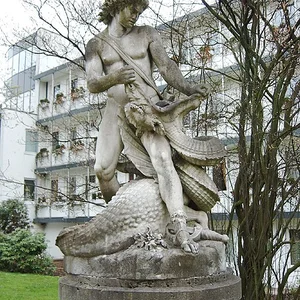

Hero of Norse and Germanic mythology, Sigurd is the slayer of the dragon Fáfnir according to the Völsunga Saga. An iconic figure of Germanic legend, he embodies the archetype of the warrior-conqueror cursed by his own heroic deed.
Sigurd
Siegfried
8 min read
Frequently asked questions
Key Facts
- Slew the dragon Fáfnir by thrusting his sword Gram beneath the dragon
- Obtained the Nibelung treasure after defeating Fáfnir and his brother Regin
- Central figure of the Völsunga Saga, the main source of his exploits (13th century)
- Germanic versions: Siegfried in the Nibelungenlied (medieval High German epic)
- Became king of the Franks according to certain epic traditions
Works & Achievements
A major heroic feat in which Sigurd slays the dragon Fáfnir, who guarded a cursed treasure. This act forms the heart of the Völsung cycle and marks the peak of his warrior prowess.
After defeating Fáfnir, Sigurd takes possession of the dragon's gold and cursed hoard. This wealth becomes the source of the dramatic conflicts that drive the rest of the legend.
His union with the valkyrie Brynhildr, who was promised to whoever could wake her from her enchanted sleep. This marriage weaves together love and tragedy, binding the heroes' fates in a complex web of intrigue.
Major conflicts pitting Sigurd and his ally Gunnar against the Nibelungs, culminating in a series of killings and acts of vengeance that destroy the royal families involved.
A medieval Icelandic collection compiling the Norse oral traditions surrounding Sigurd. A foundational text preserving Germanic legends and the primary source for the stories of this hero.
The legends of Sigurd fed into the Germanic epic cycle of the Nibelungs, from which Wagner's 19th-century opera cycle derives. His influence on European literature has been far-reaching and enduring.
Anecdotes
According to the Völsunga saga, a 13th-century Icelandic text, Sigurd is the son of Völsung and becomes the greatest warrior of his age. He forges a magical sword called Gram from the shards of his father's blade, which allows him to accomplish his legendary feats. This weapon becomes a symbol of his power and exceptional destiny.
Sigurd's most famous adventure is the slaying of the dragon Fáfnir, guardian of a cursed treasure. After killing the beast, Sigurd dips his finger in the dragon's blood and brings it to his lips, gaining the ability to understand the language of birds. This heroic act marks the turning point of his legend — but also unleashes the curse of the treasure.
Sigurd encounters the valkyrie Brynhildr, a divine warrior woman asleep within a ring of fire that only a fearless hero can cross. He passes through the flames and awakens her, pledging to marry her. This mythic meeting symbolizes the impossible love between a mortal hero and a superhuman being.
Sigurd's tragedy is sealed when he forgets his love for Brynhildr after drinking a magic potion that erases his memories. He then marries Gudrun, sister of King Gunnar, which triggers Brynhildr's revenge. This complex web of betrayal shows how Norse heroes fall victim to curses and the schemes of the gods.
Sigurd is ultimately murdered in his bed by Gutthorm, Gudrun's brother, who runs the sleeping hero through with a sword. Even in death, his legend lives on through the Icelandic sagas and deeply shaped medieval Germanic literature, making him the archetype of the tragic warrior.
Primary Sources
Sigurd rode through the forest of Mirkwood, and found a great serpent lying across the path. He struck it with his sword and slew it. This was the dragon Fáfnir, who guarded the treasure of the Völsungs.
Sigurd drank the dragon's blood and heard the birds speak. Through their words, he learned of hidden things and of Regin's treachery.
Sigurd awoke the valkyrie who lay sleeping within the fire. She taught him the runes and the secrets of Norse magic before he continued on his journey.
Sigurd took the ring Andvaranaut and the dragon's treasure. But the ring was cursed, and would bring misfortune upon whoever possessed it.
The mighty Siegfried slew the dragon Fáfnir and bathed his body in the monster's blood, which made him invulnerable everywhere except for one spot on his back.
Key Places
The mythological homeland of the Völsung family, from which Sigurd descends. It is the legendary birthplace of the hero according to the Völsunga saga, though its exact location remains debated between Scandinavia and Central Europe.
The mythological site where Sigurd confronts and slays the dragon Fáfnir, his greatest feat. This battle marks the climax of his heroic adventures and allows him to claim the cursed gold of the dragon's hoard.
The broader geographical area in which the oral and written traditions surrounding Sigurd are rooted. The Norse sagas that feature him originated in Iceland and reflect medieval Germanic culture.
A legendary dark forest where several episodes of Sigurd's adventures take place. It is a key location in the hero's wanderings across the Norse mythological tales.
Medieval Iceland was the primary home of the written preservation of Sigurd's saga in the 13th century. Icelandic manuscripts remain the major primary sources for the character.
Typical Objects

A magical sword forged by dwarves according to legend, with which Sigurd slays the dragon Fáfnir. This weapon symbolizes heroic power and the destiny of the Norse warrior.

The cursed treasure of the dragon Fáfnir, claimed by Sigurd after his victory. This golden ring represents hard-won wealth but also the curse that clings to heroic deeds.

Protective equipment made of iron plates and chainmail, typical of Germanic warriors of the Middle Ages. It symbolizes the martial status and battle-readiness of the legendary hero.

A combat shield characteristic of Norse warriors, likely decorated with symbolic motifs and runes. It accompanies Sigurd throughout his warrior adventures.

A common Norse object used at feasts and assemblies, symbolizing hospitality and the communal rituals of medieval Viking society.

Sigurd's legendary steed, descended from Odin's horse. This extraordinary animal represents the hero's connection to the divine world and his exceptional warrior status.

A Scandinavian warrior's garment adorned with runes and magical symbols, reflecting the blend of martial and spiritual aspects found in Norse mythology.

A symbolic relic of Sigurd's victory — according to legend, eating it grants him the ability to understand the language of birds. It embodies the hero's transformation through his great feat.
School Curriculum
Vocabulary & Tags
Key Vocabulary
Daily Life
Morning
Sigurd wakes in the royal or warrior hall of his family, the Völsungs. After a light meal of bread and ale, he prepares for the day's activities, whether that means combat or managing his lands. He dons his weapons and armor, symbols of his status as an aristocratic warrior.
Afternoon
The afternoon is devoted to intensive martial training: sword, shield, and spear work, along with preparation for battles and expeditions. He may also join prestigious hunting parties alongside other noble warriors — an activity that serves both as a source of food and as a mark of social standing.
Evening
In the evening, Sigurd gathers in the great hall with his family and court to share a feast. Meals are occasions for diplomatic exchange, retelling of warrior deeds, and strengthening of alliances. He listens to the skalds (bards) recite legends while enjoying mead and ale.
Food
As an aristocratic warrior, Sigurd's diet includes roasted meats, game from the hunt, fish, dark bread, and cheese. Ale and mead are his everyday drinks. Feasts feature abundant, meat-heavy meals — a symbol of wealth and power.
Clothing
Sigurd wears a tunic of wool or linen beneath a warrior's armor — either a chainmail coat or metal plates. He carries a prestigious sword and a shield painted with his family's markings, and may wear a noble fur-lined cloak. His appearance reflects his rank and his deeds in battle.
Housing
Sigurd lives in a large aristocratic longhouse or a fortified royal hall, typical of medieval Scandinavian dwellings. This timber structure houses his family, his warriors, and his court. At its heart lies a great hall with a central hearth — a symbol of power and social standing.
Historical Timeline
Period Vocabulary
Visual Style
Un style pictural inspiré des manuscrits médievaux nordiques et de l'art germanique, combinant techniques de peinture à l'huile avec des motifs Viking complexes. L'ambiance mêle réalisme épique et atmosphère mythologique sombre, avec des contrastes de lumière dramatiques et des accents dorés qui illuminent les détails de l'armure et des armes.
Sound Ambience
Une ambiance sonore immersive évoquant les salles de pierre nordiques du guerrier Sigurd, mêlant les bruits d'une taverne médiévale, le grondement lointain du dragon Fáfnir et les mélodies inquiétantes d'instruments germaniques anciens. L'atmosphère combine l'héroïsme guerrier avec une menace permanente et une malédiction inévitable.
Liens externes & ressources
Références
Œuvres
Meurtre du dragon Fáfnir
N/A - récit mythologique
Conquête du Trésor des Nibelungen
N/A - récit mythologique
Mariage avec Brynhildr
N/A - récit mythologique
Bataille contre les Nibelungen
N/A - récit mythologique
Saga des Völsungs (texte source)
XIIIe siècle (composition écrite)