 flip
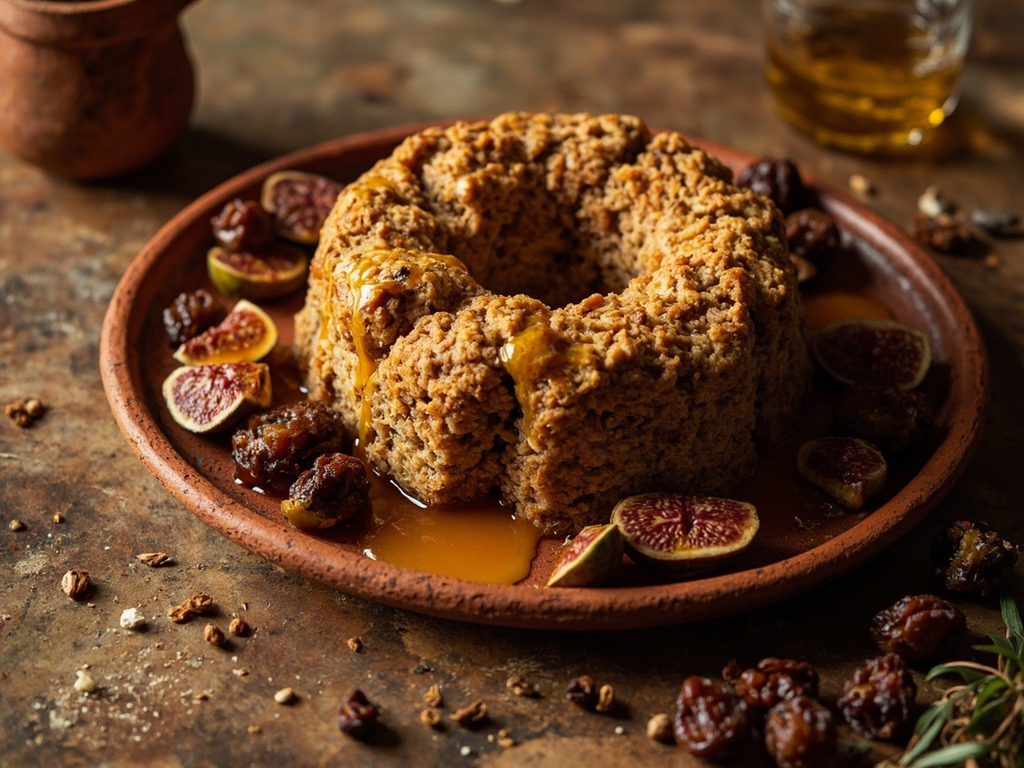
flipConical Emmer Bread with Honey for the Altar
Conical Emmer Bread with Honey for the Altar
Why this dish? Thoth is the scribe of the gods and the master of Hermopolis: every morning, the priests of his temple placed conical loaves on the altar, whose stone models and tomb scenes have come down to us. Offering bread to Thoth was feeding the one who kept the accounts of heaven.
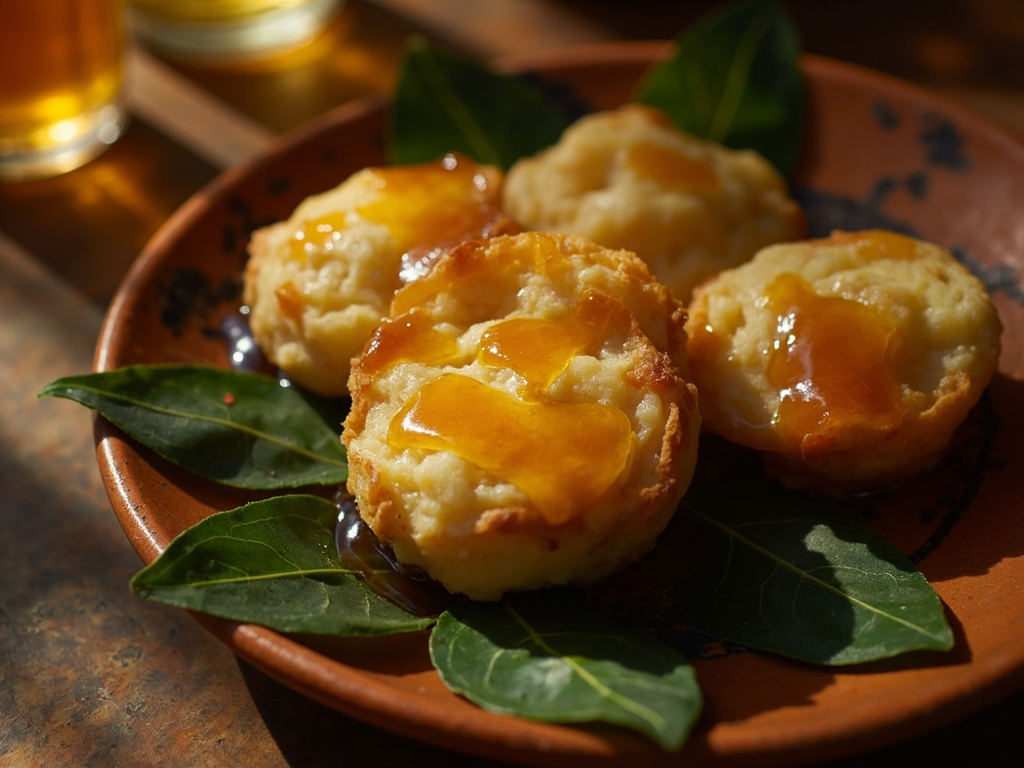
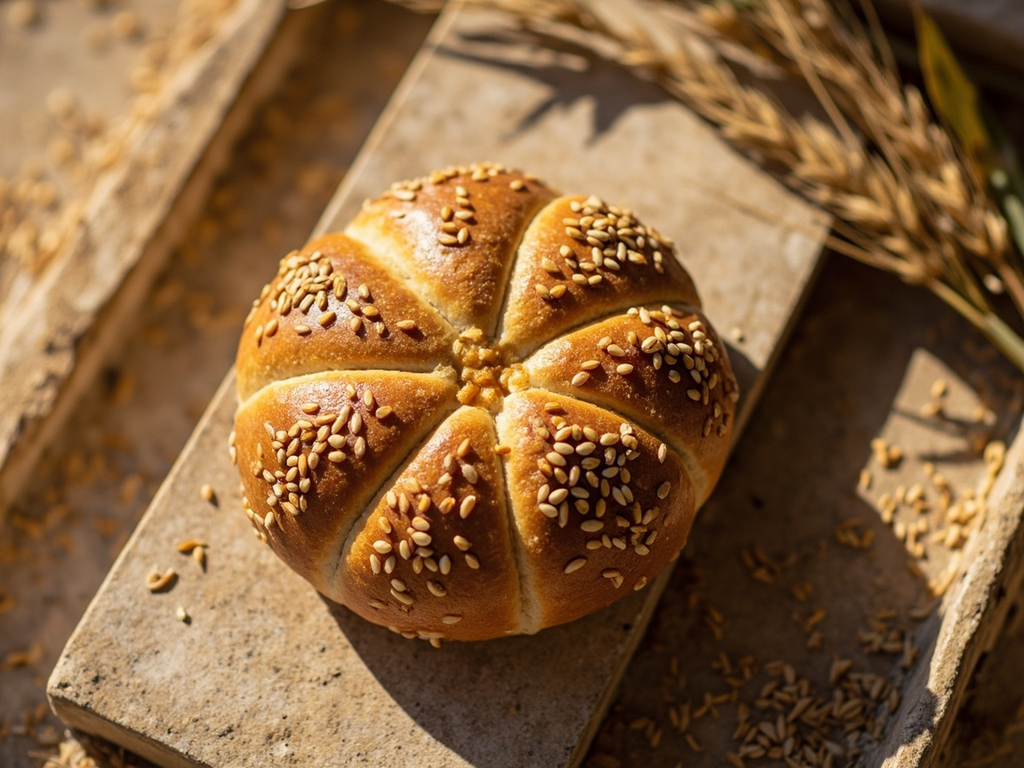
A dense, slightly sweet bread made from emmer wheat, shaped into a cone like ritual loaves, flavored with honey and sesame seeds. Golden, compact, made to be presented before being shared.
Approach, you who know how to read. I, Thoth, master of divine words, receive each dawn this bread that my priests knead from the emmer of the Nile. See how it is raised into a cone, pointed toward the sky like a scribe's reed; it is sweetened with the honey of the bees of Lower Egypt, and sesame seed is scattered upon it as words are sown on papyrus. Eat it after me: that which has touched the altar makes wise the one who feeds on it.
- •Stone-ground emmer (farro) flour — a large measure (base)
- •Wild honey — by the ladle (sweetener)
- •Natural sourdough (yesterday's dough) — a handful (fermentation)
- •Sesame seeds — a handful (topping)
- •Nile water — as needed for dough (binder)
- •Salt — a pinch (seasoning)
Conical Emmer Bread with Honey for the Altar
A dense, slightly sweet bread made from emmer wheat, shaped into a cone like ritual loaves, flavored with honey and sesame seeds. Golden, compact, made to be presented before being shared.
Why this dish? Thoth is the scribe of the gods and the master of Hermopolis: every morning, the priests of his temple placed conical loaves on the altar, whose stone models and tomb scenes have come down to us. Offering bread to Thoth was feeding the one who kept the accounts of heaven.
Approach, you who know how to read. I, Thoth, master of divine words, receive each dawn this bread that my priests knead from the emmer of the Nile. See how it is raised into a cone, pointed toward the sky like a scribe's reed; it is sweetened with the honey of the bees of Lower Egypt, and sesame seed is scattered upon it as words are sown on papyrus. Eat it after me: that which has touched the altar makes wise the one who feeds on it.
Ingredients (period version)
- Stone-ground emmer (farro) flour — a large measure (base)
- Wild honey — by the ladle (sweetener)
- Natural sourdough (yesterday's dough) — a handful (fermentation)
- Sesame seeds — a handful (topping)
- Nile water — as needed for dough (binder)
- Salt — a pinch (seasoning)
Ingredients
- Spelt or einkorn flour — 400 g
- Active sourdough starter — 80 g (fermentation)
- Honey — 3 tbsp (sweetener)
- Warm water — 230 ml (binder)
- Salt — 1 tsp (seasoning)
- Sesame seeds — 2 tbsp (topping)
Method
- Dissolve the sourdough in warm water, add the honey.
- Mix the flour and salt, incorporate the liquid and knead until a supple dough forms.
- Let rise for 3 to 4 hours in a warm place, until doubled.
- Shape into a cone (or small dome) on a baking sheet, sprinkle with sesame seeds.
- Let rest 45 min, then bake for 30-35 min at 210 °C until the crust sounds hollow.
How it was made : Emmer was the queen cereal of ancient Egypt, older than modern wheat. The Egyptians knew dozens of bread shapes, many molded into cones or disks for offering. Since sugar did not exist, honey and dates were the only true sweeteners.
The contemporary twist : Serve this bread warm, split in two, with a drizzle of honey and a few toasted sesame seeds — call it "the scribe's bread."
Sources : Delwen Samuel, « Bread Making and Social Interactions at the Amarna Workmen's Village » (1999) · Pierre Tallet, La cuisine des pharaons (2003)
Thoth · Charactorium