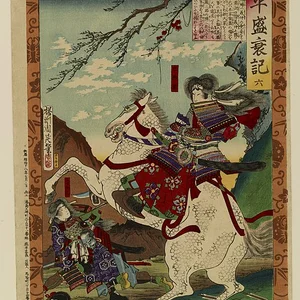

Tomoe Gozen is one of the rare female samurai (onna-musha) in Japanese history. An exceptional warrior in the service of Minamoto no Yoshinaka, she distinguished herself during the Genpei War (1180–1185) through her mastery of the bow, the sword, and horsemanship.
Tomoe Gozen(1157 — 1247)
Tomoe Gozen
Japon
7 min read
Frequently asked questions
Key Facts
- Around 1180: joins Minamoto no Yoshinaka at the outbreak of the Genpei War
- 1183: takes part in the Battle of Kurikara, a decisive victory for the Minamoto clan
- 1184: fights at the Battle of Awazu, the last historical record of her military presence
- Her portrait in the Heike Monogatari (13th c.) establishes her as a model of courage and loyalty
- She is the emblematic figure of the onna-musha — noblewomen of the warrior class trained in combat
Works & Achievements
Tomoe Gozen takes part in this decisive victory against the Taira clan alongside Minamoto no Yoshinaka. The battle marks a turning point in the Genpei War and establishes the military superiority of the Minamoto clan.
Tomoe Gozen distinguishes herself in this battle, fighting against enemy forces with great bravery. She is one of the few female warriors mentioned in Japanese historical sources for her role in direct combat.
Tomoe Gozen is immortalized as a legendary figure in the epic narratives of the Heike Monogatari. Her portrayal as an onna-bugeisha (female warrior) becomes emblematic of medieval Japanese warrior culture.
Renowned for her exceptional skills in horsemanship and archery — disciplines central to the samurai warrior tradition. Her military talents make her an enduring source of inspiration in Japanese warrior literature.
Anecdotes
Tomoe Gozen was a Japanese female warrior of the 12th century, one of the rare women samurai in history. She served the Minamoto clan and was renowned for her exceptional combat skills, mastering the bow, the sword, and horsemanship with formidable effectiveness. Her courage and military talents earned her a legendary reputation in Japanese war chronicles.
At the Battle of Awazu in 1184, Tomoe Gozen fought alongside Minamoto no Yoshinaka, her lord. During this desperate engagement, she is said to have cut down several enemy warriors before withdrawing with dignity from the battlefield, refusing to die in defeat. This act of honor and bravery became a legend in the samurai tradition.
According to historical accounts, Tomoe Gozen possessed remarkable strength: she could draw a bow with the same power as a man and was capable of riding the most difficult horses. Her warrior skills were so highly respected that even her enemies admired her combat prowess and chivalric code of honor.
After the end of the Minamoto clan wars, Tomoe Gozen withdrew from the warrior life and is said to have spent her final years in a Buddhist convent. This transition from warrior to nun reflects the deep spiritual values of bushido, illustrating how samurai sought redemption and inner peace after a life of battle.
Primary Sources
Tomoe was a warrior of great valor. She could face a thousand enemies without fear and was renowned for her skill in archery and horsemanship. She was an extraordinary woman whose exploits surpassed those of many warriors.
Tomoe Gozen, wife of Lord Minamoto no Yoshinaka, fought alongside her husband at the Battle of Awazu in 1184, displaying courage and martial skill equal to those of the finest samurai.
In the fourth year of the Juei era, Tomoe Gozen distinguished herself through remarkable feats of valor during Minamoto no Yoshinaka's campaigns against the Heike clan.
Key Places
A region in central Japan where Tomoe Gozen was born. It was the territory of her family, the Minamoto, where she grew up and received her military training.
Site of the Battle of Kurikara (1181), where Tomoe Gozen fought alongside her husband Minamoto no Yoshinaka against the Taira clan. This battle marks her entry into the Genpei Wars.
The capital of Japan, where Tomoe Gozen took part in several crucial battles during the Genpei Wars (1180–1185), including fierce fighting for political control of the city.
A 1184 engagement in which Tomoe Gozen fought valiantly alongside Yoshinaka. This battle is one of the most celebrated episodes of her military career, documented in the war chronicles.
The place where Tomoe Gozen is said to have spent her final years as a Buddhist nun after withdrawing from military life, in keeping with the tradition of warriors of that era.
Typical Objects

A curved Japanese sword and the primary weapon of samurai warriors in Tomoe Gozen's era. It is the defining symbol of the warrior and of martial honor in medieval Japan.
📷 Wikimedia · Wikimedia Commons ↗
Traditional Japanese armor made of iron plates and scales, worn by high-ranking warriors such as Tomoe Gozen. It offered protection while also serving as a mark of social status.

Essential ranged weapons for 12th-century samurai. Tomoe Gozen was renowned for her exceptional skill with the bow on horseback — an indispensable ability in medieval Japanese warfare.

A noble animal used in battle by samurai warriors. Tomoe Gozen was particularly celebrated for her feats on horseback, riding into charges and executing tactical maneuvers in combat.
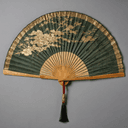
An emblem and command tool used by samurai generals to direct their troops on the battlefield. It represents military authority and leadership within warrior clans.

Traditional Japanese garments worn beneath the armor. The kimono and hakama formed the everyday attire of samurai warriors, reflecting their status and adherence to the warrior code.

The distinctive heraldic symbol of the clan to which Tomoe Gozen belonged. Warrior clans displayed their mon on their armor and banners to identify their allegiance.

The epic narrative 'Heike Monogatari' (The Tale of the Heike) records the exploits of Tomoe Gozen and the wars of the 12th century. These chronicles are the primary historical sources for this period of military conflict.
School Curriculum
Vocabulary & Tags
Key Vocabulary
Tags
Daily Life
Morning
Tomoe Gozen rises early to inspect her weapons and armor, essential elements of her life as a samurai in service to a feudal lord. She practices archery and swordsmanship techniques, maintaining her physical conditioning and martial skills. After these exercises, she takes a light meal before attending to her military or administrative duties within the clan.
Afternoon
The afternoon is devoted to intensive combat training: wielding the katana, mounted archery, or military strategy depending on the needs of the moment. Tomoe also takes part in mounted hunts, an aristocratic pursuit that sharpens essential warrior skills. She may also oversee other warriors or sit in on the feudal lord's war councils.
Evening
In the evening, Tomoe shares meals with her household or clan, where military and political affairs are discussed. She tends to her combat equipment — cleaning her sword, repairing her armor, checking her arrows. Before rest, she may practice meditation or study poetry, disciplines held in high regard within samurai culture.
Food
Tomoe's diet centers on rice, the staple of Japanese cuisine, accompanied by dried fish, seasonal vegetables, and miso. As a high-ranking warrior, she has access to a more varied table than common peasants: poultry, fruit, and green tea. Her diet is balanced and suited to the intense physical demands of a fighter.
Clothing
Tomoe wears traditional samurai armor (dō and kusari), adapted for women warriors, along with the kabuto helmet and protective face mask (menpo). In daily life outside of combat, she dresses in fine-quality kimono that reflect her high standing within the warrior nobility. Her clothing marks her place in the samurai class and her prestigious military role.
Housing
Tomoe lives on the estate of a feudal lord (daimyo) or within a military stronghold, inside the clan's aristocratic residence. Her living environment consists of traditional timber-and-stone buildings with training grounds, stables for horses, and private living quarters. She enjoys the comfort and space reserved for the warrior elite of 12th–13th century feudal Japan.
Historical Timeline
Period Vocabulary
Visual Style
Un style fusionnant la peinture de rouleau japonaise médiévale avec l'art guerrier samurai, utilisant des techniques de calligraphie à l'encre noire, des aplats d'or leaf et des teintes évocant les périodes Heian et Kamakura. L'ambiance conjugue élégance aristocratique et force martiale.
Sound Ambience
Une ambiance sonore évoquant les champs de bataille féodaux japonais avec les bruits caractéristiques de l'armement samuraï, les chevaux au galop, les éléments naturels typiques du Japon médiéval et les instruments de musique traditionnels, créant une atmosphère respectueuse et immersive autour de la légendaire guerrière Tomoe Gozen.
Liens externes & ressources
Références
Œuvres
Bataille de Kurikara (1183)
1183
Bataille de Awazu (1184)
1184
Légende du Heike
XIIe-XIIIe siècles
Maîtrise de l'équitation et du tir à l'arc
1170s-1180s