
A medieval legend telling the story of two lovers whose impossible love, sparked by the accidental drinking of a magic potion, leads them to tragedy. This tale of courtly love has inspired countless literary and artistic adaptations from the Middle Ages to the present day.
Tristan and Iseult
Tristan and Isolde
8 min read
Frequently asked questions
Key Facts
- Literary versions attested in the 12th century (Béroul, Thomas of Britain)
- Accidental drinking of the love potion that binds Tristan and Iseult forever
- Gradual integration into the Arthurian cycle as variations on the theme of courtly love
- Multiple adaptations in French, German, and Old Norse during the Middle Ages
- Major influence on European Romantic literature (19th century)
Works & Achievements
The Anglo-Norman version of the Tristan romance that establishes the foundations of the medieval myth, featuring the magic potion and impossible love. This version significantly influenced European courtly literature.
A refined and psychologically nuanced retelling of the legend that emphasizes emotion and courtly values. This version became the basis for later adaptations and had a profound influence on courtly literature.
Allusions to and adaptations of the Tristan myth in Marie de France's poetic lais, most notably in 'Chevrefoil' ('The Honeysuckle'), which enrich the legend with lyrical elements.
A prose retelling that reinterprets the legend by weaving it into the Arthurian cycle and greatly expanding Tristan's chivalric adventures.
The myth inspired significant visual representations, including wall frescoes, manuscript illuminations, and tapestries, all attesting to the enduring popularity of this legendary couple.
Tristan and Iseult became a defining model of the courtly romance throughout medieval Europe, inspiring adaptations in German, Italian, and other vernacular languages.
Anecdotes
The legend of Tristan and Iseult has its roots in Breton Celtic traditions, likely based on historical figures from the early Middle Ages. The earliest known literary texts date from the 12th century, most notably the versions by Béroul and Thomas of Britain, who adapted this ancient oral legend. These versions already feature the key elements: forbidden love, a magic potion, and a tragic ending.
The magic love potion is the central element of the legend: Iseult was meant to drink it with King Mark to strengthen their marital bond, but Tristan and Iseult consume it by accident. This pivotal event explains their impossible passion and illustrates how, in medieval literature, magic could account for the most powerful of human emotions.
The story of Tristan and Iseult belongs to the tradition of courtly love, a defining literary ideal of the Middle Ages that celebrated passionate yet refined devotion. This legend became one of its greatest models, influencing generations of writers and shaping the modern archetype of tragic, impossible love.
The various medieval versions of the tale — French, English, and German — show how the same legend transforms across cultures. For example, Béroul's French version emphasizes physical passion, while Thomas of Britain's version places greater weight on courtesy and the spiritual dimension of love.
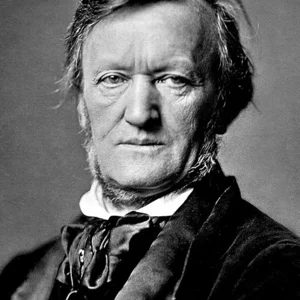
The legend of Tristan and Iseult directly inspired Richard Wagner's famous opera Tristan und Isolde in the 19th century, proving that this medieval story retains its dramatic power to this day. The legend's influence on literature, music, and art spans more than 800 years, making it one of the most enduring in all of European culture.
Primary Sources
Lords, it pleases you to hear of a noble matter, of those who were of great renown, Tristram and Queen Ysolt, of whom many a tale was told and many a fine chanson de geste and many a fair rhyming history.
And when they came to the meal, the queen and Tristan were seated together, and a cupbearer brought them the enchanted wine in a goblet. And when Tristan had drunk a portion of that wine, he knew that it was the love potion.
Love shows itself to him and to her in such a way that they would never have hearts so whole as to wish to die for the sake of loving more. It is the potion that has seized them.
Of the bitter potion you speak of between them, which made them love so deeply — I will tell you the truth of it, how it was first made and procured.
Key Places
The legendary kingdom ruled by King Mark, Tristan's uncle. Cornwall is the setting for much of the legend, particularly the love story between Tristan and Iseult, Queen of Cornwall.
The region where Tristan is said to have been born and raised. In several versions of the legend, his father King Rivalen rules in Brittany, and it is here that Tristan receives his training as a knight and musician.
The legendary fortress associated with King Mark's court in Cornwall. The castle has become a powerful symbol of the Arthurian tradition and of the tragic fate of Tristan and Iseult.
The homeland of Iseult the Fair, where she lives under the rule of her father, the King of Ireland. It is to Ireland that Tristan travels to bring Iseult back to King Mark — a journey that ends with both of them drinking the fateful love potion.
The legendary forest where Tristan and Iseult take refuge after their love is discovered. They live as fugitives in this wild place, far from King Mark's court, and the forest becomes a powerful symbol of their exile and forbidden love.
The region where Tristan takes refuge after leaving Cornwall. In some versions of the legend, it is here that he marries Iseult of the White Hands, a union that deepens the tragedy of his impossible love.
Typical Objects

An enchanted drink accidentally consumed by Tristan and Iseult, responsible for their irresistible and inevitable love. This object symbolizes the very heart of the legend and the impossibility of resisting fate.

The weapon of Tristan, knight at the court of King Mark. The sword represents his noble status and his calling as a warrior in medieval feudal society.

Symbols of the power of King Mark of Cornwall and Queen Iseult. They embody the royal obligations and the impossibility of a union between the lovers due to their duties to the throne.

A medieval musical instrument associated with Tristan, a gifted musician and troubadour. Music represents his art of courtship and the refinement of medieval courtly culture.

The emblematic setting of the secret meetings between Tristan and Iseult in the forests. It symbolizes their forbidden passion and their moments of intimacy far from the royal castle.

An object from Iseult's trousseau, the Irish princess promised to King Mark. The rich fabrics reflect the matrimonial exchanges and the noble status of the princess in medieval society.

The residence of King Mark in Cornwall, a seat of power symbolizing feudal authority and the social constraints that keep the lovers apart. A space of social order that stands opposed to their happiness.

Tristan's companion throughout his adventures and travels. The horse represents chivalric mobility and the many trials of feudal medieval life.
School Curriculum
Vocabulary & Tags
Key Vocabulary
Tags
Mythologie
Daily Life
Morning
Tristan rises at the sound of the castle bell and attends the morning religious services, an unavoidable obligation for a knight of high rank. He takes a light meal of bread, cheese, and wine before devoting himself to military training or the affairs of the royal court.
Afternoon
The afternoon is spent in chivalric pursuits: sword and horsemanship training, participation in royal hunts, or attendance at court for audiences and diplomatic negotiations. Tristan may also take part in tournaments or courtly pastimes such as chess and music.
Evening
At the end of the day, Tristan joins the lord's feast in the great hall of the castle, then attends courtly entertainments: troubadour music, readings of courtly texts, or gallant conversation in the royal apartments, in keeping with the customs of courtly love.
Food
As a knight of high rank, Tristan eats meat (game, poultry, and fish depending on the season), white bread, and cheese, and drinks wine. His privileged diet far surpasses that of the peasantry, including spices and refined dishes at royal banquets.
Clothing
Tristan wears the classic attire of the medieval knight: a tunic, chainmail or plate armor, a surcoat in royal colors, and a richly adorned sword. At court, he dons sumptuous garments of fine cloth in purple or scarlet, marking his privileged status.
Housing
Tristan lives in the royal castle of Cornwall (or in Breton versions of the legend), in the apartments reserved for high-ranking knights and those close to the king. His living quarters include vaulted chambers, stone staircases, hearths for warmth, and access to the reception halls where courtly life unfolds.
Historical Timeline
Period Vocabulary
Visual Style
Un style inspiré des manuscrits enluminés du Moyen Âge, mêlant l'esthétique gothique raffinée à une ambiance mystique et tragique, avec des jeux de lumière dorée et des ombres dramatiques qui évoquent la passion impossible et la destinée fatale des amants.
Sound Ambience
Une ambiance mystérieuse et mélancolique mêlant la beauté courtoise du Moyen Âge à la tragédie inévitable, où les sons délicats de la musique médiévale côtoient les bruits sinistres d'une tempête nocturne et la magie du philtre d'amour.
Liens externes & ressources
Références
Œuvres
Le Roman de Tristan et Iseut (version de Béroul)
vers 1170-1190
Le Roman de Tristan et Iseut (version de Thomas d'Angleterre)
vers 1160-1180
Tristan et Iseut dans les Lais de Marie de France
vers 1160-1180
Le Roman de Tristan en prose (Tristan de Léonois)
XIIIe siècle
Les fresques et représentations artistiques du mythe
XIIe-XVe siècles
Influence sur la littérature courtoise européenne
XIIe-XIVe siècles