 flip
flipHippocras, or Iseult's Herbed Wine
Hippocras, or Iseult's Herbed Wine
Why this dish? The very heart of the legend is a potion: the 'herbed wine,' a philtre that Iseult's mother prepares for the wedding night and that Tristan and Iseult drink by mistake aboard the ship, sealing their love forever. Hippocras, a sweet spiced wine drunk at the end of meals, is the real-world cousin of this magic potion.
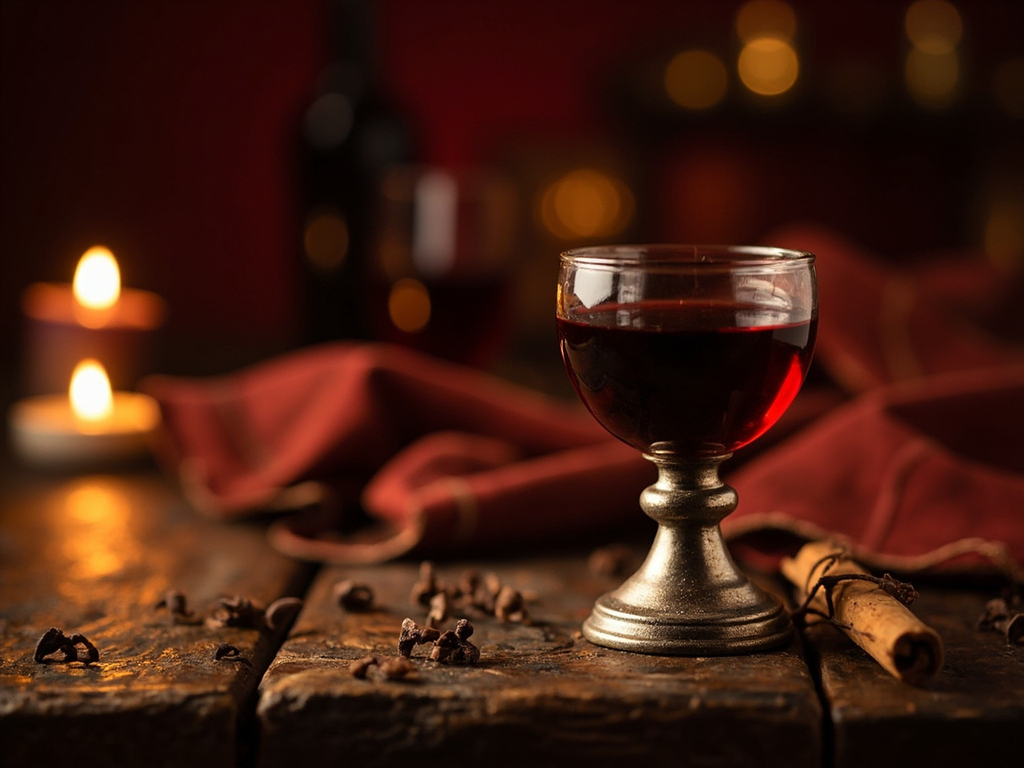
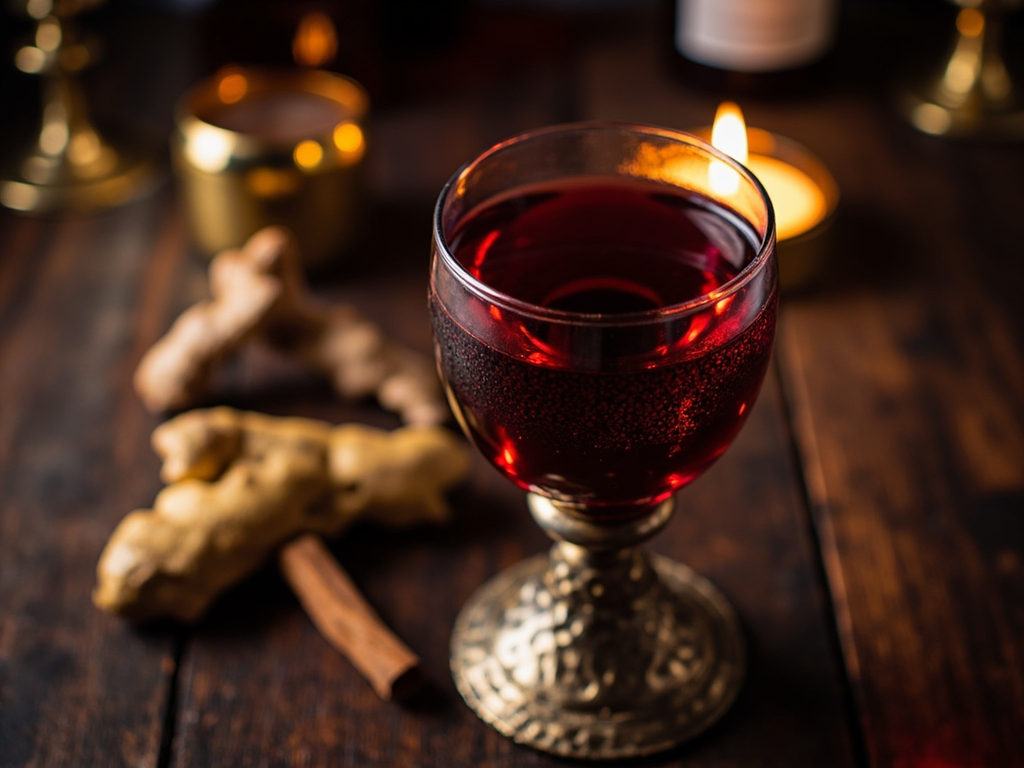
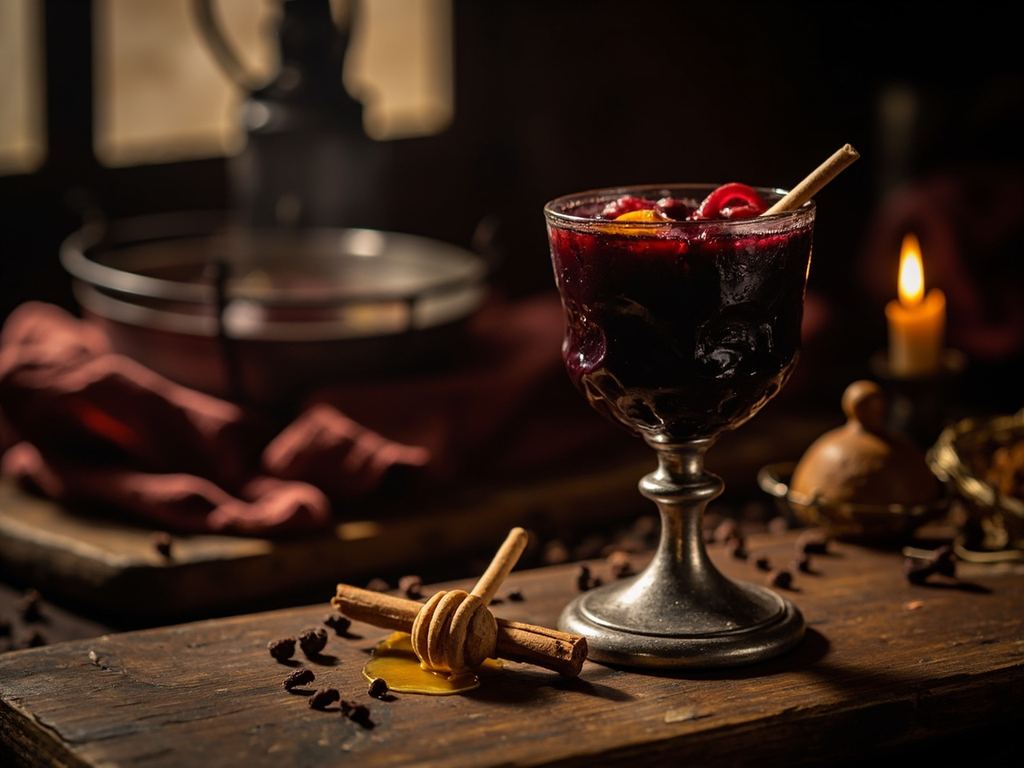
A red or white wine warmly spiced with cinnamon, ginger, and cloves, sweetened with honey and strained through a cloth. It was drunk warm or cool at the end of the meal, much as we serve a digestif today. In the legend, it is such a carefully prepared wine that changes two destinies.
Hark, gentle friend, and take good heed what you pour into your cup, for I have learned at my cost that a wine can bind two souls for life and for death. This one you heat gently with cinnamon, ginger, and clove, sweeten with pure honey, then strain through a cloth until it shines like ruby. When Queen Iseult handed me the cup, I dared not think of the potion drunk on the ship from Ireland — drink, you, without fear, and may this nectar warm your heart without stealing it away.
- •Wine (red claret or white wine) — a setier (base)
- •Honey — a generous ladleful (sweetness)
- •Cinnamon sticks — a few pieces (master spice)
- •Ginger — one root (warmth)
- •Cloves — a pinch (aroma)
- •Grains of paradise (melegueta pepper) — a few grains (noble piquancy)
Hippocras, or Iseult's Herbed Wine
A red or white wine warmly spiced with cinnamon, ginger, and cloves, sweetened with honey and strained through a cloth. It was drunk warm or cool at the end of the meal, much as we serve a digestif today. In the legend, it is such a carefully prepared wine that changes two destinies.
Why this dish? The very heart of the legend is a potion: the 'herbed wine,' a philtre that Iseult's mother prepares for the wedding night and that Tristan and Iseult drink by mistake aboard the ship, sealing their love forever. Hippocras, a sweet spiced wine drunk at the end of meals, is the real-world cousin of this magic potion.
Hark, gentle friend, and take good heed what you pour into your cup, for I have learned at my cost that a wine can bind two souls for life and for death. This one you heat gently with cinnamon, ginger, and clove, sweeten with pure honey, then strain through a cloth until it shines like ruby. When Queen Iseult handed me the cup, I dared not think of the potion drunk on the ship from Ireland — drink, you, without fear, and may this nectar warm your heart without stealing it away.
Ingredients (period version)
- Wine (red claret or white wine) — a setier (base)
- Honey — a generous ladleful (sweetness)
- Cinnamon sticks — a few pieces (master spice)
- Ginger — one root (warmth)
- Cloves — a pinch (aroma)
- Grains of paradise (melegueta pepper) — a few grains (noble piquancy)
Ingredients
- Fruity red wine (or semi-sweet white wine) — 75 cl (1 bottle) (base)
- Honey — 4 to 6 tablespoons (sweetness)
- Cinnamon — 2 sticks (master spice)
- Fresh ginger — 3 thin slices (warmth)
- Cloves — 4 (aroma)
- Long pepper or grains of paradise — 1 small pinch (noble piquancy)
Method
- Pour the wine into a saucepan with the honey and heat gently without ever boiling.
- Add cinnamon, ginger, cloves, and the pepper/grains of paradise; let steep off the heat for 30 minutes, covered.
- Taste and adjust honey to your liking.
- Strain carefully through a muslin or fine cloth until the wine is clear.
- Serve warm in winter, cool in summer, in small cups.
How it was made : Hippocras takes its name from 'Hippocrates' sleeve,' the conical cloth bag used to strain the spiced wine. Recipes are attested from the 13th–14th centuries (Le Ménagier de Paris, Le Viandier). Since sugar was extremely rare and expensive, honey remained the common sweetener in the 12th century.
The contemporary twist : Serve it in two cups tied with a ribbon and call it 'the philtre': no one can resist drinking the lovers' potion.
Sources : Le Ménagier de Paris (c. 1393) · Le Viandier de Taillevent (14th c.)
Tristan and Iseult · Charactorium