 flip
flipYpocras — Spiced Pope's Wine
Ypocras — Spiced Pope's Wine
Why this dish? The papal court, traveling from Rome to Viterbo and Anagni, constantly received cardinals, legates, and ambassadors. At the end of grand meals, ypocras — hot spiced wine sweetened with honey — concluded the service as a mark of hospitality and was reputed to aid digestion. It was the honor drink of a table concerned with appearances.
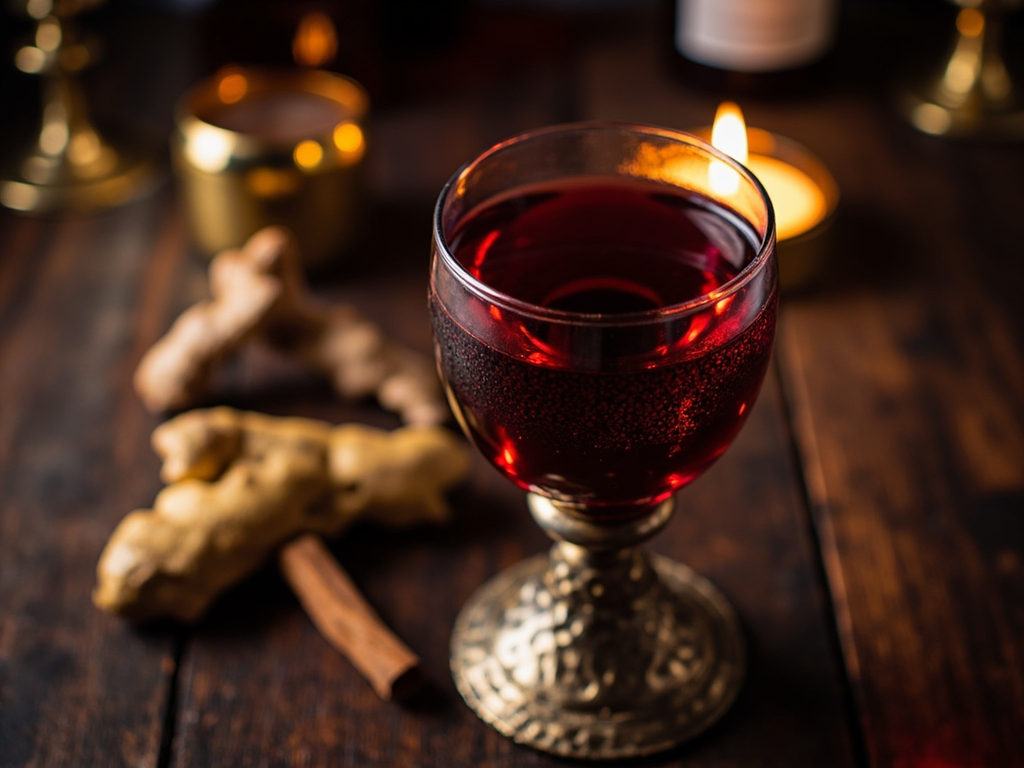
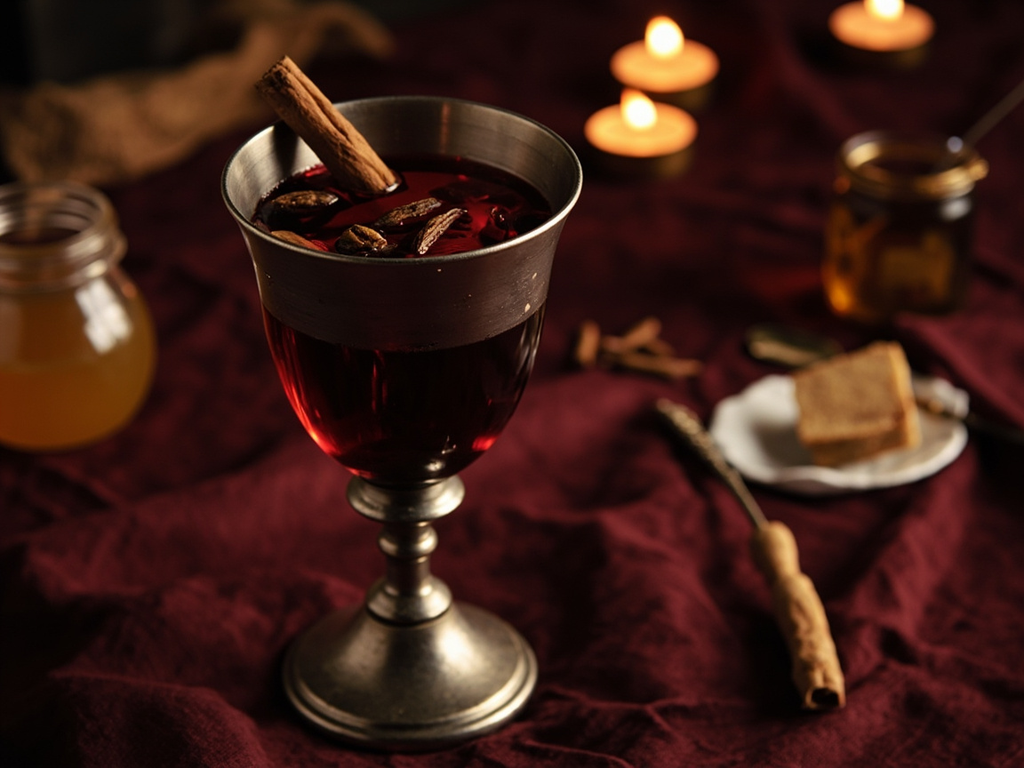
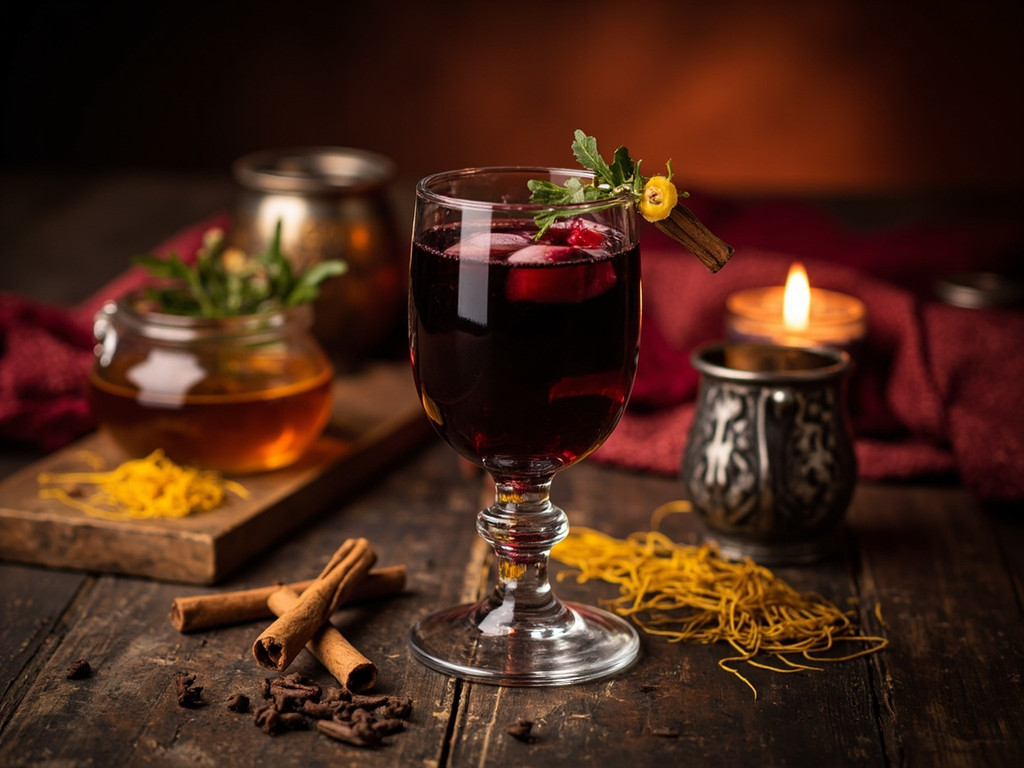
A warmed red wine, sweetened with honey and infused with cinnamon, ginger, and cloves, then filtered until clear. Comforting and fragrant, it was served to end the meal and honor the host.
When the meal draws to a close and guests linger, have ypocras brought in: that is how we honor those who sit at our table. Take a good wine, sweeten it with honey, and let cinnamon, ginger, and cloves steep in it, then pass it through a cloth strainer until it is clear as ruby. The physicians of Salerno say it aids digestion and warms the cold humors; We see in it above all the sweetness of a shared moment. Drink little, but drink heartily.
- •Red wine — a pitcher (base of the beverage)
- •Honey — to taste (sweetener (sugar was rare and precious))
- •Cinnamon — one stick (sweet spice)
- •Ginger — a piece (warm spice)
- •Clove — a few (fragrant spice)
- •Grains of paradise or long pepper — a pinch (spicy heat (non-New World))
Ypocras — Spiced Pope's Wine
A warmed red wine, sweetened with honey and infused with cinnamon, ginger, and cloves, then filtered until clear. Comforting and fragrant, it was served to end the meal and honor the host.
Why this dish? The papal court, traveling from Rome to Viterbo and Anagni, constantly received cardinals, legates, and ambassadors. At the end of grand meals, ypocras — hot spiced wine sweetened with honey — concluded the service as a mark of hospitality and was reputed to aid digestion. It was the honor drink of a table concerned with appearances.
When the meal draws to a close and guests linger, have ypocras brought in: that is how we honor those who sit at our table. Take a good wine, sweeten it with honey, and let cinnamon, ginger, and cloves steep in it, then pass it through a cloth strainer until it is clear as ruby. The physicians of Salerno say it aids digestion and warms the cold humors; We see in it above all the sweetness of a shared moment. Drink little, but drink heartily.
Ingredients (period version)
- Red wine — a pitcher (base of the beverage)
- Honey — to taste (sweetener (sugar was rare and precious))
- Cinnamon — one stick (sweet spice)
- Ginger — a piece (warm spice)
- Clove — a few (fragrant spice)
- Grains of paradise or long pepper — a pinch (spicy heat (non-New World))
Ingredients
- Full-bodied red wine — 1 bottle (75 cl) (base)
- Honey — 4 to 6 tbsp (sweetener)
- Cinnamon — 1 stick (sweet spice)
- Fresh ginger — 4 thin slices (warm spice)
- Cloves — 4 (fragrant spice)
- Long pepper (or black peppercorns) — a pinch (heat)
Method
- Gently heat the wine without boiling.
- Add the honey and stir until dissolved.
- Add cinnamon, ginger, cloves, and pepper; let steep off the heat for 30 min to 1 hour.
- Strain carefully through a fine cloth (the 'Hippocratic sleeve' that gave the drink its name).
- Serve lukewarm in small cups. Sip with great moderation.
How it was made : Ypocras (or hypocras) takes its name from the 'Hippocratic sleeve', the conical cloth filter used to clarify it. A prestige drink reserved for wealthy tables because spices were costly, it was considered both medicinal and festive, served at the end of the meal ('issue de table').
The contemporary twist : Non-alcoholic version: replace the wine with red grape juice and a dash of verjus — the choirboy's ypocras, to be drunk hot on winter evenings.
Sources : Le Ménagier de Paris (ypocras recipes, 14th c.) · Regimen sanitatis Salernitanum
Alexander IV · Charactorium