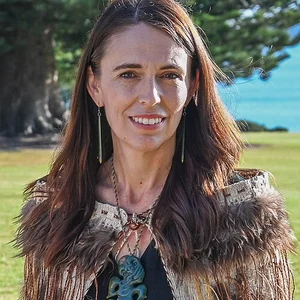

First female president of Taiwan, elected in 2016 and re-elected in 2020. A lawyer by training, she leads the Democratic Progressive Party and defends Taiwanese sovereignty against Chinese pressure.
Tsai Ing-wen(1956 — ?)
Tsai Ing-wen
Taïwan
8 min read
Frequently asked questions
Famous Quotes
« Taiwan is a democracy and we will defend our freedom.»
« We will not accept the “one country, two systems” formula for Taiwan.»
Key Facts
- Born in 1956 in Taiwan, holds a doctorate in law from the London School of Economics
- First woman elected president of Taiwan in January 2016
- Re-elected in 2020 with 57% of the vote, a record in Taiwanese history
- Legalization of same-sex marriage in Taiwan in 2019, a first in Asia
- Maintaining a firm stance against Beijing's military and diplomatic pressure
Works & Achievements
A foundational academic work defended at the London School of Economics, examining unfair trade practices and safeguard mechanisms in international trade law. This thesis established her reputation as a specialist in international commercial law.
Under President Chen Shui-bian, Tsai Ing-wen led the body responsible for managing relations between Taiwan and mainland China, developing first-rate expertise in navigating this fundamental and complex relationship.
Under her presidency, Taiwan became in May 2019 the first country in Asia to legalize same-sex marriage, following a 2017 Constitutional Court ruling. This landmark reform strengthened Taiwan's image as an advanced liberal democracy.
As early as January 2020, Taiwan implemented under Tsai's leadership an exemplary epidemiological surveillance and containment protocol, allowing the island to maintain near-normal life without strict lockdowns — widely praised around the world as a model public health response.
Over her two terms, Tsai Ing-wen expanded military, economic, and diplomatic cooperation agreements with Washington, Brussels, and Tokyo, consolidating Taiwan's international network of support in the face of growing Chinese pressure.
Tsai championed several institutional reforms aimed at strengthening a distinctly Taiwanese identity in school curricula, public institutions, and the law — while stopping short of a formal declaration of independence that would have triggered a military crisis.
Anecdotes
Tsai Ing-wen earned her doctorate in law from the London School of Economics in 1984, with a thesis on unfair trade practices. Returning to Taiwan, she became a law professor before entering politics — an academic background that is rare among heads of state.
During her re-election in January 2020, Tsai Ing-wen won 8.17 million votes, an absolute record in the history of Taiwanese presidential elections. Her landslide victory was partly a reaction to the crackdown on the pro-democracy movement in Hong Kong, which had galvanized Taiwanese public opinion.
Tsai Ing-wen has remained single throughout her life, which drew attacks from political opponents suggesting she could not understand Taiwanese families. She responded calmly that her commitment to Taiwan was her absolute priority, and that the debate revealed more about her detractors' prejudices than about any shortcoming of her own.
A devoted cat lover, she adopted stray cats living in the gardens of the presidential residence. She regularly posted photos of her feline companions on social media, earning her unexpected popularity far beyond political circles — particularly among young Taiwanese.
In 2022, when U.S. House Speaker Nancy Pelosi visited Taiwan despite military threats from Beijing, Tsai Ing-wen personally welcomed her and presented her with Taiwan's highest honor. This symbolic visit illustrated American support for Taiwan amid extreme tensions with China.
Primary Sources
We are committed to maintaining the status quo of peace and stability in the Taiwan Strait. Both sides must find, in a spirit of equality and dignity, modes of interaction that are acceptable to both parties.
Taiwan has shown the entire world that democracy is invincible. We have affirmed our will to exist freely as a nation. I ask Beijing to understand that Taiwan's perseverance for democracy is not a provocation, but a reality that China must accept.
The analysis of trade safeguard mechanisms reveals a persistent tension between protecting domestic industries and honoring international free-trade commitments — a tension that shapes the entire body of multilateral trade law.
What is happening in Hong Kong makes it abundantly clear that the 'one country, two systems' model has failed. Taiwan will never accept this framework. We stand with the people of Hong Kong as they defend their fundamental freedoms.
Key Places
The seat of the Taiwanese government, the Presidential Palace (formerly the seat of Japan's colonial administration) is where Tsai Ing-wen exercised power for two terms and defended Taiwan's sovereignty.
Tsai Ing-wen completed and defended her doctoral thesis in law here in 1984. Her training at the LSE, a world-renowned institution, established her intellectual and international credibility.
Tsai Ing-wen earned her Master of Laws (LLM) here before her London doctorate, deepening her legal training at one of America's leading universities.
The ancestral homeland of Tsai Ing-wen's paternal family, with Hakka and Paiwan roots. She has often cited her mixed heritage as emblematic of the diversity and resilience of the Taiwanese people.
This 180-kilometer-wide strait separating Taiwan from mainland China was the arena of major geopolitical tensions that Tsai Ing-wen had to manage throughout her terms, most notably China's military exercises in 2022.
Typical Objects

A law professor before entering politics, Tsai Ing-wen built her career on a mastery of commercial and constitutional law. The Taiwanese Civil Code, annotated and commented, symbolizes her intellectual grounding in the rule of law.

Symbol of the supreme office she held from 2016 to 2024, the presidential seal embodies the authority of the Taiwanese state, of which she was the guardian in the face of external pressures.

Tsai Ing-wen consistently displayed Taiwan's colors during her diplomatic meetings, the blue, red, and white flag with its sun becoming the symbol of the sovereignty she defended.

Known for her rigorous work ethic and command of technical issues, Tsai made intensive use of digital tools, regularly posting on Facebook and Twitter to communicate directly with Taiwanese citizens and the international diaspora.

The cats she adopted in the gardens of the presidential residence had become true national mascots. The feline accessories symbolize her approachable, humanized image — a contrast with the gravity of the geopolitical issues she was managing.

Tsai Ing-wen cultivated a strict, professional wardrobe — trouser suits or jacket suits in neutral colors — which signaled her refusal to play on femininity and her determination to be judged solely on her political competence.
School Curriculum
Vocabulary & Tags
Key Vocabulary
Daily Life
Morning
Tsai Ing-wen is known for waking up early and starting her day by reading Taiwanese, Chinese, and international press reviews. She has a simple breakfast at the presidential residence before her first coordination meetings with her national security advisors, often as early as 7:30 a.m.
Afternoon
Her afternoons are filled with official audiences, interministerial meetings, and working sessions on diplomatic and economic files. She pays particular attention to military intelligence reports concerning People's Liberation Army activity in the Taiwan Strait.
Evening
Tsai Ing-wen is known for working late into the evening, often until 10 p.m. or 11 p.m., reviewing documents and preparing her speeches. She also makes time for her cats and maintains an active presence on social media, personally writing some of her messages to Taiwan's citizens.
Food
Tsai Ing-wen eats simply, with a preference for traditional Taiwanese cuisine — rice, vegetable broth, tofu, and seafood. She is known for her restraint and does not drink alcohol at official receptions, preferring oolong tea, emblematic of Taiwan's high-altitude tea-growing regions.
Clothing
She consistently favors a professional, understated style: blazer suits or pantsuits in muted tones (navy, grey, black, and occasionally red for ceremonies). This deliberate sartorial choice allows her to project an image of authority and competence, deflecting any commentary on her femininity.
Housing
During her two terms, Tsai Ing-wen resided in the official residence of the President of the Republic of China in Taipei, a secured complex adjacent to the Presidential Palace. She lives simply there, sharing her private apartments with cats she adopted from the palace grounds.
Historical Timeline
Period Vocabulary
Liens externes & ressources
Références
Œuvres
Thèse de doctorat : Unfair Trade Practices and Safeguard Actions
1984
Présidence du Conseil des affaires du continent (MAC)
2000–2004
Réforme du droit du mariage homosexuel à Taïwan
2019
Gestion de la pandémie de Covid-19
2020
Loi sur l'identité taïwanaise et réforme constitutionnelle
2021