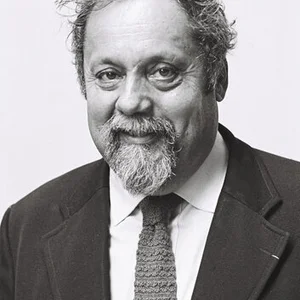

Viktor Hamburger was a German-American developmental biologist. His work on the development of the nervous system in the chicken embryo contributed decisively to the discovery of nerve growth factor (NGF), which earned a Nobel Prize awarded to his collaborators.
Viktor Hamburger(1900 — 2001)
Viktor Hamburger
États-Unis, Allemagne
5 min read
Frequently asked questions
Key Facts
- Born in 1900 in Landeshut (Silesia), trained at the University of Freiburg under Hans Spemann
- Having emigrated to the United States in 1932, he fled Nazi Germany and joined Washington University in St. Louis
- His research on the chicken embryo established the role of target tissues in the development of neurons
- His collaboration with Rita Levi-Montalcini led to the discovery of nerve growth factor (NGF) in the 1950s
- Having died in 2001, he left his mark on nearly a century of neuroembryology
Works & Achievements
Hamburger shows that the development of the nervous system depends on the peripheral organs it innervates, laying the foundations of modern neuro-embryology.
With Rita Levi-Montalcini and later Stanley Cohen, his research leads to the discovery of NGF, one of the great advances in 20th-century biology.
The universal standard for describing chick embryo development, still used in laboratories around the world.
A reference textbook that trained generations of researchers in the techniques of embryonic microsurgery.
A historical work in which Hamburger passes on the legacy of German experimental embryology.
Anecdotes
Viktor Hamburger fled Nazi Germany in 1932 thanks to a Rockefeller fellowship: Jewish and an opponent of the regime, he was dismissed from the University of Freiburg and rebuilt his entire career in the United States, at Washington University in St. Louis.
It was he who invited Rita Levi-Montalcini to join him in St. Louis after reading her work. Together they discovered nerve growth factor (NGF), but it was she, and not he, who received the Nobel Prize in 1986 — a decision that sparked debate within the scientific community.
To study how nerves develop, Hamburger performed astonishing micro-operations: he removed or added limb buds on chick embryos barely a few days old, then observed how the spinal cord adapted.
With his colleague Howard Hamilton, he established in 1951 a “table” describing the 46 stages of chick embryo development. More than 70 years later, laboratories around the world still use it daily: people simply call it the “HH stage”.
Hamburger worked almost until his death at the age of 100. A passionate enthusiast of ornithology and music, he embodied the image of the cultured 20th-century scholar, bridging classical European embryology and American molecular biology.
Primary Sources
The present series of normal stages was undertaken to provide a standard for the identification of stages of chick embryos, based on external characters which can be observed in the living embryo.
Hamburger, intrigued by the results Levi-Montalcini had obtained under makeshift conditions, invited her to come and verify and continue her experiments in his laboratory at Washington University.
In it, Hamburger traces the legacy of his teacher Hans Spemann and the birth of experimental embryology, of which he was one of the last great witnesses.
Key Places
Birthplace of Viktor Hamburger, then in Germany, today in Poland.
Where Hamburger studied under Hans Spemann and taught before being driven out in 1933.
Hamburger's first American stop, funded by a Rockefeller fellowship starting in 1932.
The laboratory where Hamburger spent his entire American career and welcomed Rita Levi-Montalcini and Stanley Cohen.
The city where Hamburger lived most of his life and where he died a centenarian in 2001.
Typical Objects

Hamburger's favorite study material: the chicken embryo, accessible through a window cut into the shell, makes it possible to observe development live.

An instrument allowing micro-operations on embryos: the removal or grafting of limb buds just a few millimeters in size.

Needles, glass lances, and microscissors custom-made to remove or transplant fragments of an embryo without destroying them.

Thin slices of embryo mounted on glass slides and dyed to count the neurons of the spinal cord under the microscope.

An oven keeping eggs at 38 °C to synchronize the development of the embryos studied in the laboratory.

The notebook where Hamburger recorded drawings, measurements, and embryo stages, the basis of the famous HH table.
School Curriculum
Vocabulary & Tags
Key Vocabulary
Tags
Daily Life
Morning
Hamburger arrived early at his laboratory at Washington University. He often began by cutting a “window” in the shell of incubated eggs in order to examine the embryos under the microscope before the heat of the day made them fragile.
Afternoon
The afternoon was devoted to delicate micro-operations — grafts or ablations on embryos just a few days old — followed by the preparation of histological sections. He discussed the results at length with his collaborators, among them Rita Levi-Montalcini.
Evening
In the evening, Hamburger read, wrote his papers, and kept up an abundant scientific correspondence. A music lover and bird enthusiast, he also devoted time to music and ornithology.
Food
Like an American academic of the mid-twentieth century, he ate simple meals, often on campus or at home. Born in Germany, he kept a taste for European cooking without excess.
Clothing
Hamburger wore the sober suit and tie of the professors of his time, covered with a white lab coat when handling the embryos.
Housing
He lived in a comfortable house in the residential neighborhoods of St. Louis, near the university where he spent nearly seventy years.
Historical Timeline
Period Vocabulary
Liens externes & ressources
Références
Œuvres
Travaux sur la mort cellulaire neuronale dans la moelle épinière
années 1930-1940
Collaboration sur le facteur de croissance nerveuse (NGF)
1947-1953
Table des stades Hamburger-Hamilton
1951
Manual of Experimental Embryology
1942
The Heritage of Experimental Embryology: Hans Spemann and the Organizer
1988