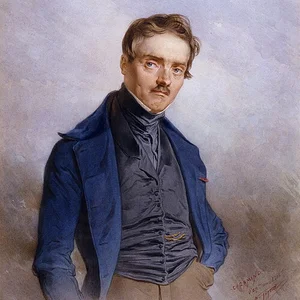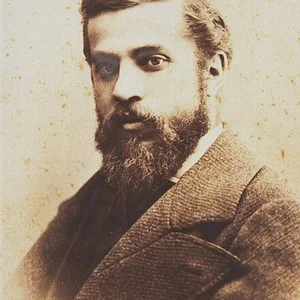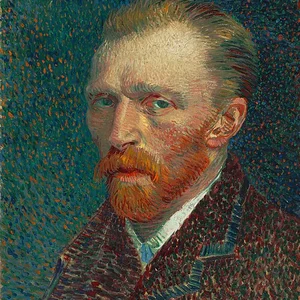

A Dutch painter of the 19th century, Vincent van Gogh is one of the towering figures of Post-Impressionism. Known for his expressive canvases with intense colors and distinctive brushwork, he revolutionized modern art despite receiving little recognition during his lifetime.
Frequently asked questions
Famous Quotes
« I dream my painting, and then I paint my dream.»
« I am still far from being what I want to be, but with God's help I shall succeed.»
« One sees clearly only with the heart. What is essential is invisible to the eye.»
Key Facts
- 1880: Decides to become an artist and begins his artistic training in Brussels
- 1886: Moves to Paris, where he discovers Impressionism and Pointillism
- 1888: Paints 'The Starry Night' and 'Sunflowers' in Arles, his most celebrated works
- 1890: Dies in Auvers-sur-Oise on July 29, leaving a legacy of more than 2,000 works
- 1889: Creates his most iconic works during his stay at Saint-Paul-de-Mausole
Works & Achievements
One of his most celebrated works, depicting a swirling night sky above a village. This canvas perfectly embodies his Expressionist style, with intense colors and dynamic brushstrokes.
A series of paintings showing sunflowers in a vase, exploring the intensity of yellows and oranges. These works symbolize his fascination with natural light and have become icons of modern art.
A depiction of his bedroom in Arles, rendered with a distinctive perspective and warm colors. This canvas reveals the importance of personal and emotional space in his work.
A nocturnal landscape showing the Rhône river illuminated by stars and the reflections of city lights. The work demonstrates his ability to transform an ordinary scene into a poetic creation.
A depiction of the church at Auvers-sur-Oise, featuring a distinctive architectural perspective and expressive colors. Painted shortly before his death, it reflects his mature style and his interest in buildings.
A floral composition executed during his stay at the Saint-Paul-de-Mausole asylum, showing irises in vibrant colors. This series attests to his artistic productivity despite his personal struggles.
A series of self-portraits painted in Paris and Provence, exploring different styles and expressions. These works offer personal introspection and serve as visual documents of his artistic evolution.
Anecdotes
In 1888, Van Gogh cut off part of his left ear during an argument with his friend Paul Gauguin in Arles. Although the exact details remain debated by historians, this event marked a dramatic turning point in his life and revealed his growing mental illness. This act of self-mutilation shocked those around him and accelerated his social isolation.
Vincent van Gogh painted the majority of his major works in just ten years, between 1880 and 1890. Before that, he tried several careers: Protestant pastor, coal miner, and art dealer at his uncle's firm. This late shift to painting at the age of 27 shows his determination to find his true calling despite all obstacles.
Van Gogh sold only one painting during his lifetime: a canvas titled 'The Red Vineyard'. Despite his artistic genius, he never achieved commercial success and relied financially on his brother Theo, an art dealer who regularly sent him money to survive.
During his stay at the Saint-Paul-de-Mausole psychiatric asylum in Saint-Rémy-de-Provence in 1889, Van Gogh painted around 150 works in a single year. Among them is 'The Starry Night', one of his most famous creations, painted from memory in his asylum room.
Van Gogh wrote more than 800 letters over the course of his life, mostly to his brother Theo. These correspondences, discovered after his death, are an invaluable historical source on his creative process, emotional states, and revolutionary vision of art — giving historians a much deeper understanding of his thinking.
Primary Sources
I dream my painting and then I paint my dream. I want to paint men and women with that something of the eternal which the halo used to symbolize.
I am always in search of the true colour. My paintings have a life of their own — they breathe through the paint I lay on the canvas with a kind of frenzy.
Work absorbs me completely. I paint all day long and by evening I am so exhausted that I nearly fall asleep at the dinner table.
One only paints well what one truly understands. And the subject is infinitely interesting when one is dealing with figures of a new kind.
Key Places
Dutch village where Vincent van Gogh was born in 1853. His father was a pastor in this small municipality in Brabant, which shaped van Gogh's humble and religious roots.
City where van Gogh lived and studied art from 1882 to 1883. There he received formal artistic training and painted his earliest works, including studies of landscapes and figures.
The French capital where van Gogh lived from 1886 to 1888. There he discovered Impressionism, met fellow artists such as Paul Gauguin, and developed his distinctive personal style.
Town in the south of France where van Gogh lived from 1888 to 1889 and created some of his most celebrated works, including the Sunflowers series and The Starry Night over the Rhône.
Psychiatric asylum in Saint-Rémy-de-Provence where van Gogh voluntarily committed himself in 1889 following his conflict with Gauguin. There he painted The Starry Night and approximately 150 other works.
Small French village near Paris where van Gogh spent his final weeks in 1890. He painted intensely there before his death on 29 July, producing around 70 works in just two months.
Typical Objects
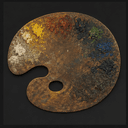
A color-mixing tool used by Van Gogh to prepare his intense, expressive hues. The palette was central to his revolutionary artistic technique, characterized by pure, vibrant colors.
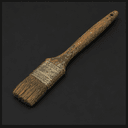
One of Van Gogh's most iconic tools, recognizable through his visible, textured brushstrokes. These brushes allowed him to apply paint thickly, a hallmark of his Post-Impressionist style.
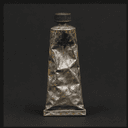
A 19th-century innovation that allowed artists to paint outdoors and on the move. Van Gogh made extensive use of this new technology to produce his many landscape studies and still lifes.
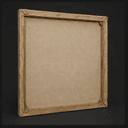
Van Gogh's preferred support for his major works. Canvas was the ideal medium for expressing his intensely colorful and turbulent pictorial world.
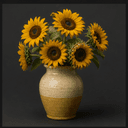
An iconic subject Van Gogh returned to again and again, symbolizing his fascination with the color yellow and with light. This still life showcases his ability to transform an everyday subject into an Expressionist work of art.
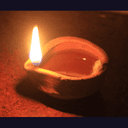
An everyday object of the 19th century, depicted in one of his Provençal bedroom scenes. The lamp reflects his interest in artificial light and domestic intimacy within his compositions.
📷 CC BY-SA 3.0 · Wikimedia Commons ↗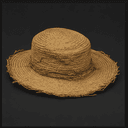
An accessory worn by Van Gogh during his time in Provence, visible in several of his self-portraits. It symbolizes his immersion in nature and his practice of painting outdoors.

The medium for his many drawings and preparatory studies made throughout his life. Van Gogh used his notebooks to quickly explore ideas before transposing them into paint.
📷 Domaine public · Wikimedia Commons ↗School Curriculum
Vocabulary & Tags
Key Vocabulary
Daily Life
Morning
Van Gogh rose early, often before dawn, to make the most of natural light. He ate a frugal breakfast — usually coffee and bread — then went straight to his easel or began preparing his canvases and pigments.
Afternoon
Afternoons were devoted to intensive painting, either outdoors or in the studio depending on the weather. Van Gogh worked in a frenzy, focused on capturing the effects of light and color that fascinated him, sometimes without stopping until evening.
Evening
In the evenings, Van Gogh would often retreat to local cafés, observing the customers and the atmosphere, sketching or talking about art. He would then return to his modest lodgings — usually alone — and spend time on correspondence, including his famous letters to his brother Theo.
Food
His diet was very simple and often insufficient, a reflection of his chronic poverty. Van Gogh made do with bread, cheese, eggs, and cheap fruits and vegetables, washed down with black coffee. His meals were irregular, frequently sacrificed in favor of buying painting supplies.
Clothing
Van Gogh wore worn, paint-stained clothes that reflected his life as an impoverished bohemian. He was known for his unkempt appearance — a scruffy reddish beard and the blue work jacket that became an iconic part of his image.
Housing
He lived in modest furnished rooms, often in working-class neighborhoods in Antwerp, Paris, Arles, and Auvers-sur-Oise. His rooms were tiny and sparsely furnished, but served as working studios where he would pile up canvases and painting supplies.
Historical Timeline
Period Vocabulary
Visual Style
Un style post-impressionniste caractérisé par des coups de pinceau épais et expressifs, des couleurs saturées et vibrantes qui émanent l'émotion, et une composition dynamique et tourbillonnante typique de l'univers pictural de Van Gogh.
Sound Ambience
Une ambiance immersive de l'atelier du peintre au cœur de la Provence, mêlant les sons intimes de la création artistique avec la sérénité de la nature méditerranéenne, évoquant la solitude créative et l'intensité émotionnelle qui caractérisaient la vie de van Gogh.
Liens externes & ressources
Références
Œuvres
La Nuit étoilée
1889
La Chambre à Arles
1888
Nuit étoilée sur le Rhône
1888
L'Église d'Auvers
1890
Portrait de l'Artiste
1887-1889