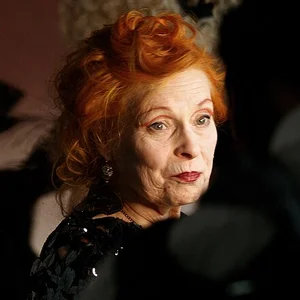

British fashion designer (1941–2022)
Vivienne Westwood(1941 — 2022)
Vivienne Westwood
Royaume-Uni
7 min read
Frequently asked questions
Key Facts
Works & Achievements
Westwood co-founded SEX, a fashion boutique in London that became the cradle of punk fashion. She created revolutionary garments — torn trousers, safety pins, leather — that became symbols of punk rebellion and transformed fashion into a political act.
Westwood reinvented the corset as a piece of modern haute couture, exposing it and pairing it with structured tailoring. This approach revolutionised the way designers treated the female body in fashion.
Her collections from the 1980s — Harris Tweed, the mini-crini, punk tartan — fused British heritage with punk and postmodern aesthetics. Westwood became a leading figure in London haute couture.
Westwood channelled her energy into political engagement, championing LGBT rights, anti-militarist causes, and environmental justice. Her ecological activism became central to her identity as a designer.
Westwood launched a global campaign for climate action, bringing environmental messages onto the runway and using her public profile to raise awareness of environmental and social crises.
Her autobiographical work documents her journey from punk to ecological activism, offering a first-hand perspective on six decades of cultural revolution and militant campaigning.
Anecdotes
In 1971, Vivienne Westwood and Malcolm McLaren opened their shop 'Let It Rock' on King's Road in London. It was in this small store that they began creating the provocative clothes that would define the punk movement: safety pins, chains, and torn fabric. The shop quickly became the headquarters of the British punk scene.
Vivienne Westwood created the famous punk tartan in the 1970s, reinventing the traditional Scottish pattern with aggressive cuts and metal accessories. This blend of British tradition and punk rebellion became one of her most recognisable signatures and influenced global fashion for decades.
In 1989, at the age of 48, Vivienne Westwood walked the runway at her own Paris fashion show wearing one of her iconic creations: a tartan corset with a globe on the chest. This symbolic gesture marked her shift towards a more activist approach to fashion, with a strong commitment to environmental causes.
Vivienne Westwood made the Vivienne corset a centrepiece of her 1990s collections. Unlike traditional corsets, hers freed the body rather than constraining it, turning it into a symbol of punk feminism: it celebrated female sexuality without subjugating women.
Until her death in 2022, Vivienne Westwood used her fame to champion environmental causes. She created collections from recycled materials and organised protests against climate change, proving that fashion can be a political act and a tool of resistance.
Primary Sources
Punk wasn't a music, it was an attitude. We wanted to shock, to disturb respectable people. Fashion was our political weapon to say that the system was rotten.
Real rebellion today means saving the planet. I no longer buy new clothes — I've been wearing the same ones for years. Overproduction is a crime against the environment.
Our customers need to be involved in the creation. They cut, assemble, transform the clothes. Fashion should not be passive but participatory and subversive.
Stop Climate Chaos. I call on all governments to act now. Sustainable fashion is not an aesthetic choice — it is an urgent moral and ecological necessity.
Key Places
Vivienne Westwood's birthplace in England. It was in this small town in the north-west that she was born in 1941 — the woman who would become an icon of punk fashion and environmental activism.
The iconic street where Vivienne Westwood opened her first shop, 'Let It Rock', in 1971, followed by 'Sex' in 1974. The location became the cradle of the London punk movement and a showcase for her revolutionary designs.
The neighbourhood where Vivienne Westwood settled and established her design studios throughout her career. She developed her collections there and coordinated her work as both a designer and an environmental activist.
Vivienne Westwood's later home. She spent her final years there, continuing her environmental advocacy and her critiques of the industrial fashion system.
The world's fashion capitals where Vivienne Westwood presented her collections at international runway shows, asserting her punk aesthetic and her values of sustainable and ethical fashion on the world's most prestigious catwalks.
The museum that has honoured Vivienne Westwood's legacy through major retrospective exhibitions. Her iconic pieces are held in its collection as testament to her revolutionary influence on fashion and culture.
Typical Objects

Vivienne Westwood's signature garment combining traditional corsetry with rebellious Scottish tartan fabrics. A symbol of her fusion of seduction and punk rebellion, democratizing the corset as an accessible fashion piece.

Iconic accessory of the 1970s punk movement, used to assemble and decorate clothing. Represents the DIY and subversive aesthetic of the London punk scene that Westwood co-founded.

Punk trousers featuring multiple zips and chains, created by Westwood in her eponymous boutique. Embodies the provocation and break with traditional dress codes of the 1970s.

T-shirts with shocking and political prints sold at Westwood's boutique on King's Road. A vehicle for punk communication and social activism, marking the union between fashion and protest.

Westwood's signature featuring her distinctive orb motif, a symbol of the globe and her ecological convictions. Represents the brand's evolution toward environmental and political engagement.

Core materials in Westwood's work, reusing, transforming and repurposing textiles. A manifesto of her early ecological commitment and critique of fashion consumerism.

Emblematic punk accessory in Westwood's designs, blending luxury and rebellion. Symbolizes her approach of subverting haute couture codes through the hybridization of styles.

Westwood's creations featuring massive, deconstructed soles influenced by punk and androgynous aesthetics. An icon of the 1970s–1980s representing freedom of movement and transgression.
School Curriculum
Vocabulary & Tags
Key Vocabulary
Daily Life
Morning
Vivienne Westwood begins her day in her London studio, reviewing sketches and fabrics prepared by her team. She drinks a strong coffee while scanning the press to keep up with political and social news — a constant source of inspiration for her activist designs.
Afternoon
The afternoon is devoted to creation and collection oversight. She takes part in fitting sessions, discusses details with collaborators and models, and refines every aspect of her revolutionary designs. She may also give press interviews or attend meetings connected to her activist campaigns.
Evening
In the evenings, Vivienne attends cultural events, fashion shows, or environmental demonstrations. She moves in London's artistic and activist circles, using these occasions to spread her ecological ideas and voice her opposition to overconsumption.
Food
Her diet reflects her ethical convictions: she favours simple, locally sourced foods, often vegetarian. As an environmental activist, she avoids excess and embraces responsible consumption, consistent with her anti-conformist stance.
Clothing
Vivienne wears her own designs — a distinctive mix of punk influences, Scottish tartan, and provocative details. Her look is deliberately unconventional: structured garments, bold accessories, and a style that challenges the norms of mainstream fashion.
Housing
She lives and works in London, at the heart of the British arts scene. Her live-work studio combines creative space and home, reflecting her commitment to an authentic way of life — far from ostentatious luxury, with an emphasis on functionality and art.
Historical Timeline
Period Vocabulary
Visual Style
Un style visuel rebelle et sophistiqué fusionnant l'esthétique punk raw des années 70-80 avec la haute couture intemporelle. Compositions graphiques dynamiques associant géométries agressives, tartans, typographies provocantes et collages DIY, dans une palette contrastée de noir profond et de couleurs électriques.
Sound Ambience
Une ambiance sonore urbaine et contestataire mêlant punk rock agressif, bruits d'un atelier de mode londonien effervescent, et une charge politique manifeste, incarnant l'esprit rebelle et créatif de la révolutionnaire de la mode.
Liens externes & ressources
Références
Œuvres
Punk Fashion Collection
1975-1979
Corsetry and Tailoring
1980s
Worlds End Collection
1982-1989
Activism Against Injustice
1980s-2022
Climate Revolution Campaign
2012-2022
Documentation 'Vivienne Westwood: A Life'
2021