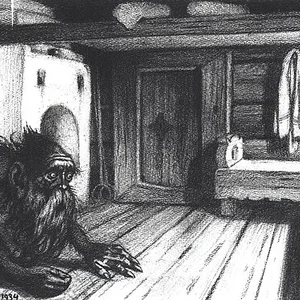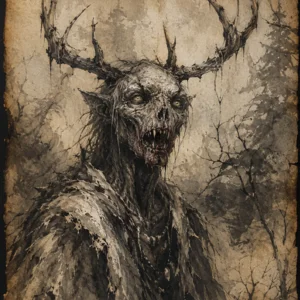

A malevolent spirit from Algonquian traditions (Ojibwe, Cree), the Wendigo embodies insatiable hunger, winter madness, and cannibalism. A mythic creature said to transform anyone who consumes human flesh into a monster, it symbolizes fundamental taboos and the dangers of winter isolation.
Wendigo
Wendigo
8 min read
Frequently asked questions
Key Facts
- Present in the oral traditions of Algonquian peoples (Ojibwe, Cree, Algonquin) for centuries
- Embodies extreme famine and madness associated with the harsh winters of North American boreal forests
- According to belief, any human who consumes human flesh risks transforming into a Wendigo
- "Wendigo psychosis" is a culture-bound syndrome described by anthropologists in the 19th and 20th centuries
- Represents a fundamental social warning against cannibalism and destructive individualism
Works & Achievements
A body of stories passed down orally from generation to generation by the Ojibwe, Cree, and Anishinaabe nations. These narratives constitute the primary source of the myth, combining moral warnings, explanations of food taboos, and traditional cosmology.
The first European written corpus to mention cannibalistic spirits in Algonquian traditions. Although filtered through the Christian perspective of the missionaries, these texts are a valuable historical record of the myth's vitality in the 17th century.
A British horror story that introduced the Wendigo myth to modern Western literature. Though fictional, it played a significant role in spreading awareness of the mythological figure to a broad audience.
A collection of academic studies documenting 'Windigo psychosis' as a culture-bound syndrome. This body of work established the myth within the scientific literature of anthropology and cross-cultural psychiatry.
In his Mythologiques series, Lévi-Strauss analyzes myths of cannibalism and transformation among Native American societies, offering a structuralist framework for understanding the Wendigo's place within Algonquian cosmologies.
Anecdotes
Wendigo psychosis is a culture-bound syndrome documented by anthropologists as early as the 19th century: some members of Algonquian communities, after a particularly harsh winter, would develop an obsessive fear of becoming cannibals or believed they were transforming into a Wendigo. These episodes were treated by specialized shamans called upon to drive the malevolent spirit from the afflicted person's body.
In Ojibwe tradition, the Wendigo is described as a gigantic being whose body of ice and snow grows larger with each victim it devours, yet is never satisfied. The more it eats, the hungrier it becomes — a powerful image that portrays insatiability as an absolute curse, a moral warning against greed and excess.
In the 17th century, French Jesuit missionaries in the Great Lakes region recorded accounts of individuals accused of being possessed by the Wendigo in their Relations. These writings represent one of the earliest European transcriptions of the myth, blending ethnographic observation with Christian interpretations of the 'cannibal demon.'
Among several Cree nations, a community council could, in extreme cases of winter famine, authorize the execution of an individual deemed possessed by the Wendigo before they could commit irreversible acts. This protocol, documented by ethnologists such as Marius Barbeau, demonstrates that the myth served a real social function in regulating behavior during times of survival crisis.
Primary Sources
The Savages of these lands fear above all else a spirit they call Ouindigou, who seizes men in winter and fills them with a furious desire to eat their fellow men.
The Windigo or Witiko is a malignant giant of the north, a spirit of winter and famine, who devours human flesh and grows larger with each victim, never finding satisfaction.
The Wendigo represents in Algonquian thought the supreme moral danger: the transgression of the cannibalism taboo, an act that erases humanity and transforms a person into an immortal and suffering beast.
Several cases are recorded among Cree and Ojibwe communities where individuals, during severe winters, became convinced they had been transformed into Windigo. Shamanic intervention was the primary therapeutic response.
Key Places
The ancestral homeland of the Wendigo myth, this vast coniferous forest stretching from Manitoba to Ontario is the setting in which the Cree and Ojibwe nations developed their traditions. The extreme winters and isolation of hunting parties made the myth especially vivid.
The heart of the historic Algonquian territory, this region is the cradle of the Anishinaabe and Ojibwe nations whose oral traditions constitute the richest sources on the Wendigo. Its lakes and forests form an environment that is both nurturing and threatening depending on the season.
A Hudson's Bay Company trading post and Jesuit mission on the shore of James Bay, this is one of the places where the first historical cases of 'Wendigo psychosis' were documented among the surrounding Cree communities.
A Cree community in northern Quebec whose oral traditions preserve some of the most complete versions of the Wendigo myth, studied extensively by twentieth-century anthropologists.
Liens externes & ressources
Références
Œuvres
Traditions orales algonquiennes sur le Wendigo (corpus oral)
Depuis des millénaires
Relations des Jésuites (mentions du Wendigo)
1636-1672
The Wendigo — Algernon Blackwood (nouvelle)
1910
Windigo Psychosis — Compte rendus anthropologiques (Hallowell, Teicher)
1934-1960
Encyclopédie des mythologies amérindiennes — travaux de Claude Lévi-Strauss
1964-1971