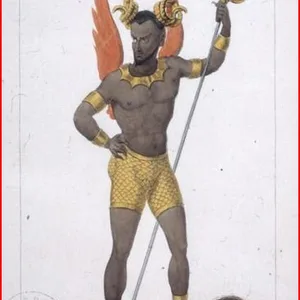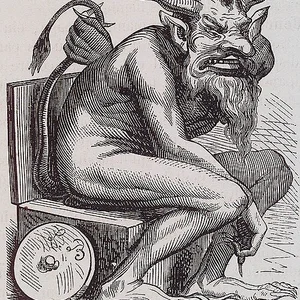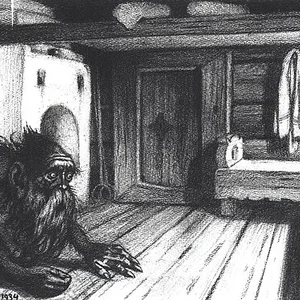

A male demon from medieval demonology, the incubus was believed to have intercourse with women while they slept. It embodied the fear of sexuality and sin in medieval Christian thought. Its female counterpart is the succubus.
Incubus
Incubus
10 min read
Frequently asked questions
Key Facts
- Mentioned as early as Late Antiquity, the concept of the incubus was systematized during the Middle Ages by Christian theologians
- Saint Augustine (5th century) already refers to demons mating with humans in The City of God
- The Malleus Maleficarum (1486) devotes lengthy sections to incubi and succubi in the context of the witch hunts
- Thomas Aquinas (13th century) attempted to explain rationally how incorporeal demons could father children
- Belief in incubi was often used to explain illegitimate births or unexplained pregnancies during the Middle Ages
Works & Achievements
Monumental work of political theology in which Augustine explicitly mentions incubi, granting them doctrinal legitimacy within the Christian tradition. This text is the first major ecclesiastical authority to seriously address their existence.
Major theological synthesis of the Middle Ages in which Thomas Aquinas devotes entire articles to sexual demons. His explanation of the biological mechanism of incubi (collection and transmission of semen) was accepted as doctrine for centuries.
Inquisitorial manual that exhaustively codifies the doctrine on incubi and succubi. Translated into several languages and reprinted many times, it was the primary tool of witchcraft trials and led to the condemnation of thousands of people.
Cycle of literary texts attributing an incubus origin to Merlin, illustrating how the figure of the sexual demon was integrated into popular and courtly literature. Geoffrey of Monmouth (*Historia Regum Britanniae*, 1138) is one of the earliest sources of this tradition.
Epic poem describing the architecture of the medieval Hell, abode of incubi and other demons. Although Dante does not explicitly name incubi, his vision of Hell structures the collective imagination in which they operate.
French legal and theological treatise dealing with sabbaths and relationships between witches and incubi. Written by a judge who himself condemned accused persons, it illustrates the persistence of beliefs in incubi into the early modern period.
Anecdotes
In medieval Christian tradition, the incubus was considered a demon capable of taking the form of an attractive man to deceive sleeping women. Theologians seriously debated its nature: Saint Thomas Aquinas, in the 13th century, proposed that incubi collected human seed to transmit it, since they themselves possessed none. These debates show how seriously demonology was taken as an intellectual discipline in the Middle Ages.
Merlin, the famous enchanter of Arthurian legend, was said to have been fathered by an incubus according to some medieval versions of the tale. This demonic origin explained his magical powers while allowing Christian authors to portray him as a morally ambiguous character. Geoffrey of Monmouth and other medieval chroniclers perpetuated this tradition in the 12th century.
The *Malleus Maleficarum* (The Hammer of Witches), published in 1486 by two Dominican inquisitors, devotes extensive discussions to incubi and succubi. This witch-hunting manual, approved by a forged papal bull, asserts that sexual demons are responsible for many physical ailments. It was used during witchcraft trials and helped condemn thousands of people.
The incubus is not unique to medieval Christianity: similar figures appear in many cultures. In ancient Mesopotamia, the demon Lilitu (ancestor of Lilith) played a comparable role. In Arabic folklore, djinn could take a similar form. This universality reflects the human tendency to demonize unexplained nocturnal anxieties, such as what is now called sleep paralysis.
During the 16th and 17th centuries, in the great witch trials, many accused women confessed—often under torture—to having relations with incubus-type demons. These codified confessions reveal how belief in incubi was exploited by religious and judicial authorities to control sexual and marginal behavior, especially that of women deemed too independent or strange.
Primary Sources
It is a matter too generally affirmed for it to be impudent to deny, that the sylvans and fauns, commonly called incubi, have often shown themselves insolent toward women, and have desired and accomplished intercourse with them.
Demons who seduce men in the form of incubi or succubi can engender offspring. As succubi, they collect the seed of men; as incubi, they transmit it to women.
Incubi and succubi, demons who abuse men and women during their sleep, are an indisputable reality, confirmed by experience, by Holy Scripture, and by the authority of the holy doctors.
Certain perverted women, seduced by the illusions and phantasms of demons, believe they ride with Diana, goddess of the pagans, or with Herodias, in the night, on certain beasts, in the company of an innumerable multitude of women.
Demons are capable of taking on a bodily appearance and interacting physically with humans, especially at night, taking advantage of the vulnerability of sleep to corrupt souls and bodies.
Key Places
The original dwelling place of demons according to medieval Christian cosmology, Hell is the source from which incubi come to torment humans. Dante gives a famous description in the *Divine Comedy*, organized into circles according to the nature of sins.
A major center of the Cluniac monastic reform and a hub for producing theological texts on medieval demonology. The monks of Cluny helped spread theories about nocturnal demons throughout Christian Europe.
The city from which Heinrich Kramer and Jakob Sprenger, authors of the *Malleus Maleficarum*, launched their inquisitorial campaigns against witchcraft. Cologne was a major center of theoretical and practical demonology in the late 15th century.
The cradle of early demonological traditions that influenced the figure of the incubus. Babylonian cuneiform texts already describe nocturnal spirits (ardat lili, lilitu) that prey on sleeping men and women, direct ancestors of the medieval incubus.
The city where the *Malleus Maleficarum* was printed in 1486, thanks to Gutenberg's new technology. The spread of this treatise on incubi across Europe was made possible by Alsatian presses, greatly amplifying its influence.
Typical Objects

A learned or popular treatise listing the names, attributes, and methods of action of demons, including the incubus. These works circulated among clerics and inquisitors and codified official beliefs about sexual demons.

A protective object par excellence against nocturnal demons in the Middle Ages. Women fearing incubi kept blessed candles near their beds, believing that the sacred light warded off the forces of darkness.

A magical symbol from the Judeo-Christian tradition, believed to enable commanding and repelling demons. Used in exorcism rituals to neutralize incubi that possessed their victims.

A fundamental ritual weapon against demonic entities in the Middle Ages. Sprinkling a room with holy water was considered an effective way to drive away an incubus and purify the space defiled by its presence.

A Christian symbol placed above the bed as protection against nocturnal demonic visits. The power of Christ was believed to repel all evil beings, including tempting incubi.

In medieval iconography, demons like the incubus are sometimes depicted with broken chains, symbolizing their revolt against the divine order. These attributes remind us of their nature as fallen angels imprisoned in darkness.

A Christian sacrament by which the presumed victim of an incubus had to reveal their experience to the confessor priest. Confession allowed both the identification of possession cases and the reaffirmation of the Church's control over sexuality.
School Curriculum
Vocabulary & Tags
Key Vocabulary
Tags
Lieu
Daily Life
Morning
According to medieval tradition, the incubus loses its power at sunrise, forced to return to the darkness from which it came. Dawn represents a forced retreat for it, because the divine light symbolized by the sun repels it. Roosters, associated with the announcement of daybreak, were reputed to chase away nocturnal demons with their crowing.
Afternoon
In medieval demonological cosmology, incubi inhabit the air between the earth and the moon, an intermediate space populated by spirits according to Christianized Aristotelian physics. There they observe humans, waiting for the opportune moment—night and sleep—to act. Some theologians also attributed to them the power to cause nightmares and impure thoughts in broad daylight.
Evening
It is at nightfall that the incubus goes into action according to medieval beliefs. It takes advantage of women's sleep and vulnerability to visit them in a seductive or terrifying form. Nocturnal protection rites—holy water, crucifix, prayers to Saint Michael the Archangel—were practiced every evening to guard against its visits.
Food
As a spiritual and demonic being, the incubus does not feed on material food according to medieval demonology. It feasts on the vital and spiritual energy of its victims, leaving them exhausted and emaciated upon waking. Some texts mention that it also feeds on the sin and moral corruption it causes, growing in power as its victims sink into despair.
Clothing
In medieval iconographic representations, the incubus often appears naked or covered in dark fur, with animal attributes (horns, claws, bat wings, tail) recalling its bestial and demonic nature. Sometimes it takes the appearance of a handsome, elegantly dressed man to better deceive its victims, wearing dark and luxurious clothes evoking seduction and sin.
Housing
The incubus resides in the darkness of Hell or in the dark spaces between worlds—caves, deep forests, cursed places abandoned by men. In the medieval imagination, it also haunts the bedrooms and alcoves of castles and monasteries where it finds its victims. Cemeteries and crossroads, liminal places par excellence, were also associated with gatherings of demons.
Historical Timeline
Period Vocabulary
Visual Style
Le style visuel de l'incube s'inspire des enluminures médiévales et de la peinture gothique sombre : ombres dramatiques, rouges et bleus profonds sur fond de ténèbres, créature ailée et menaçante veillant sur une victime endormie sous la lueur d'une chandelle.
Sound Ambience
L'atmosphère sonore de l'incube est celle de la nuit médiévale angoissante : cloches sonnant les heures nocturnes, vent glacé dans les couloirs de pierre, prières chuchotées en latin et souffle d'une bougie vacillant dans l'obscurité.
Liens externes & ressources
Références
Œuvres
La Cité de Dieu (De Civitate Dei) — saint Augustin
413-426
Summa Theologica — Thomas d'Aquin
1265-1274
Malleus Maleficarum (Le Marteau des sorcières) — Kramer et Sprenger
1486
Histoire de Merlin — compilations arthuriennes médiévales
XIIe-XIIIe siècles
La Divine Comédie — Dante Alighieri
1304-1321
Discours des sorciers — Henri Boguet
1602