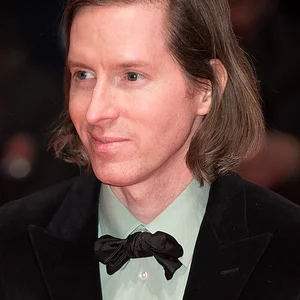

Wes Anderson is an American filmmaker, screenwriter, and producer born in 1969 in Texas. Recognizable by his highly codified visual style — symmetry, pastel palettes, and meticulous framing — he is the author of bittersweet comedies that have become cult classics.
Wes Anderson(1969 — ?)
Wes Anderson
États-Unis
6 min read
Frequently asked questions
Key Facts
- Born on May 1, 1969, in Houston, Texas.
- Directs his first feature film, Bottle Rocket, in 1996.
- Achieves critical success with The Royal Tenenbaums (2001) and then The Darjeeling Limited (2007).
- Releases The Grand Budapest Hotel in 2014, which wins four Oscars (including score, production design, costumes, and makeup).
- Develops stop-motion animated cinema with Fantastic Mr. Fox (2009) and Isle of Dogs (2018).
Works & Achievements
First feature film, a comedy about three amateur thieves; it already sets the bittersweet tone and the rapport with Owen Wilson.
Portrait of an eccentric high-schooler; the film establishes Anderson's style and launches his long collaboration with Bill Murray.
Chronicle of a family of fallen child prodigies; a critical success nominated for the Oscar for Best Original Screenplay.
A slapstick seafaring adventure inspired by Jacques-Yves Cousteau, with meticulously crafted visuals.
First stop-motion animated film, adapted from the novel by Roald Dahl; praised for its craftsmanship.
A story of first love between two runaway children; the opening film of the Cannes Film Festival.
An adventure comedy inspired by Stefan Zweig; four Oscars in 2015 and the Grand Jury Prize at Berlin.
Second stop-motion film, a fable about exiled dogs; the opening film of the Berlin Film Festival.
Anecdotes
It was on the campus of the University of Texas at Austin that Wes Anderson met the actor Owen Wilson, in a playwriting class. The two friends wrote the screenplay for *Bottle Rocket* together, first shot as a black-and-white short film (1994), then as a feature film in 1996. This friendship would give rise to an entire “family” of loyal actors.
Anderson's style is so recognizable that it has become a game: his shots are almost always perfectly symmetrical, with the character placed at the exact center of the frame, as in a painting. The colors are carefully chosen pastel shades (pink, yellow, sea green), and the camera often moves at right angles.
For *Fantastic Mr. Fox* (2009) and *Isle of Dogs* (2018), Anderson did not use computer-generated imagery but the technique of frame-by-frame animation (stop-motion): puppets are moved a few millimeters between each photograph. It takes entire days of work to produce a few seconds of film.
The set of *The Grand Budapest Hotel* (2014) was built inside a disused former department store in the town of Görlitz, Germany. The film, inspired by the Austrian writer Stefan Zweig, won four Oscars in 2015, including those for best production design and best costume design.
The actor Bill Murray has appeared in nearly all of Anderson's films since *Rushmore* (1998), sometimes for a brief cameo lasting only a few seconds. From film to film, the director thus assembles a recurring troupe that also includes Owen Wilson, Jason Schwartzman, Tilda Swinton and Willem Dafoe.
Primary Sources
I stole from Stefan Zweig. I had never read this author, and I discovered an entire universe. The character of Monsieur Gustave and the structure of the film owe a great deal to him.
I like to set the camera perfectly straight, facing the subject, and to compose the image like a frame. It's a habit I can't shake, and one that amuses me.
We shot with real puppets, moving them just a tiny bit with each take. It's slow, handcrafted work, but you can feel the artisan's hand in every shot.
Key Places
Wes Anderson's hometown, where he grew up and later shot the locations for his first film, “Bottle Rocket.”
Where he studied philosophy, met Owen Wilson, and wrote his first screenplays.
A border town where the set of “The Grand Budapest Hotel” was built inside a disused department store.
The city where Anderson lives part of the year, and which inspired “The French Dispatch,” a tribute to the French press and French culture.
A major event in world cinema where several of Anderson's films have premiered, including “Moonrise Kingdom” (which opened the 2012 festival) and “Asteroid City.”
Typical Objects

The director's central tool, which Anderson often places perfectly upright and head-on to achieve his famous symmetrical framing. He favors clean movements: lateral tracking shots and right-angle pans.

A small articulated figurine moved frame by frame to create the illusion of movement. Anderson used them for the fox in *Fantastic Mr. Fox* and the dogs in *Isle of Dogs*.

A series of drawings planning out each shot of the film before filming begins. Anderson draws and animates highly detailed storyboards himself, since his style relies on meticulous, millimeter-perfect composition.

A range of soft hues (powder pink, pale yellow, seafoam green) that defines Anderson's visual universe. Sets, costumes, and props are all tuned to this palette as if in a painting.

A scaled-down reconstruction of a building or a landscape, like the pink hotel in *The Grand Budapest Hotel*. Filmed with great care, it heightens the handcrafted, “dollhouse theater” feel of the films.

The text containing the dialogue and stage directions, often co-written by Anderson with a close collaborator (Owen Wilson, Roman Coppola, Noah Baumbach). His films have been nominated several times for the Academy Award for Best Screenplay.
School Curriculum
Vocabulary & Tags
Key Vocabulary
Tags
Daily Life
Morning
A contemporary director, Anderson splits his morning between writing screenplays — often jointly with a co-writer — and the visual preparation of his films. He draws highly detailed storyboards, since nothing in his shots is left to chance.
Afternoon
The afternoon is devoted to collaborative work: scouting locations, meeting with the head costume and set designers, choosing colors and props. On set, he directs his troupe of loyal actors in an atmosphere described as family-like.
Evening
In the evening, Anderson watches classic films that feed his imagination (French cinema, old comedies) and fine-tunes the editing. During festivals like Cannes or Berlin, his evenings revolve around screenings and meetings with the press.
Food
Living between the United States and Europe, particularly Paris, Anderson enjoys French cuisine and café culture. Food, refined and colorful, often appears on screen as well, like the “Mendl's” pastries in *The Grand Budapest Hotel*.
Clothing
Anderson is known for his polished, slightly retro look: corduroy suits, fitted jackets and warm tones, in a style that echoes the aesthetic of his films.
Housing
He divides his life between New York and Paris, where he resides part of the year. His interiors, like his film sets, are renowned for their vintage elegance and attention to detail.
Historical Timeline
Period Vocabulary
Liens externes & ressources
Références
Œuvres
Bottle Rocket
1996
La Famille Tenenbaum
2001
La Vie aquatique
2004
The Grand Budapest Hotel
2014