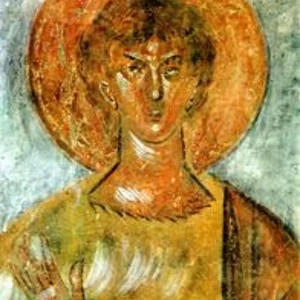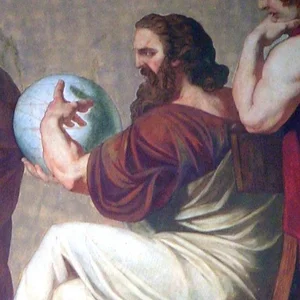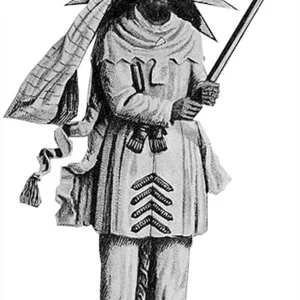

Iranian prophet and founder of Zoroastrianism, one of the oldest monotheistic religions. He is believed to have lived between 1500 and 550 BCE and received divine revelations from Ahura Mazda. His teachings are recorded in the Gathas, sacred hymns that form part of the Avesta.
Zoroaster(627 av. J.-C. — 550 av. J.-C.)
Zoroaster
7 min read
Frequently asked questions
Key Facts
- Believed to have lived between 1500 and 550 BCE — dates heavily debated by historians
- Founded Zoroastrianism, a dualistic religion opposing Ahura Mazda (Good) and Ahriman (Evil)
- Composed the Gathas, seventeen hymns in Old Avestan that form the core of the Avesta
- His religion became the state religion under the Achaemenids (6th–4th centuries BCE)
- Major influence on late Judaism, Christianity, and Islam (concepts of Last Judgment, heaven/hell)
Works & Achievements
Seventeen sacred hymns in Old Avestan directly attributed to Zoroaster, forming the spiritual and literary heart of Zoroastrianism. These poems of great beauty set out his dualistic theology and his ethical vision of the world.
A liturgical section of the Avesta written in archaic Avestan prose, composed by Zoroaster's earliest followers. It extends the teachings of the Gathas and stands as one of the oldest Indo-Iranian prayer texts in existence.
Zoroaster is recognized as the founder of one of the earliest monotheistic religions in history, introducing the concept of a single creator deity, moral free will, and the judgment of the soul after death.
Zoroaster transformed the polytheistic Indo-Iranian religion by elevating Ahura Mazda to the status of sole supreme deity and demoting the other gods (daevas) to the rank of demons. This theological revolution stands as one of the most significant of the ancient world.
Anecdotes
According to Zoroastrian tradition, Zarathustra received his first revelation at the age of 30, by the bank of a river, when a luminous being named Vohu Manah (Good Thought) appeared to him and led him into the presence of Ahura Mazda. This vision transformed the young priest into a prophet and marked the beginning of a new religion.
Zarathustra is said to have preached for ten years without winning any converts except his own cousin. It was only when he reached the court of King Vishtaspa, in northeastern Iran, that he managed to persuade the ruler — reportedly after miraculously healing the king's favorite horse. Vishtaspa became his first great patron.
The Gathas, the sacred hymns attributed to Zarathustra himself, are written in an archaic language closely related to Vedic Sanskrit. These texts rank among the oldest examples of Indo-Iranian religious poetry and constitute one of the most precious linguistic documents of the ancient world.
The death of Zarathustra remains shrouded in mystery: according to some traditions, he was murdered by a rival priest while officiating before the sacred fire. Other accounts describe him dying in a state of mystical ecstasy at the age of 77 — a symbolically significant number in Zoroastrian tradition.
Zoroastrianism introduced one of the earliest structured religious dualisms in history: the cosmic struggle between Ahura Mazda (the Wise Lord) and Angra Mainyu (the Destructive Spirit). This conception of good versus evil profoundly influenced late Judaism, Christianity, and Islam — particularly the notions of paradise, hell, and the Last Judgment.
Primary Sources
I wish to speak to you of what the Holy One has taught me — it is the best word for mortals. Whoever obeys Ahura Mazda in heart and will, to him shall be granted health and immortality.
Zarathustra asked Haoma: Who are you, whose face is the most beautiful I have seen among corporeal creatures? Haoma replied: I am Haoma, O Zarathustra, the pure one, who keeps death at bay.
Zarathustra was born into the Spitama family, in Airyana Vaejah. From the moment of his birth, he burst into laughter — a sign of his prophetic nature — while demons fled before him.
The religion of Zarathustra is the straight path: good thought, good word, good deed. Whoever follows this path contributes to the victory of Ahura Mazda over darkness.
Ahura Mazda is great above all gods. It is he who created this earth, who created this sky, who created man, who created happiness for man.
Key Places
The mythical homeland and legendary birthplace of Zoroaster according to Zoroastrian texts, identified by some scholars with the region of present-day Azerbaijan or northern Afghanistan. It is here that the prophet is said to have received his first revelations.
An ancient city of Bactria sometimes identified as the center of Zoroaster's activity and the seat of King Vishtaspa's court. It is here that Zoroastrianism is believed to have achieved its earliest successes in spreading.
The ceremonial capital of the Achaemenid Empire, where Zoroastrianism served as the royal religion. Reliefs and inscriptions attest to the worship of Ahura Mazda under the successors of Cyrus II.
An Iranian city home to the Atash Bahram fire temple, one of the oldest sacred Zoroastrian fires still burning today. It is now the world center of the Zoroastrian community in Iran.
The site where Darius I had his trilingual inscriptions carved, invoking Ahura Mazda — a major testament to the spread of Zoroastrianism as the imperial ideology of the Achaemenid Empire.
Typical Objects

Fire is the central symbol of Zoroastrianism, representing the divine light of Ahura Mazda. Zarathustra officiated before a perpetually tended fire, a symbol of purity and divine presence.

A bundle of plant stems (originally from pomegranate or tamarisk) held in the hand by the priest during ceremonies. The barsom serves as an intermediary between the human and divine worlds during prayers.

A sacred plant whose pressed juice is consumed during rituals to induce mystical states. Haoma is referenced in the Gathas and represents a link with the Indo-Iranian Vedic traditions.

A braided wool cord worn around the waist by Zoroastrian believers, symbolizing their commitment to the faith. The ritual tying of the kusti accompanies each daily prayer.

A white garment worn beneath the clothing, representing the purity of the soul and belonging to the Zoroastrian community. It is one of the two ritual items received during the Navjote initiation ceremony.

The collection of sacred texts of Zoroastrianism, of which the Gathas form the oldest core, directly attributed to Zarathustra. These hymns in Old Avestan convey the divine revelation received by the prophet.
School Curriculum
Vocabulary & Tags
Key Vocabulary
Tags
Daily Life
Morning
Zarathustra rose before dawn to perform the morning prayers (Ushahin Gah), reciting hymns facing the rising sun as a symbol of Ahura Mazda's light. He would then perform ritual purification ablutions before tying his kusti while pronouncing sacred formulas.
Afternoon
Afternoons were devoted to the oral teaching of his disciples and to composing or reciting the Gathas. He also officiated at sacred fire ceremonies, pressing the haoma and offering milk libations during yasna rituals.
Evening
In the evening, Zarathustra would meditate and continue spiritual dialogues with his closest disciples. The night was marked by a final prayer (Aiwisruthrem Gah) and by contemplation of the celestial vault, visible dwelling of the divine powers.
Food
His diet was that of a semi-nomadic herder of the Iranian steppe: milk, cheese, meat (consumed during ritual occasions), and grains such as barley and millet. Haoma, a ritual drink pressed from a sacred plant, held a central place in ceremonies.
Clothing
Zarathustra wore the sudreh, a white cotton or linen tunic symbolizing the purity of the soul, held in place by the kusti, a braided wool cord tied in a ritual manner. Over this, he wore woolen garments suited to the continental climate of the Iranian plateau, along with a white turban or head covering for officiants.
Housing
Zarathustra likely lived in a dwelling of mud brick or wattle and daub typical of the agro-pastoral communities of ancient Iran. After the conversion of King Vishtaspa, he is said to have resided at the royal court, in a more opulent setting with wooden columns and tapestries.
Historical Timeline
Period Vocabulary
Visual Style
Esthétique de l'Iran antique : prophète en robe blanche tenant le barsom devant un feu sacré, palette de terres chaudes et d'ambre évoquant la lumière divine d'Ahura Mazda.
Sound Ambience
Ambiance de la steppe iranienne à l'aube : feu sacré crépitant, récitation d'hymnes en vieux-avestique et sons de la nature sauvage du plateau iranien.
Liens externes & ressources
Références
Œuvres
Les Gathas
vers 1200-600 av. J.-C.
Yasna Haptanghaiti
vers 1000-600 av. J.-C.
Fondation du zoroastrisme
vers 600 av. J.-C.
Réforme du panthéon iranien
vers 600 av. J.-C.