Imaginary interview with Abbas Kiarostami
by Charactorium · Abbas Kiarostami (1940 — 2016) · Performing Arts · Visual Arts · 6 min read
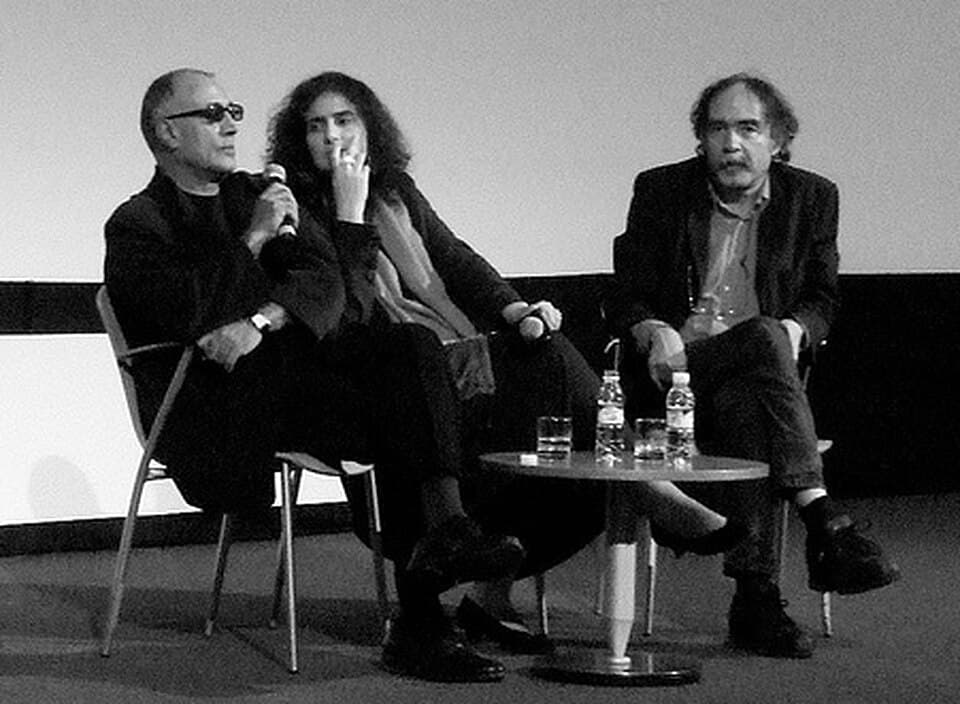
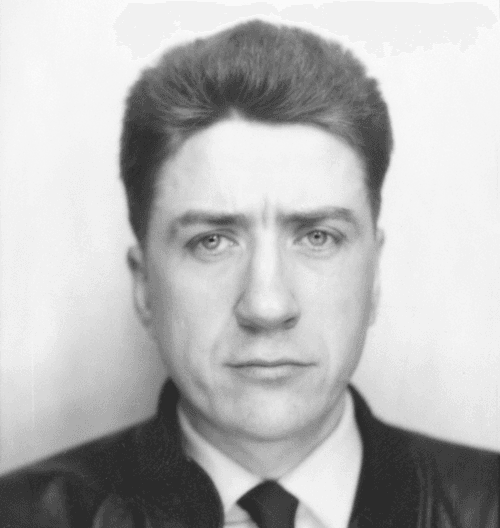
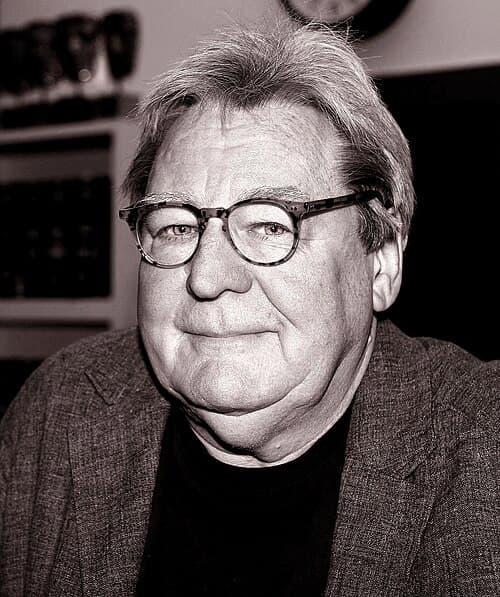
Tehran, at dawn, in an old Peugeot parked overlooking the hills. Abbas Kiarostami lowers his tinted glasses for a moment to watch the slanting light rise on the snow. He agrees to talk, engine off, as if the car itself were listening.
—Many artists left Iran after 1979. Why did you choose to stay?
I've been asked that question a thousand times, as if leaving were a given. After the 1979 revolution, friends were packing for Paris or Los Angeles, and I understood their fear. But I think of a tree. When you take a tree rooted in the ground and transplant it from one place to another, the tree no longer bears fruit. My fruits are these hills around Tehran, these winding roads, these children's faces. Censorship existed; you had to outwit it, circumvent, suggest rather than show. But a filmmaker who negotiates with shadows sometimes learns to see the light better. Staying wasn't courage: it was refusing to become barren.
Staying wasn't courage: it was refusing to become barren.
—How do you work when every shot can be cut by the authorities?
You learn the economy of the unsaid. I don't film what's forbidden; I film what surrounds it, and the viewer guesses the rest. A moving curtain, a closed door, a voice coming from elsewhere: the off-screen space became my best ally, because no censor can cut what you don't show. At the Kanun, the institute for children where I started in 1970 with Bread and Alley, I had already gotten used to saying a lot with very little. Constraint, if you don't suffer it as humiliation, becomes a grammar. I eventually came to believe that a film that is too explicit leaves no room for the viewer — and that is another form of censorship, gentler but more total.
No censor can cut what you don't show.
—Tell us about the origin of Close-Up, this film born from an astonishing news story.
In 1990, I read in a newspaper the story of a penniless man who had passed himself off as filmmaker Mohsen Makhmalbaf to enter a wealthy family. He was unmasked, dragged before a judge. I dropped everything to go film his trial, then I had an idea that made me dizzy: ask everyone to replay their own roles. The real judge, the real family, the real impostor. Close-Up was born from this mise en abyme — a man who had played a filmmaker replaying, in front of my camera, the man who had played a filmmaker. Where does the lie end, where does the confession begin? I wasn't trying to decide. I deeply believe that one can only approach truth through lies.
One can only approach truth through lies.
—This boundary you constantly blur between documentary and fiction, why do you hold it so dear?
Because life itself doesn't know that boundary. They call it docufiction, as if it were a genre; for me it's simply honesty. When a man re-enacts his own lie in front of me, he no longer quite lies, and he doesn't tell the truth either: he makes cinema, that is, both at once. I like to use non-professional actors, ordinary people, because they haven't learned to pretend and their awkwardness is truer than any performance. An actor plays emotion; a peasant from Koker, on the other hand, carries it without knowing it. My work is only to frame what already exists, and to wait.
—You constantly film inside cars. Where does this obsession with the cabin come from?
A car is the most perfect studio ever given to me. A windshield for a frame, a landscape that passes for free, two seats that force people to talk without looking at each other — and believe me, one confides better that way, eye on the road. My winding roads around Tehran, I filmed them a hundred times because a car climbing a hill already tells everything: effort, waiting, doubt. For Ten, in 2002, I fixed tiny digital cameras on the dashboard, then sometimes got out. I wasn't even there anymore. The conversations unfolded on their own, and in the evening I retrieved hours of truth that I could never have staged if I had been sitting behind a camera.
A car is the most perfect studio ever given to me.
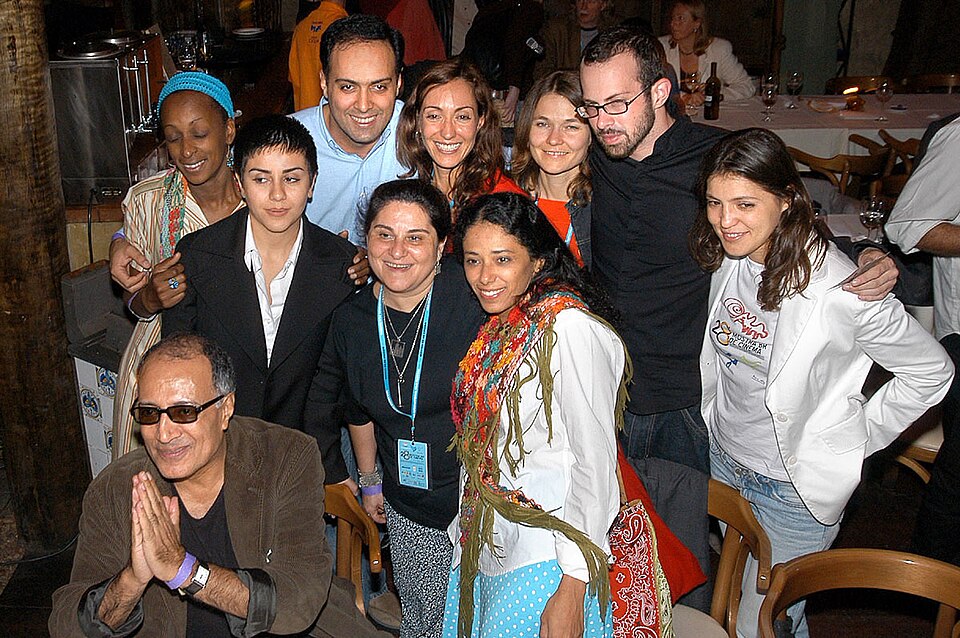
—What does a camera so small you forget it change?
Everything. The big 35mm camera of my early days was a magnificent but heavy animal, imposing its long contemplative shots, its fixed frames, its slowness — and I loved that slowness. Then comes this little digital box you put on a dashboard and the passenger eventually stops seeing. Without it, no one really speaks; you compose a face for the lens. With it, people become themselves again. I understood that in cinema, the most precious technique is not the one that shows the most, but the one that is most easily forgotten. An invisible digital video camera is almost an honest camera. It gave me back something thirty years of work had made me lose: surprise.
—In June 1990, an earthquake devastated northern Iran, near Koker. What happened to you that day?
The Manjil-Rudbar earthquake killed tens of thousands, and my first reflex was not that of a filmmaker, but of a worried man. Three years earlier, I had shot Where Is the Friend's Home? in those villages, with local children. So I took the road to the Koker region, not knowing if the little boy in the film was alive. What I saw on those collapsed roads — people who, under the rubble, were already fixing an antenna so as not to miss a football match — moved me more than death itself. Life persisted. I made And Life Goes On from it, in 1992, re-enacting in fiction the journey I had made for real.
Under the rubble, life persisted.
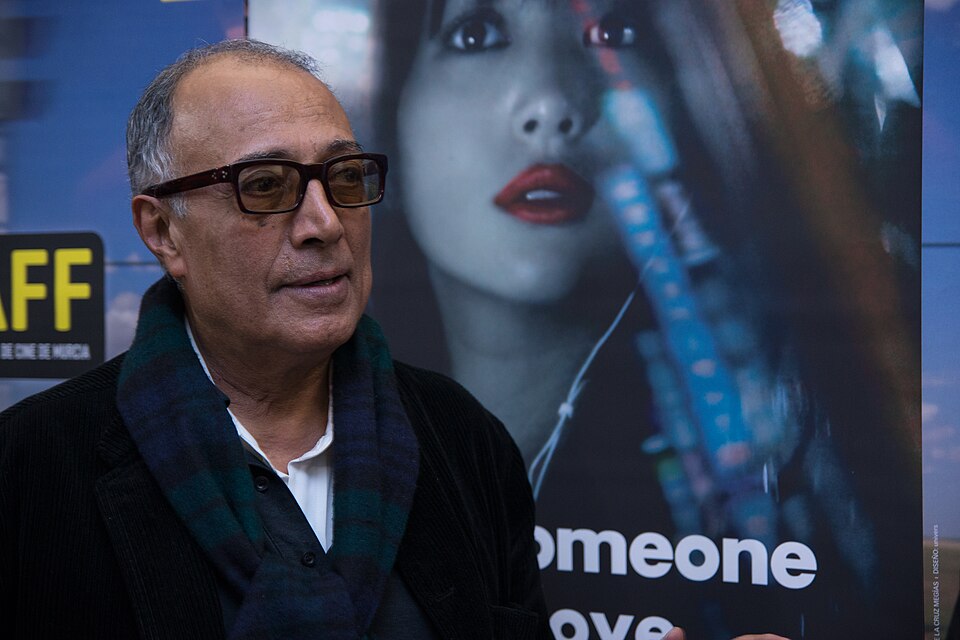
—How do you turn a real catastrophe into a film that speaks of hope without lying?
By not filming the catastrophe. The dead, the ruins, the numbers, we know them, they're in the newspapers. What interests me is the moment after: the woman making tea again, the child asking to play again. The 1990 earthquake taught me that life does not wait for mourning to end to start again, and that this obstinacy, almost indecent, is the most sacred thing. They call this mixture docufiction, but the real subject is not the form: it's the question a father asked me on the road, between two collapsed villages, about the best way to go on. I had no answer. I made a film so as not to lie by pretending to have one.
—People often forget that you are also a photographer and poet. How do these three gazes coexist in you?
They don't coexist, they are the same gesture. Before any film, there is dawn. I get up very early, go up alone into the hills above Tehran, my film camera slung over my shoulder, and I watch for the slanting light on the snow, an empty road, a solitary tree in the middle of the field. A solitary tree, for me, is already a whole film. In the evening, what the eye has captured, the hand writes: a few short lines, in the manner of haiku, attentive to a tiny thing one might have missed. Photographing, writing, filming: I am only learning to look better, again and again. Cinema is just the noisy and expensive version of that silence.
A solitary tree, for me, is already a whole film.
—What place do you leave for the one who watches your films in the theater?
The greatest of all. I have spent my life believing in a cinema that gives more possibilities and time to the viewer; a half-created, unfinished cinema that is only fulfilled through the creative spirit of the viewer. A film that is too full is a closed door. I prefer long shots, silences, those moments when the screen seems to tell nothing — because that is where the viewer enters and places their own story. I've been criticized for my slow films. I always answer the same thing: I prefer films that put the viewer to sleep in the theater; some films made me doze, but they are the same ones that kept me awake all night. A poem inspired by haiku works like that: it doesn't say everything, it entrusts you with the rest.
This imaginary interview was generated by artificial intelligence from sources documented in Abbas Kiarostami's profile. It dramatises what the figure might have said based on what we know about them, but does not constitute attested historical testimony. For primary sources and factual documentation, refer to the full profile.