Imaginary dialogue between Mohsen Makhmalbaf and Abbas Kiarostami
by Charactorium · Abbas Kiarostami (1940 — 2016) · Performing Arts · Visual Arts · 5 min read
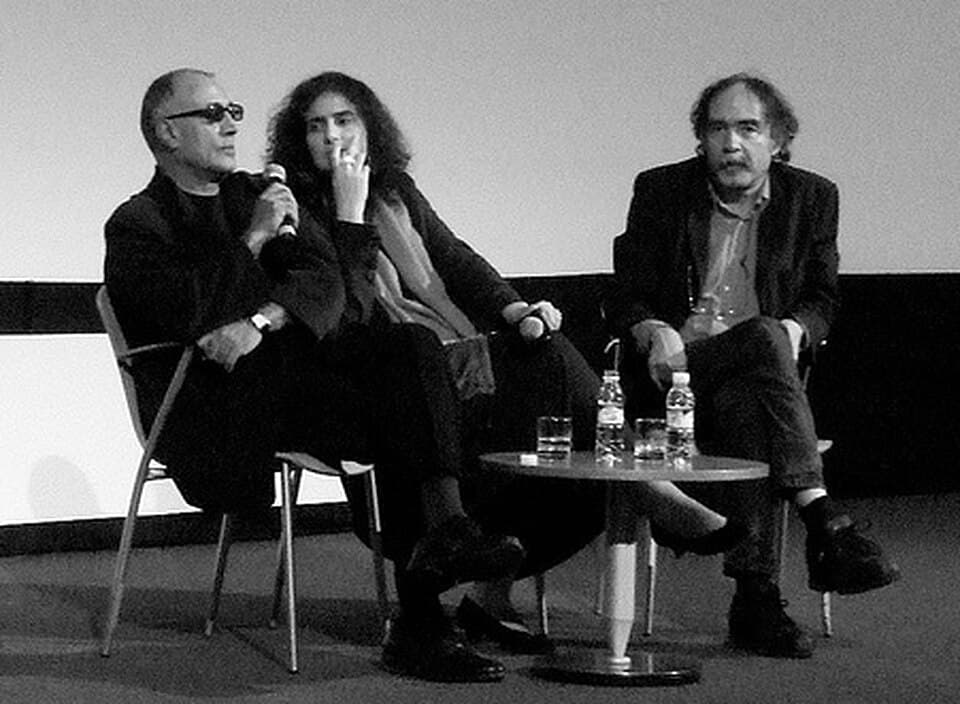
It is on the heights of Tehran, in Kiarostami’s house open to the still-snowy hills, that one spring morning in 2003 Mohsen Makhmalbaf comes to visit his elder. The tea steams, and behind his inseparable dark-tinted glasses, the master watches the slanting light of dawn. The two men have known each other for a long time: friendly rivals of the same Iranian renewal, they are also linked by a strange film in which a stranger had impersonated Makhmalbaf. The latter has not come as a polite admirer, but to push his colleague to justify himself.
—Abbas, so many of ours left after 1979. I myself sometimes think of it. You stay, you shoot under censorship. Why do you persist?
Because I wouldn’t know how to work anywhere else, Mohsen. You know me: my films are born from these hills, this light, from people I meet on roads I’ve traveled a thousand times. I’ve often been asked the question, and I always give the same answer: when you take a tree rooted in the earth and transplant it from one place to another, the tree no longer bears fruit. I could make beautiful images in Europe, I’m invited enough. But they would be hollow. Censorship, yes, I deal with it every day; it forces me into cunning, detour, the unspoken. Curiously, this constraint has made my cinema more suggestive. Leaving would be cutting the root.
Transplant the tree elsewhere, and it no longer bears fruit.
—Let’s talk about the two of us. A man usurped my name to enter a family, and you turned it into Close-Up. You even filmed me meeting him. What were you looking for?
You, who were at the heart of the affair, Mohsen, know better than anyone. That man, Sabzian, wasn’t stealing anything: he simply wanted to be you, to be respected as a filmmaker. When I read that news item, I knew no actor could convey that pain. So I asked the real people to re-enact their own roles — the family, the judge, Sabzian, and you at the end, going to meet him. Reality re-enacted becomes truer than reality filmed on the spot. I spent hours at the courthouse with my camera, waiting for a face to crack. That film is a bit the story of all three of us, and I think it says something about the desire for cinema that we share.
Reality re-enacted becomes truer than reality filmed on the spot.
—You constantly blur documentary and fiction. But admit it: isn’t that an elegant way to lie to your viewer?
Call it lying if you wish, but I believe exactly the opposite. One can only approach truth through lies. The camera itself is a lie: it frames, it chooses, it excludes. Pretending to film raw reality would be the real deception. I, for my part, embrace staging to reach a deeper truth, that of emotions. In And Life Goes On, an actor plays a director who resembles me and retraces a journey I really made. That detour through fiction expresses my anxiety better than any report. I prefer an unfinished cinema, half-created, that the spectator completes with their own mind. Ultimately, it is they who fabricate the truth of the film.
One can only approach truth through lies.
—In June 1990, the earthquake devastated the Koker region, where you had filmed your young actors. They say you immediately hit the road. What were you really afraid of?
I was afraid for those children, quite simply. The boy from Where Is the Friend's Home?, his friends, the village families — I had shared their bread, their school lessons. When the earth trembled and killed tens of thousands, I didn’t think about cinema, I thought about them. I took my car and drove north, on broken roads, amid the rubble and people digging. I didn’t find them all, and that uncertainty still haunts me. But on that road, I saw something extraordinary: survivors who, the day after the disaster, were already repairing, setting up an antenna to follow the World Cup. Life triumphed over death. That real journey became a film.
I didn’t think about cinema, I thought about those children.
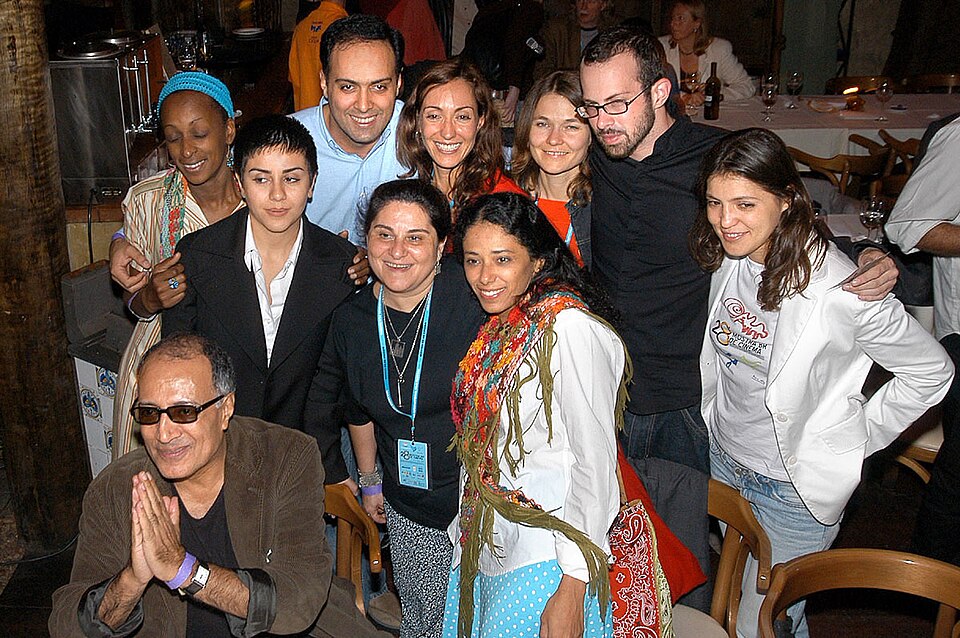
—From that catastrophe you made And Life Goes On. Wasn’t there some indecency in making fiction about so many deaths?
I hesitated a long time, believe me. But I didn’t film the corpses or the ruins to move people. I filmed the stubbornness of the living. The title says it all: and life goes on. Where others would have sought pathos, I sought that old man still planting, that woman making tea again, that stubborn desire for football in the midst of mourning. That seemed sacred to me, not the spectacle of misfortune. By blurring documentary and fiction, I could keep a respectful distance, not steal people’s pain. A character serves as my intermediary; he asks the questions in my place. Thus the film honors the dead without exhibiting them, and celebrates those who remain standing.
I didn’t film the dead, I filmed the stubbornness of the living.
—You shoot more and more in cars. For Ten, they say you fixed tiny cameras on the dashboard and sometimes got out. Does the filmmaker become useless?
Almost, yes, and that delights me! The car is my real studio, Mohsen, a little rolling theater. Inside, people forget they are being filmed; the windshield frames the world, the winding roads set the rhythm. For Ten, I placed two small digital cameras on the dashboard, set up the situation, then stepped aside. Sometimes I wasn’t even in the car. The conversations unfolded almost on their own, between a woman and her passenger, without my presence freezing them. A director who is too visible kills naturalness. My dream would be a film that makes itself without me, where I am only the one who chose the frame and the light, then fell silent.
The car is my real studio: a little rolling theater.
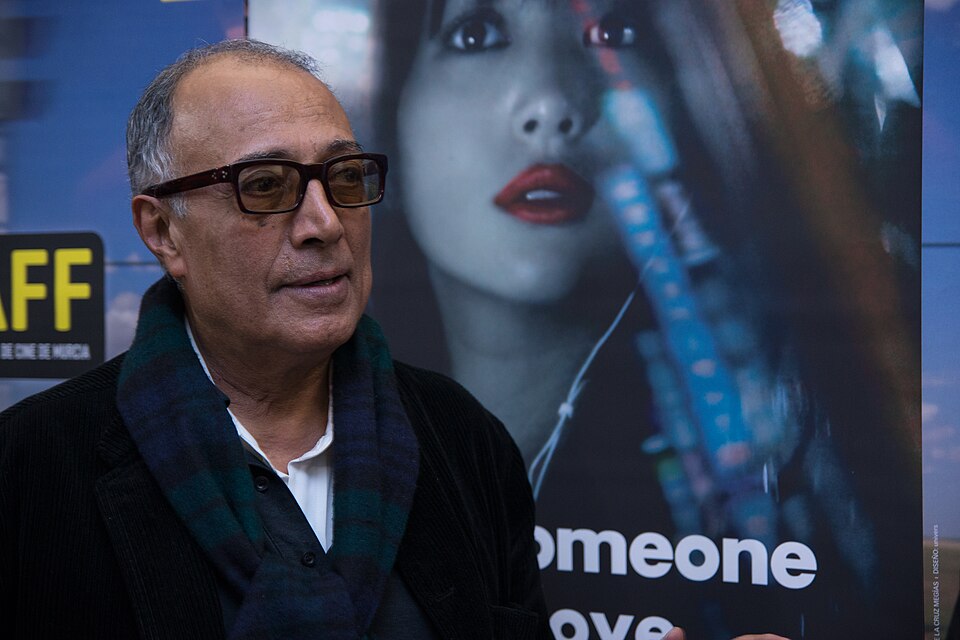
—Those small video cameras you praise — don’t you miss 35 mm film? Isn’t that betraying the beauty of your old long takes?
I understand your attachment; I too loved film and its contemplative shots, those winding roads filmed from afar. But this digital camera has made me free as never before. Light, discreet, it waits without tiring, it records autonomously while I look elsewhere. The heaviness of 35 mm imposed a crew, a machinery that intimidated people. With digital, I capture naturalness, the imperceptible, those silences where a face bares itself. This isn’t betraying beauty, it’s seeking it differently, as close as possible to life. The beauty of a shot does not depend on the medium but on the patience of the gaze. A poor tool brought me closer to the truth that technical richness kept at a distance.
A poor tool brought me closer to the truth that technique kept at a distance.
—Your friends say you leave alone before dawn, your camera in hand, into the hills. What do you seek up there that cinema does not give you?
Silence, Mohsen, and solitude. Cinema is a crowd, a crew, budgets, permits. Photography is me alone, at dawn, on a deserted road, facing a solitary tree in the snow. I leave when the city still sleeps, I climb the hills around Tehran, and I wait for that slanting light that sculpts every contour. I photograph winding roads, solitary trees, white expanses. These are images without actors, without dialogue, without story — just the shape of the world. This discipline nourishes my films: that is where I learn to frame, to wait, to force nothing. My tinted glasses, you know, it’s a bit like always looking through a lens.
Photography is me alone at dawn, facing a tree in the snow.
—I’m told that in the evening you write short poems, in the manner of haikus. You, the filmmaker of long takes, seduced by the briefest of arts?
The contrast is only apparent. A long take and a haiku seek the same thing: to stop time on a tiny detail so that it reveals everything else. In the evening, when my friends have left, I jot down a few lines attentive to a drop, a bird, the snow on a branch. These poems from Japan teach me economy, the art of suggesting rather than telling. That is exactly what I aim for on screen: show little, let the spectator imagine the off-screen, complete it with their mind. My films, my photos, my poems — these are three ways of doing the same thing: looking long at a small thing until it becomes immense. Brevity is not the opposite of slowness; it is its sister.
Looking long at a small thing until it becomes immense.
This imaginary interview was generated by artificial intelligence from sources documented in Abbas Kiarostami's profile. It dramatises what the figure might have said based on what we know about them, but does not constitute attested historical testimony. For primary sources and factual documentation, refer to the full profile.