Kids interview Abbas Kiarostami
by Charactorium · Abbas Kiarostami (1940 — 2016) · Performing Arts · Visual Arts · 4 min read
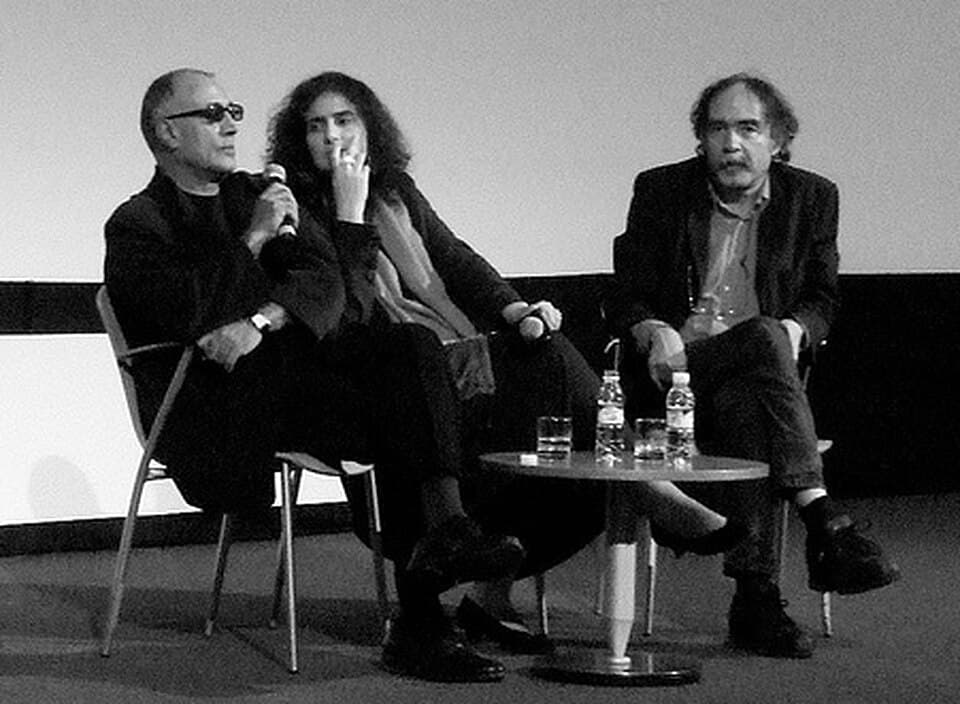
That morning, two sixth-graders on a school field trip pushed open the door of a small screening room. A man in dark glasses was waiting for them, smiling, touched that children would come to question him about his films. He invited them to sit very close to him.
—Is it true you made a film about a man who pretended to be someone else?
You know, my child, one day I read an incredible story in a newspaper. A man had pretended to be a famous filmmaker, Mohsen Makhmalbaf, to get into a family. Imagine: you knock on a door, and they believe you're someone else. It moved me deeply. So I did something a little crazy for Close-Up, in 1990. I asked the real people to reenact their own story. The fake filmmaker played the fake filmmaker. The real judge played the real judge. Nobody was lying, and yet it was all cinema.
Nobody was lying, and yet it was all cinema.
—But weren't they uncomfortable replaying a moment when they had been ashamed?
That's a good question. At first, yes, I was a bit afraid. Replaying your own life is delicate. But the man who had lied wanted to explain himself, to be understood. Cinema gave him that. We call this technique a mise en abyme: it's like a mirror within a mirror, a film that watches itself. Imagine drawing a child who is drawing. That's what I was doing. And by replaying the false, we touched something very true: this man's desire to finally exist in the eyes of others.
—Is it true you drove off in search of children after an earthquake?
Yes, it's true. In June 1990, a terrible earthquake devastated northern Iran, near Koker. Three years earlier, I had shot a film there with village children. At night, I couldn't sleep. Were they alive? I took my car and drove toward the mountains, on broken roads, amid collapsed houses. It was like crossing a wounded country. From that journey, I made a film, And Life Goes On. Because even in the ruins, you see people replanting, cooking, laughing.
Even in the ruins, life never stops.
—Were you scared driving through all that?
A little, yes. But you know, what I saw mostly gave me courage. People had lost everything: their home, sometimes their family. And yet, one of them was installing an antenna on a half-collapsed roof to follow an important match. I found that beautiful. Clinging to a small happiness when everything falls apart. I didn't want to film misery to make you cry. I filmed those who start over. In my films, I always prefer to look at what grows back, like a tiny blade of grass between two stones.
—Why did you love filming inside cars so much?
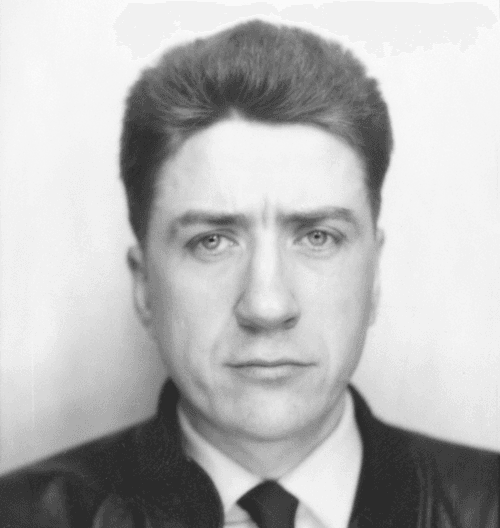
Ah, the car! For me, it was a little studio on wheels. You sit next to someone, you watch the road together, and words come naturally, without feeling observed. People confide better when moving forward than when facing each other. And I loved the long winding roads in the hills around Tehran — I also photographed them at dawn. You could always recognize me by my dark tinted glasses, which I wore day and night. They helped me see the world my way, as if through a little frame of my own.
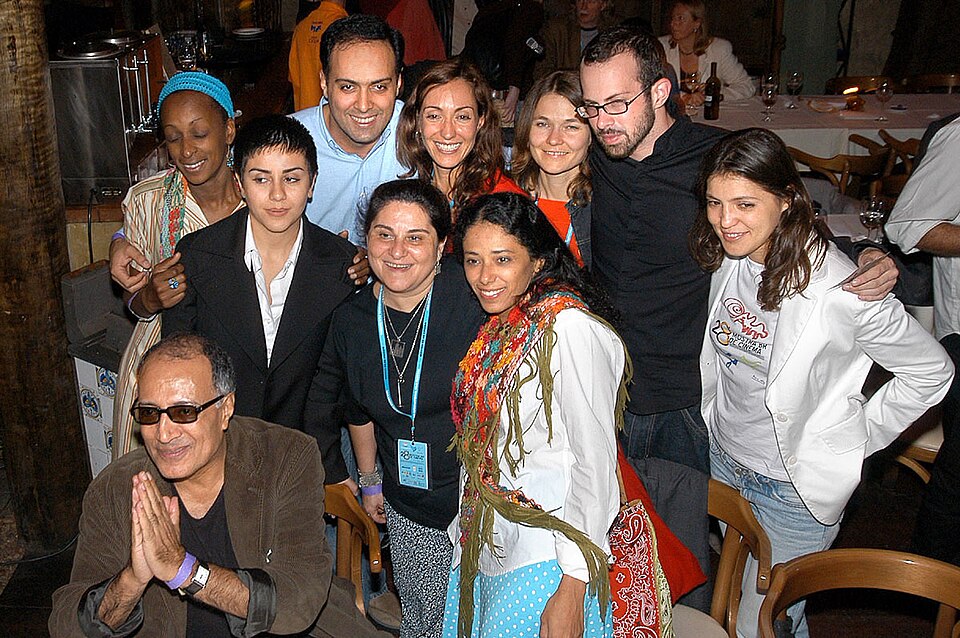
—Is it true that sometimes you weren't even in the car during filming?
Yes, and that surprises everyone! For my film Ten, in 2002, I mounted two tiny cameras on the dashboard. Then I got out. The driver drove, talked to her son, to strangers, and life filmed itself almost on its own. Imagine a camera so discreet that you forget it: nobody is acting anymore, everyone becomes real again. I believe a filmmaker shouldn't always control everything. Sometimes you have to step back, trust, and let reality enter the frame.
The most beautiful things happen when you loosen the reins a little.
—Many artists left. Why did you stay in Iran?
It's true that after the revolution of 1979, many of my friends left to live elsewhere. I couldn't. Let me tell you with an image I love: 'When you take a tree rooted in the earth and transplant it from one place to another, the tree no longer bears fruit.' I was that tree. My roots were in the hills of Tehran, in my language, in the faces I knew. There, I knew how to film. Elsewhere, I was afraid of becoming dry. So I stayed, and I kept going, even when it was difficult.
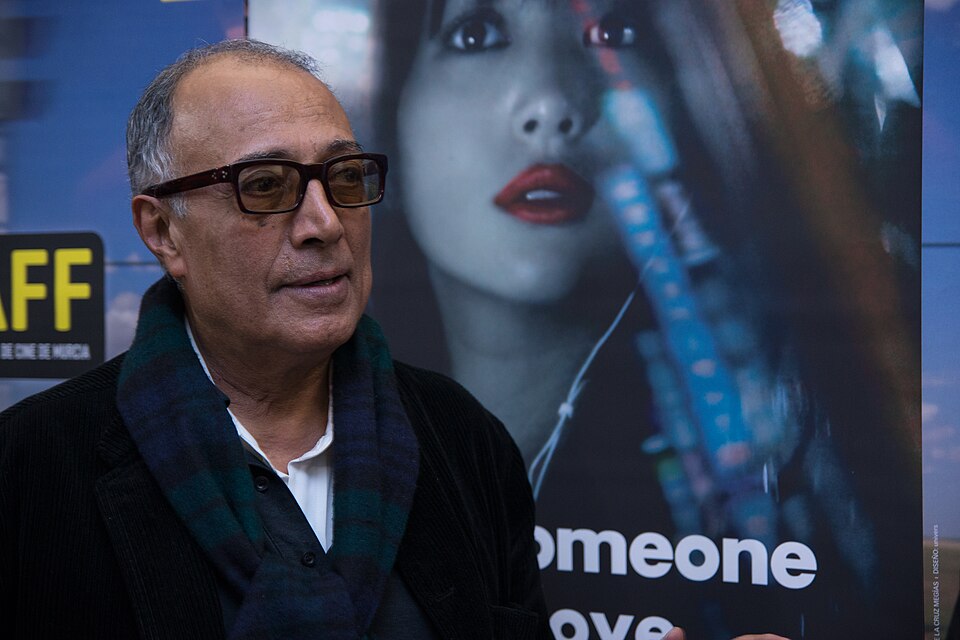
—What was it like making films under censorship?
Difficult, but not impossible. Censorship is when authorities decide what you are allowed to show or not. You had to be cunning, to circumvent, to say things differently. So I filmed children, roads, landscapes, very simple stories. And behind that simplicity, there was everything: life, death, freedom. A school notebook that a little boy wants to return to his friend, as in Where Is the Friend's Home?, speaks to the whole world. I learned that you can say a lot, provided you say it softly, with delicacy.
You can say anything, provided you say it softly.
—You said your films were 'half-made.' What does that mean?
Yes, I insisted on that. In 1995, I wrote a text where I said I believed in 'a cinema half-created, unfinished, which is only completed through the creative spirit of the spectator.' That means the film is not complete without you. Imagine a drawing where I only trace half the lines: it's your imagination that finishes the rest. I leave silences, roads that go up, open endings. And you, in the theater, fill the gaps with your own life.
A film is not complete without the spectator who dreams it.
—You said we approach truth through lies. Isn't that strange?
It seems strange, I know! But think about it: cinema is always an invention. Actors, lights, sets. Everything is fake. And yet, through this game, we can bring out something deeply true about human beings. That's why I said that 'one can only approach truth through lies.' I even liked slow films, those that let you doze a little. Because those films, you see, are often the ones that keep you awake all night, thinking about them in bed.
This imaginary interview was generated by artificial intelligence from sources documented in Abbas Kiarostami's profile. It dramatises what the figure might have said based on what we know about them, but does not constitute attested historical testimony. For primary sources and factual documentation, refer to the full profile.