Kids interview Abbé Prévost
by Charactorium · Abbé Prévost (1697 — 1763) · Literature · 5 min read
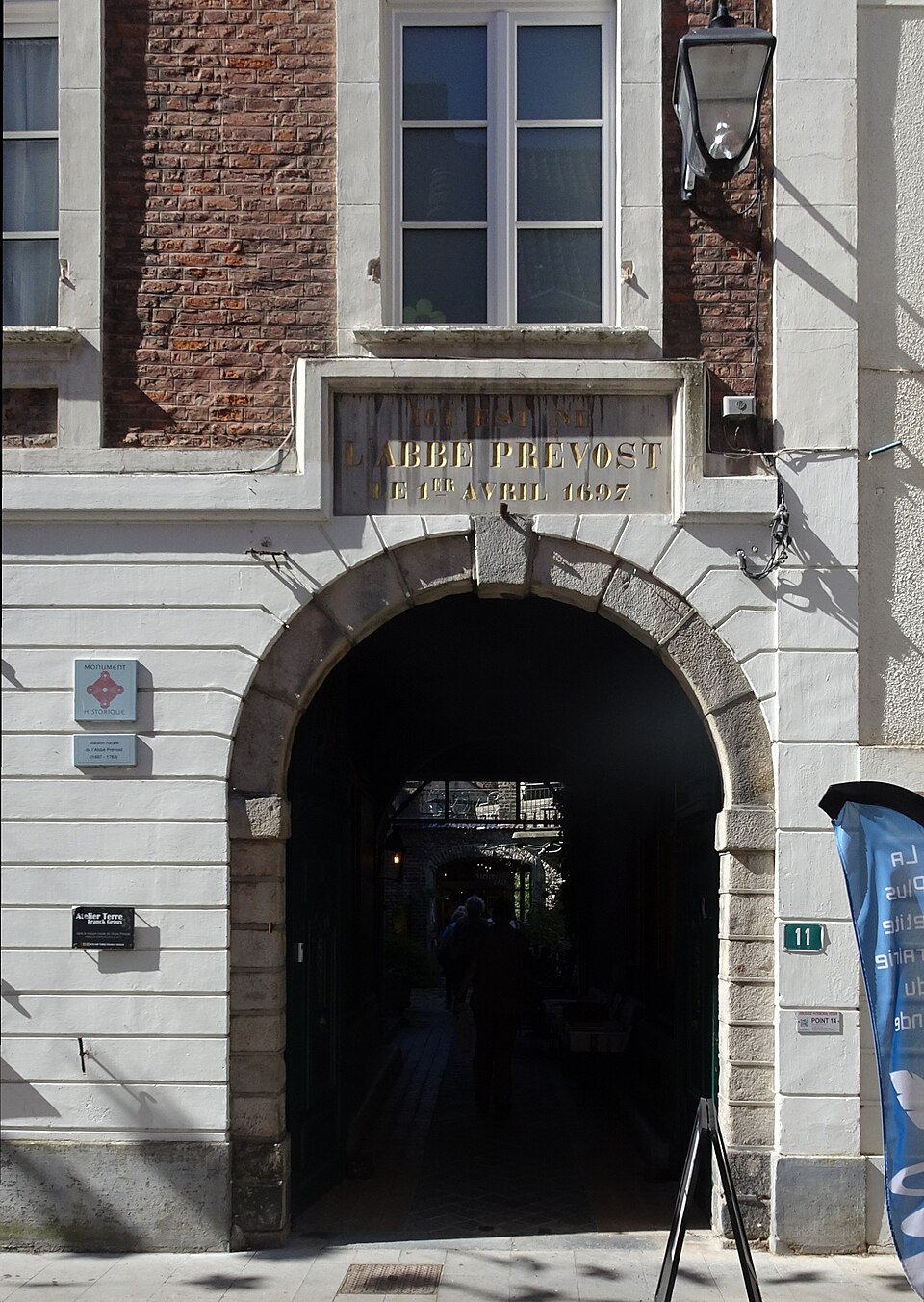
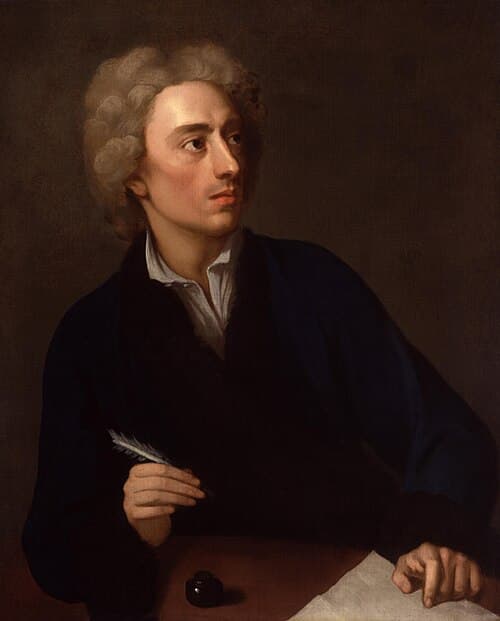
Two twelfth-grade students on a field trip push open the door of an old presbytery. A man in a black cassock awaits them, a goose quill in his hand. He sets down his manuscript, smiles, and invites them to sit beside him.
—How old were you when you entered the religious order?
You know, my child, I was still a kid. At sixteen, in 1713, I was entrusted to the Jesuits to study theology. Picture a big stone house, cold, where you pray before sunrise. As for me, my heart was too lively to stay put. So I ran away. Once, twice… seminary life chafed like an ill-fitting habit. I left, I came back, I left again. They called it instability. I called it searching for my true place. And all that commotion, later, I poured it into my novels, like pouring ink.
Seminary life chafed like an ill-fitting habit.
—Why did you go live in another country?
Because in France, I had too many troubles on my back! In 1728, I packed my things and took off. First to Holland, then to England. Imagine a carriage ride for days, then a boat rocking on the North Sea, the wind biting. In The Hague, I settled down, wrote, even added pages to my favorite novel. Far from my country, I was free but lonely. You see, leaving isn't always out of courage. Sometimes it's out of fear. And it was in that fear that I learned to tell stories of suffering hearts.
Leaving isn't always out of courage; sometimes it's out of fear.
—What is your most famous book, and what is it about?
Ah, that one, you might see it in school someday! Manon Lescaut, written in 1731. It's the story of a young knight, Des Grieux, who falls madly in love with Manon. The problem? She is not a demure young lady. In my time, they said she lived in libertinage, that is, without following moral rules. He sacrifices everything for her: his family, his honor, his virtue. It's a magnificent love and a disaster at the same time. Imagine loving someone so much that you forget what is right. That's my novel: beautiful and sad as a tear.
A magnificent love and a disaster at the same time.
—Did people like the book, or did it cause a scandal?
Both, my child! People devoured it… and the authorities frowned. To tell the love story of a knight and a woman of ill repute in 1731 just wasn't done. So they tried to ban it. But do you know what happens when you ban a book? Everyone wants to read it! It was printed in secret, passed around under the cloak. Picture a book hidden in a pocket, read by candlelight in the evening. The more they censored me, the more they read me. Censorship, you see, made me a famous man despite itself.
The more they censored me, the more they read me.
—Wasn't it strange to be a priest and write love stories?
You've put your finger right on the sore spot, my child! Yes, it was strange. In the morning, I wore the ecclesiastical habit, the black cassock, and prayed in a little chapel. And in the evening, my pen wrote the most burning love sorrows. People couldn't understand it. How could a man of the Church paint passion so well? But you see, I believe we write best what we know from the inside. I had duty on one side, heart on the other, and the two fought within me. That battle, precisely, is what I told in my pages.
We write best what we know from the inside.
—Did you find it hard to choose between religion and writing?
Very hard, yes. Imagine loving two things that pull you in opposite directions, like two ropes. On one side, my prayers, my cassock, my abbeys in Normandy. On the other, my novels, my travels, my freedom. I never really chose. I lived torn between the two my whole life. And you know what? I think my characters are torn too. One of them said that violent love overturns all duties. That's exactly what I felt. A divided man is not a failure, my child. He is a man who feels life beating in both directions.
A divided man is not a failure.
—Is it true you wrote a huge book about travels?
Huge, that's the word! It was the Histoire générale des voyages. I worked on it for nearly twenty years, starting in 1746. Imagine a pile of books taller than you: about twenty thick volumes! I gathered the accounts of sailors, explorers, those who had seen distant lands, unknown seas. In my time, you couldn't see those countries except by reading. So I became their eyes, in a way. I wanted people to know not just the coastlines, but the ways of life of the peoples there. For that, patience was needed. Lots and lots of patience.
I became the eyes of those who would never travel.
—How did you write such a long book without getting bored?
Ah, but I wasn't bored, you see! Each account transported me. Imagine: you're sitting at your desk, your inkwell before you, your goose quill in hand, and suddenly you read a navigator's journal describing an island no one in France has ever seen. It's a motionless journey! I turned pages, translated, arranged everything in order. Twenty years, yes, but twenty years of adventures without leaving my chair. I wanted to show the customs and character of the peoples being discovered. Knowledge, my child, is the only ship that takes you everywhere without ever taking on water.
Knowledge is the only ship that takes you everywhere without taking on water.
—Did you write only your own stories, or also those of others?
Both, my child! I also loved to bring books from elsewhere into our language. I translated into French the famous Don Quixote, written by a Spaniard named Cervantes. You know it? It's the story of a man who thinks he's a knight and fights windmills! Translating is like building a bridge between two countries. Without me, many French people would never have laughed at that Spanish book. In my time, ideas traveled from country to country thanks to us translators. We were ferrymen. We carried words from one shore to the other, like treasure.
Translating is building a bridge between two countries.
—If you are remembered today, what would you like people to remember?
What a beautiful question to end with! You know, I died in 1763, and I wondered what would remain of me. A churchman? An armchair traveler? No. I think people remember above all Manon, that love that makes you cry. I would like them to remember that I dared to paint the human heart as it is: weak, contradictory, full of desires and remorse. I did not judge my characters, I loved them. If one day you read my book and a tear comes to your eye, then I will still be a little alive. That is my true treasure, my child.
If a tear comes to your eye while reading me, I will still be a little alive.
Read further
This imaginary interview was generated by artificial intelligence from sources documented in Abbé Prévost's profile. It dramatises what the figure might have said based on what we know about them, but does not constitute attested historical testimony. For primary sources and factual documentation, refer to the full profile.