Imaginary interview with Abbé Prévost
by Charactorium · Abbé Prévost (1697 — 1763) · Literature · 6 min read
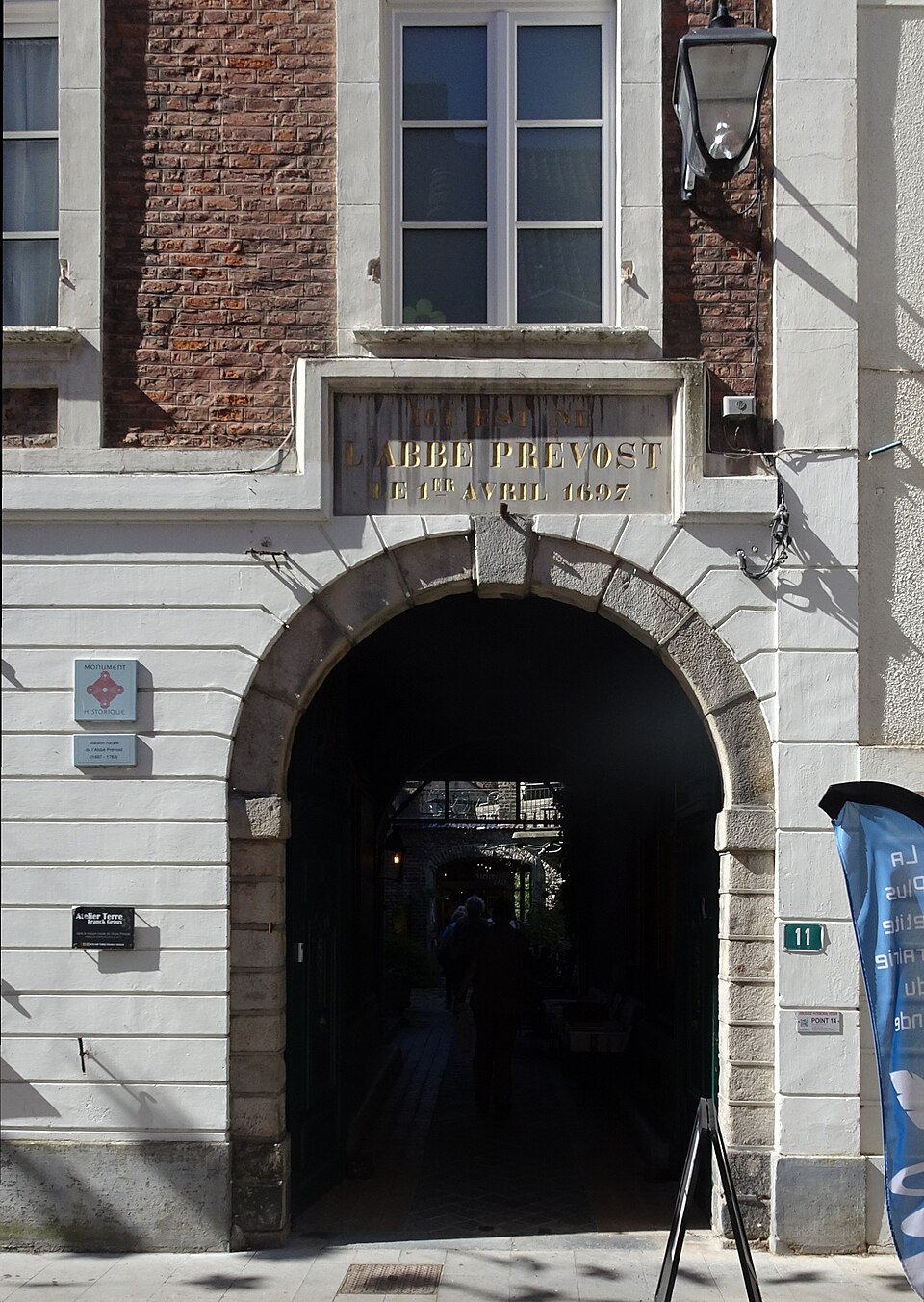
Chantilly, a gray winter morning in 1762. In a modest lodging lined with books, an old man in a black cassock sets down his quill beside a porcelain inkwell. The Abbé Prévost, a novelist whom all France reads in secret, agrees to reflect on a life divided between the cloister and passion.
—They say your youth was a series of flights. How did you get through it?
I took the habit with the Jesuits around my sixteenth year, and I think from the very first morning I felt the wall between what was expected of me and what burned inside me. I fled, I returned, I took up the cassock again, I left it once more — I was seen among the Benedictines, at Saint-Wandrille, at Jumièges, in those Norman cloisters where the stone is so cold it drives you to prayer or to escape. Then came Holland, England, voluntary exile. Understand me: I was not fleeing God, I was fleeing the idea that a man could be reduced to his vow. That restlessness I never cured; I merely poured it into my pages, where my heroes always run, too, after something that eludes them.
I was not fleeing God, I was fleeing the idea that a man could be reduced to his vow.
—Yet you wore the cassock all your life. What did that habit represent for the man of letters you were?
The black cassock and white collar — that is what the world saw of me; the rest had to be guessed. My days began with the offices, an obligation of my condition, and only afterward did the pen reclaim its rights. I knew great houses, even Cluny, where I was called to exercise functions; but my true kingdom was always the corner of a presbytery table, cluttered with a library I never ceased to enlarge. The habit gave me a roof, an income, a dignity — and it reminded me, each morning, of what I perhaps betrayed by writing the love of men rather than the love of God. I do not believe I chose between the two. I lived, ill at ease and whole, in that in-between that the devout reproached me for enough.
—How was Manon born under your pen?
She did not come into the world as a separate book. The chevalier Des Grieux and his Manon appeared in the last volume of my Mémoires et aventures d'un homme de qualité, around 1731, like a story slipped into another, a confidence a man makes to a stranger on a road. I wanted to paint an honest young man whom love hurls into the mud, and who knows it, and cannot tear himself away. He says it best, at the threshold of his confession: “I was at once an honest man and unhappy.” My whole novel is contained in that sentence. I did not invent a monster or a saint; I showed an ordinary heart swept away by a force that no morality disarms. And the public, I think, recognized itself more than it dared to admit.
—The book caused a scandal by its subject. How do you explain that it survived censorship?
Consider what I offered the guardians of good morals: the story of a son of a good family lost for a courtesan, told without condemning her strongly enough. It was banned, seized, perhaps burned. And yet it only thrived. The presses of The Hague produced editions that no privilege covered, and the work was passed under the cloak like something forbidden, therefore desirable. That is the paradox I never resolved: prohibition makes the fortune of the book. The more they cried libertinage, the more they rushed to buy it. I had not sought the uproar; I had sought the truth of a passion. But the age loves to be shown what it feigns to condemn, and Manon became famous for the very reasons that should have buried it.
Prohibition makes the fortune of the book: the more they cried libertinage, the more they rushed to buy it.
—A churchman writing the most burning pages on passion: how do you live with this contradiction?
It has been thrown in my face enough, this contradiction, and I have no easy answer. In the morning, the oratory; in the evening, the pen describing libertinage and the ravages of love. But I ask you: who better than a man bound to virtue knows what it costs, and what weight the temptation one fights carries? I do not write to celebrate vice; I write because I have felt, from inside my habit, how flesh and soul tear each other apart. Sensibility, that word my century loves so much, is not the enemy of faith: it is what makes the fall pathetic and repentance possible. I am the priest who knows his flock because he has walked through the same brambles.
—What would you say to those who see in your novels an apology for amorous disorder?
Let them read me better. I wrote, in my first Mémoires, a truth that all my work only develops: “It is a constant truth that love, when violent and passionate, confounds all principles and overturns all duties.” That is a warning, not an invitation. I do not praise passion; I describe its power, which is terrible precisely because it sweeps away reason like a flooded river. My characters are not happy to love thus — they die of it, or they weep over it to the end. There is in them a fatalism that I did not invent: man believes himself free and discovers that an inclination leads him. If one leaves my books frightened by love as much as dazzled, then I have told the truth, and morality is safe without my needing to preach.
—You devoted nearly twenty years to your General History of Travels. What were you seeking in that immense enterprise?
When I began, around 1746, I did not imagine that these volumes would devour two decades of my life. Fifteen volumes and more, accounts of sailors, merchants, missionaries, which had to be translated, compared, ordered, pruned — an ant's work bent over the quill until night. But you see, my century thirsts for distant lands as for a new wine. People want to know how peoples live at the ends of the seas, and I, novelist of passions, found there another form of the same appetite: to know man, wherever he is. It was not merely a merchant's compilation; it was a way to walk my readers outside their parish. So I wrote about love and about the world, and deep down it was always the same curiosity about the human heart that kept me awake.
—You also translated a great deal, notably Cervantes. What were you seeking in that passage from one language to another?
To translate is to make minds travel without leaving their armchair. I gave French Don Quixote by Cervantes and many other works from England and elsewhere, for I hold that no nation thinks alone. It is the same principle that guided my General History of Travels: “History must instruct us not only on facts, but on the mores and characters of the peoples we discover.” That is what I wanted. Not to line up battles and dates, but to grasp how men love, pray, deceive, and die under other skies. The translator and the historian do the same trade as the novelist: they open a door onto a foreign soul and say to the reader, see, this one too is your brother. I spent my life opening those doors.
—You frequent the salons and cafés where all the spirit of your time stirs. What place do you hold among the greats of this century?
A place of witness more than a master thinker. When I was young, Montesquieu published his Persian Letters, and one felt a new wind blowing, mocking, free, impatient with old tutelages. Since then, I have seen The Spirit of the Laws appear, the first volumes of the Encyclopédie, and most recently La Nouvelle Héloïse by Rousseau, which makes ladies weep as my Manon once did. In the afternoon I go to the salons and cafés where these books are debated, and I listen more than I decide. I am not a philosopher in the sense that word is understood; I have no system. But the novel I practice has its part in this movement: it teaches sensibility when others teach reason. The two, I believe, walk together toward the same Enlightenment.
—If you imagined that you might still be read in a century, what would you want people to remember from your work?
What a strange and sweet thought that is. I do not know if I will be read; so many books applauded today will sleep tomorrow at the back of cupboards. But if one thing were to be remembered, it would be what I wrote to Voltaire: “I always strive to paint the human heart truthfully, without fearing to show its weaknesses and contradictions.” I did not want to give wax models of virtue, nor monsters to frighten children. I wanted true men, fallible, torn — a knight who debases himself knowing he debases himself, an abbot who prays and doubts. If in a hundred years someone opens Manon and recognizes their own heart, then I will not have worn the habit in vain, and all my life of wandering will have served that: to hold up a faithful mirror to those who dare to look into it.
If in a hundred years someone opens Manon and recognizes their own heart, I will not have worn the habit in vain.
Read further
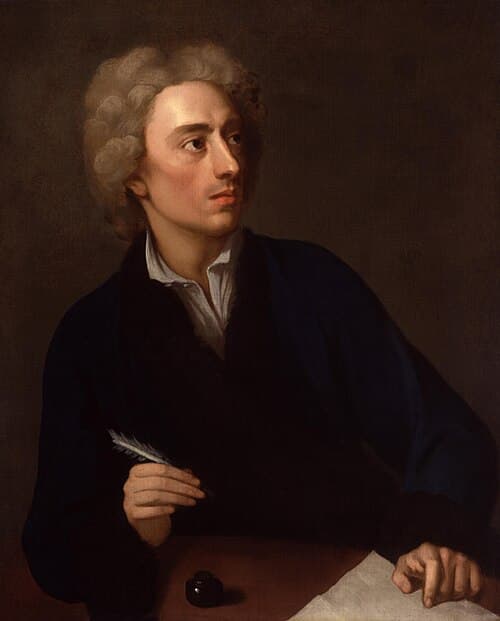
This imaginary interview was generated by artificial intelligence from sources documented in Abbé Prévost's profile. It dramatises what the figure might have said based on what we know about them, but does not constitute attested historical testimony. For primary sources and factual documentation, refer to the full profile.