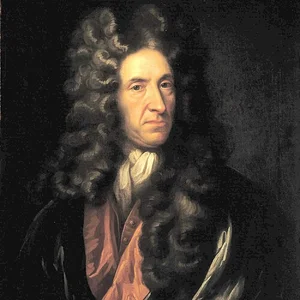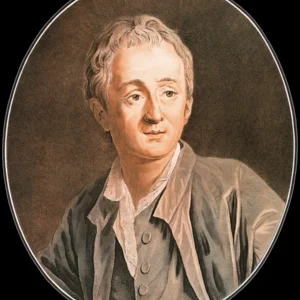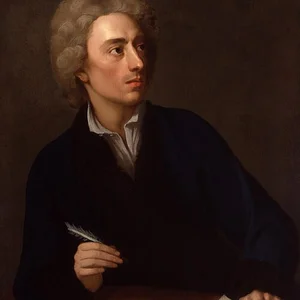

Alexander Pope was a British poet and essayist of the 18th century, a major figure of English Neoclassicism. A master of the rhymed heroic couplet, he is celebrated for his satirical and philosophical poems as well as for his translations of Homer's *Iliad* and *Odyssey*.
Alexander Pope(1688 — 1744)
Alexander Pope
royaume de Grande-Bretagne, royaume d'Angleterre
7 min read
Frequently asked questions
Famous Quotes
« To err is human, to forgive divine.»
« A little learning is a dangerous thing.»
« Hope springs eternal in the human breast.»
Key Facts
- Born in 1688 in London into a Catholic family, which deprived him of a formal education and civil rights in Protestant England
- Published the *Essay on Criticism* in 1711, which established him as a poet and literary theorist
- Brought out *The Rape of the Lock*, a mock-heroic poem, in 1712 and then 1714
- Produced a verse translation of the *Iliad* (1715-1720) and then the *Odyssey*, a financial success that secured his independence
- Published *The Dunciad* (1728) and the *Essay on Man* (1733-1734), before his death in 1744
Works & Achievements
A didactic poem in heroic couplets setting out the principles of literary taste; it contains phrases that became proverbial and revealed Pope's genius.
A mock-heroic poem that transforms a trivial society quarrel into a burlesque epic. A masterpiece of Pope's satirical wit.
A translation in heroic verse praised for its elegance; a financial success that made Pope independent of patrons.
A translation of the Odyssey carried out with collaborators, extending the triumph of the Iliad.
A critical edition of Shakespeare's plays by Pope, important despite its corrections being disputed by scholars.
A biting satire against mediocrity and bad authors, in which Pope settles his literary scores with ferocious virtuosity.
A long philosophical poem on humankind's place in the universe, defending a providential optimism. Pope's most translated and most debated work in Europe.
A series of satirical and moral epistles on wealth, taste and human nature, consummate examples of his art of the portrait.
Anecdotes
Afflicted from adolescence by a form of bone tuberculosis (Pott's disease), Pope stopped growing and never exceeded 1.37 metres in height, his back hunched and his body weakened. He had to wear a stiff canvas corset to hold himself upright and needed help to dress, but he turned this disability into creative strength through relentless work.
Born a Catholic in Protestant England, Pope was barred from the universities, from public office, and even forbidden to live within 16 kilometres of London. Largely self-taught, he learned Latin, Greek, French and Italian on his own by devouring the family library.
His translation of Homer's *Iliad* was an enormous commercial success: thanks to subscriptions, it earned him enough to live comfortably and made him the first English poet to become financially independent through his pen, without depending on a patron.
Pope took revenge on his literary enemies in his satires, notably in *The Dunciad*, a poem in which he ridiculed the bad writers of his day by name. He stirred up so much hatred that he took to walking with his Great Dane and a pair of pistols to protect himself.
At his villa in Twickenham, Pope had a famous grotto dug out and adorned with shells, mirrors and minerals, linking his house to his garden beneath a road. He made it a place of meditation and conversation, a symbol of his taste for studious retreat.
Primary Sources
A little learning is a dangerous thing ; / Drink deep, or taste not the Pierian spring.
Whatever is, is right. — a phrase summing up the philosophical optimism of the poem on the place of man within the divine order.
What dire offence from amorous causes springs, / What mighty contests rise from trivial things.
To err is human, to forgive divine.
Key Places
Pope's birthplace, in a family of Catholic merchants in the City. Anti-Catholic legislation would soon force the family to leave the capital.
Village in Berkshire where the Pope family settled to comply with the ban forbidding Catholics from living near London. The young Pope educated himself there as a self-taught scholar.
Villa on the banks of the Thames where Pope lived from 1719 until his death, famous for its landscaped garden and its grotto. The centre of his literary and social life.
Vast estate where Pope advised on the design of landscaped gardens, an art of which he was one of the leading promoters in England. A place of stays and inspiration.
Parish church where Pope was buried in 1744 and where a monument is dedicated to him. A place of remembrance for the poet.
Typical Objects

Pope's favourite poetic form: two rhymed lines in iambic pentameter. He turned it into an instrument of perfect concision and balance, and it became his signature.

The poet's everyday tool, with which Pope tirelessly drafted and crossed out his manuscripts. He was famous for rewriting every line endlessly.

A stiff canvas frame that Pope, who suffered from a curvature of the spine, had to wear to hold himself upright. An intimate object that bears witness to his physical frailty.

The register of subscribers who paid in advance for the translation of the Iliad and the Odyssey. This innovative system gave Pope financial independence.

A luxurious multi-volume edition of Pope's translation of Homer. A bestseller of the 18th century, it made his fortune and his European fame.

An underground passage decorated with shells, mirrors and minerals, built by Pope beneath a road linking his house to his garden. A place for meditation and learned conversation.
School Curriculum
Vocabulary & Tags
Key Vocabulary
Tags
Daily Life
Morning
In fragile health, Pope often rose late and needed help to dress and lace the support corset he wore. He devoted his mornings to reading the Greek and Latin classics and to the slow, meticulous crafting of his verses.
Afternoon
In the afternoon, he drew up plans for his garden at Twickenham or oversaw the building of his grotto. He frequently received his writer friends, such as Jonathan Swift or John Gay, for long conversations.
Evening
In the evening, Pope carried on his work of writing and revision, tirelessly reworking his couplets. He kept up an abundant correspondence, which he took care to preserve and sometimes to polish with an eye to publication.
Food
Pope was known to be a hearty eater despite his sickly frame, enjoying fine dishes that were sometimes too rich for his weak health. His garden supplied him with fruits and vegetables, and he loved to treat his guests to carefully prepared meals.
Clothing
He wore the dress of a Georgian gentleman — frock coat, waistcoat, breeches, and powdered wig — tailored to his small stature. Beneath his clothes, he concealed the canvas corset that supported his curved back.
Housing
Pope lived in a villa on the banks of the Thames at Twickenham, which he laid out with a refined landscaped garden and a famous decorated grotto. This home, funded by the success of his translations, became a place of literary pilgrimage.
Historical Timeline
Period Vocabulary
Liens externes & ressources
Références
Œuvres
An Essay on Criticism (Essai sur la critique)
1711
The Rape of the Lock (La Boucle de cheveux enlevée)
1712-1714
Traduction de l'Iliade d'Homère
1715-1720
Traduction de l'Odyssée d'Homère
1725-1726
Édition des œuvres de Shakespeare
1725
The Dunciad (La Dunciade)
1728-1743
An Essay on Man (Essai sur l'homme)
1733-1734