Imaginary dialogue between Horace Greeley and Abraham Lincoln
by Charactorium · Abraham Lincoln (1809 — 1865) · Politics · 5 min read
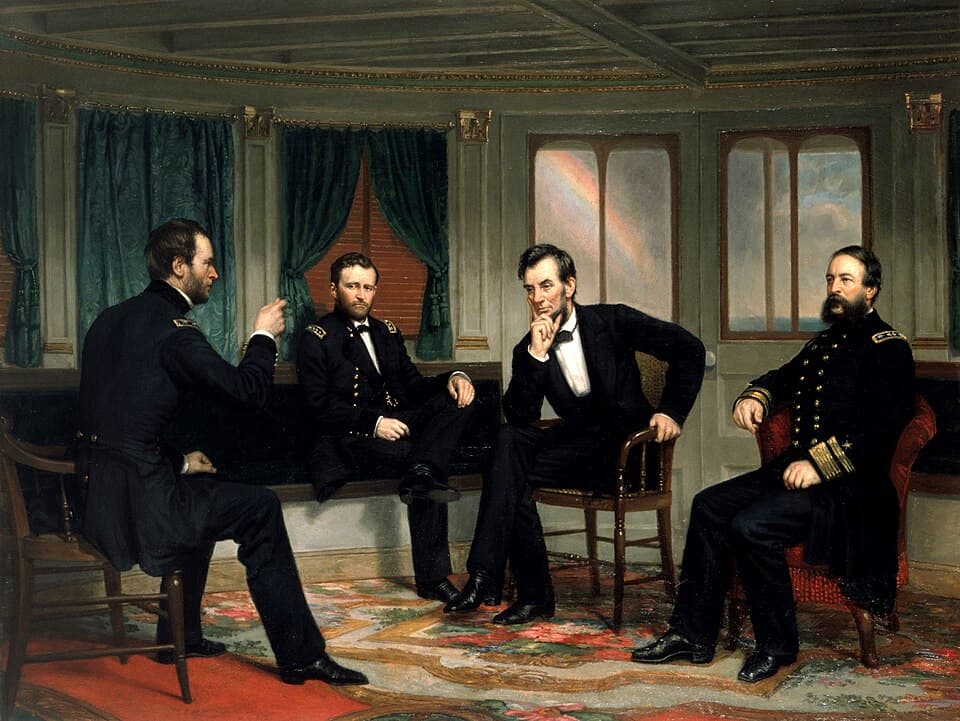
It is in a poorly heated parlor of the White House, in this month of March 1865, that Horace Greeley meets the president, a few days after his second oath. A staff map is pinned to the wall, and the distant crackle of the telegraph comes through the partition. The two men have known each other for a long time: the editor of the New York Tribune has pressed, harassed, sometimes exasperated Lincoln on slavery — and still remembers the public reply the president sent him in the summer of 1862. Greeley comes this evening to seek, behind the statesman, the man himself.
—Mr. President, in August 1862 I called on you to act against slavery. You replied through the press. Do you regret it today?
I do not regret a word, Greeley, and you who published my letter know why I wrote it as I did. My first duty was to save the Union — I said it bluntly: if I could save it without freeing a single slave, I would have done so. But understand me well: that was my official duty, not my personal wish. I already had in my drawer the Proclamation I would sign in January. I wanted the nation to follow me, not to rush ahead into the abyss. You reproached me for my slowness; I was waiting for the hour when the country would be ready to hear that this war was becoming a war for liberty. The abolitionist presses; the president must also count his steps.
The abolitionist presses; the president must also count his steps.
—You speak of the ready hour. The Proclamation of 1863 only freed the slaves of the rebellious South. Wasn't that a half-measure?
You are not the only one to have thrown that in my face, and I owe you the truth. As president, I had the power to strike slavery only as a war measure in the states in rebellion — the Constitution bound my hands elsewhere. A half-measure, yes; but a half-measure that swung hundreds of thousands of men to the side of the Union, musket in hand. That is why I pushed so hard for the Thirteenth Amendment: only it could uproot slavery everywhere, forever. The Proclamation opened the door; the Amendment condemns it forever. I did not want a man's freedom to one day depend on the mood of a court.
The Proclamation opened the door; the Amendment condemns it forever.
—At Gettysburg, in November 1863, you spoke for only two minutes. Many of my colleagues found the address too brief. Did you expect such silence?
Two minutes, Greeley, and two hundred and seventy-two words — I counted. Edward Everett spoke for two hours before me, learnedly, and no one faulted him. I stood before fresh graves and grieving families; it was not the place for a long speech. I only wanted to remind that our fathers brought forth on this continent a nation conceived in liberty, dedicated to the proposition that all men are created equal — and that it was for us, the living, to finish their work. If some editors found that meager, let them read it again. The world, I fear, will little note what we say here — but it can never forget what those soldiers did here.
Before fresh graves, it was not the place for a long speech.
—They say you are glued to the telegraph desk at the War Department. How does one run such a war, dispatch after dispatch?
Often badly, and always late. I spend my nights in the telegraph office, waiting for the wires to spit out news from Antietam, Gettysburg, the Wilderness. You cannot imagine the agony of a man reading, line by line, the fate of a hundred thousand of his own without being able to lift a finger. That copper wire has made me master of my generals as no president ever was — and prisoner of every silence between dispatches. I had to take harsh measures, suspend habeas corpus in some places, and I know your pen has not forgiven me. But a house on fire is not saved by debating the firemen's rules.
A house on fire is not saved by debating the firemen's rules.
—Here you are at the top of the state. Yet you never sat on a school bench. How did the child of Hodgenville become a lawyer?
Scarcely a year of schooling in all, my friend, added up in bits. The rest I took from books, in the evening, by firelight, in Kentucky and then Illinois. I taught myself law alone, borrowing whatever books I could, sometimes copying them because I could not keep them. They took me for a backwoods rustic; I ended up pleading in Springfield among the best lawyers in the state. I say this not out of pride — God knows I wish I had studied better — but so that the sons of cabin-dwellers may know that no barrier is entirely closed. That is what I defend at bottom: a country where the woodcutter can become a lawyer, and the lawyer, who knows, something more.
A country where the woodcutter can become a lawyer, and the lawyer, who knows, something more.
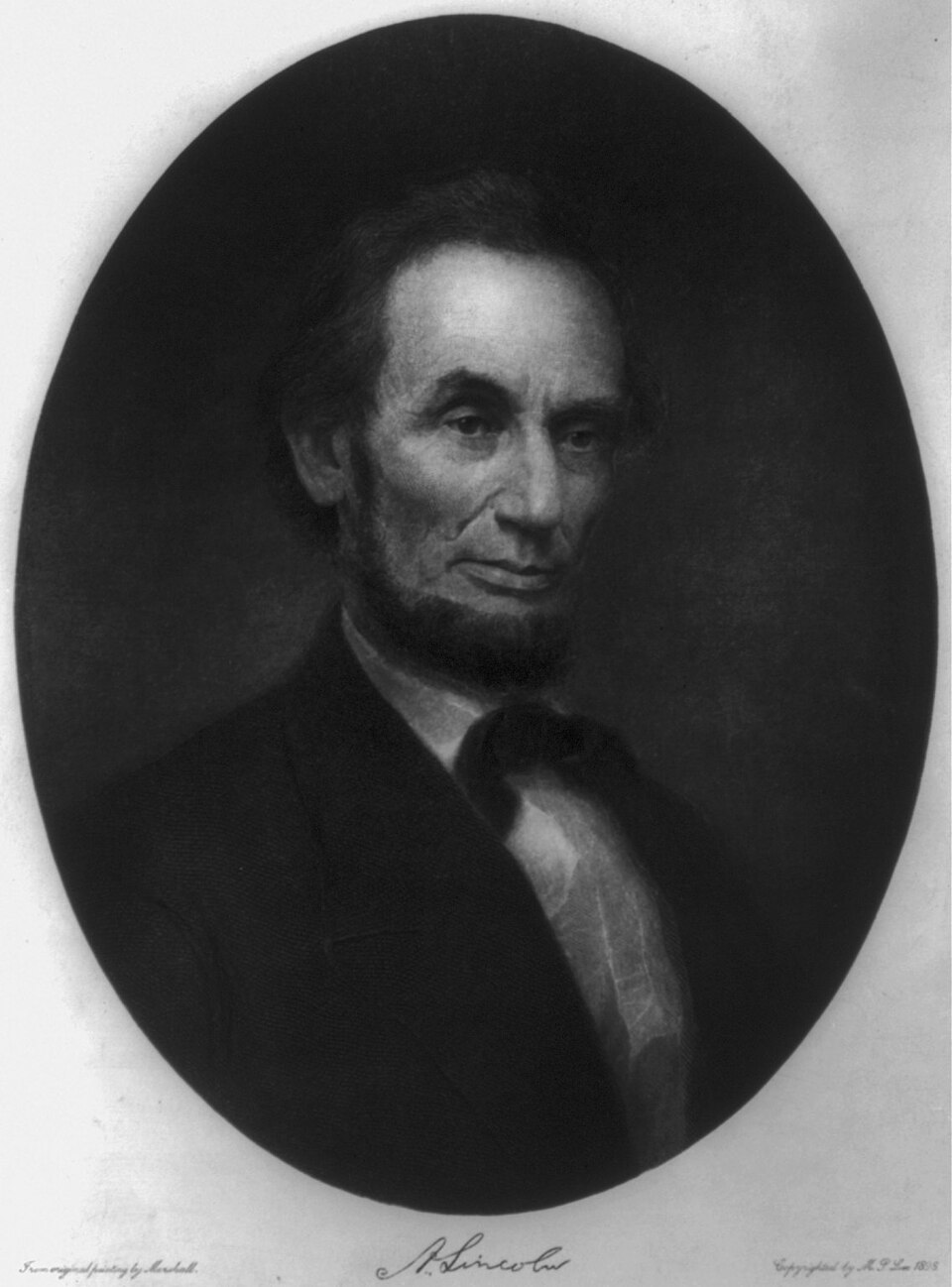
—You mentioned those nights of reading. Do you truly believe a man makes himself entirely, without master or degree?
Entirely, no — no one does. I had for masters the books of others, and for school the muddy roads where I rode the circuit of the Illinois courts, county to county. But I firmly believe a man has the right to rise by his own labor, and that is the very genius of our Republic. That is precisely the vice of slavery: it steals from a man the fruit of his labor, it forbids him to climb the ladder. I climbed rung by rung; I cannot bear the idea of pulling the ladder away from others. Free labor — that is my political faith even before my moral faith.
I climbed rung by rung; I cannot bear the idea of pulling the ladder away from others.
—I find you hollow-cheeked tonight. They whisper that melancholy has always weighed on you. What do you do with that burden?
What you call melancholy, I learned early to call my dark moods — what others call the blues. It has followed me since Illinois, Greeley, long before the war, and the war has not helped. When the night weighs too heavily, I take a volume of Shakespeare and read aloud, under my breath, for anyone who will listen — often no one. Macbeth especially, which knows much about blood and remorse. And there is Mary, whose grief sometimes equals mine since we lost our little Willie. You see a president; I am also a man who sleeps poorly. But you do not lay down the burden of a nation because your heart is heavy.
You see a president; I am also a man who sleeps poorly.

—You frequent Ford's Theatre, they say, despite the threats against you. Is that not imprudent for a president at war?
Threats — I receive a full drawer of them, and if I counted them I would never leave this house. The theatre is the only place where I forget for an hour the telegraph and the casualty lists; they would do me a favor by letting me laugh there. If a man is determined to take my life at the cost of his own, I hardly see how to prevent him entirely. I prefer to live as a free man the days that remain to me rather than as a trembling recluse. Besides, the war is ending, Greeley — Lee will not hold out much longer. My mind is already on the South afterward, on what must be rebuilt, far more than on ghosts that might lurk in the boxes.
I prefer to live as a free man the days that remain to me rather than as a trembling recluse.
—The war is drawing to a close. You who so often preached firmness toward the South, do you now intend to punish the rebels?
There you reverse the roles, my old goad — it was you who demanded severity, and it is I who preach leniency! I just said it under the Capitol a few days ago: with malice toward none, with charity for all, let us finish the work. I want neither gallows nor vengeance. Those Southern men will become our fellow citizens again, and you do not rebuild a house by hating those who must inhabit it. My plan for Reconstruction will be lenient, I intend it so, even if I fall out with the hard-liners of my own party. The war has already paid a blood price that no punishment can increase without new crime.
You do not rebuild a house by hating those who must inhabit it.
—One last question, Mr. President. When all is said and done, by what would you have your time here measured?
That is an editor's question, already looking for his article! I do not like to speak of myself in the future — leave that to the stonecutters. If anything is to be remembered, let it be this: under my hand, a nation conceived in liberty did not perish, and four million souls ceased to be chattel. I invented nothing, Greeley; I only held firm where others might have let go. The Thirteenth Amendment ratified, the Union saved, the South soon back in the fold — if History will grant me that, I will consider myself quits. The rest, my dark moods and sleepless nights, let them be forgotten: they are not the business of posterity.
A nation conceived in liberty did not perish, and four million souls ceased to be chattel.
This imaginary interview was generated by artificial intelligence from sources documented in Abraham Lincoln's profile. It dramatises what the figure might have said based on what we know about them, but does not constitute attested historical testimony. For primary sources and factual documentation, refer to the full profile.