Imaginary interview with Abraham Lincoln
by Charactorium · Abraham Lincoln (1809 — 1865) · Politics · 6 min read
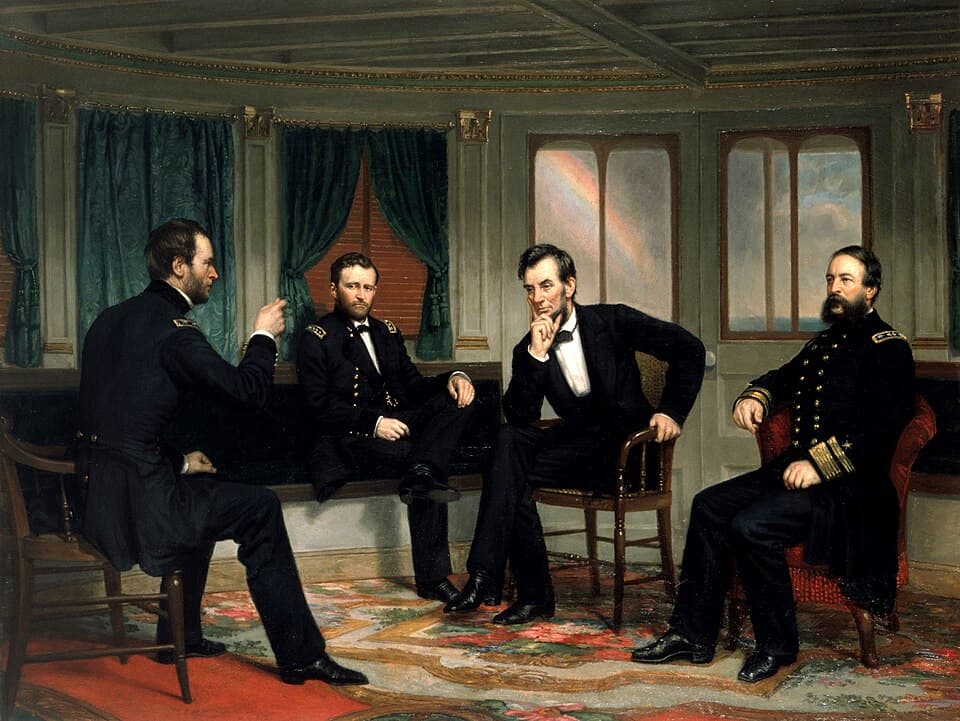
Washington, late winter 1865. Snow is melting on the lawns of the White House and the war, at last, seems to be drawing to a close. In an office cluttered with maps and telegraph dispatches, a tall, stooped man, his face hollowed by four years of sleepless nights, agrees to look back on the journey that began in a log cabin in Kentucky.
—How did a child born into the deepest poverty become one of the most respected lawyers in his state?
I was born in February 1809, in a log cabin near Hodgenville, deep in Kentucky. My father could barely write his own name; I attended school only in snatches, perhaps a year in total, gleaned between two seasons of clearing fields. Everything else I learned from the few books I carried to the fields, reading by firelight when the axe was at rest. They say today that I became a respected lawyer in Illinois; I assure you, no diploma led me there, only the stubbornness of a man who refused to remain ignorant. Grammar, surveying, then law: I had no teacher but myself, and that teacher gives no quarter.
I had no teacher but myself, and that teacher gives no quarter.
—What does the city of Springfield, where it all truly began, mean to you?
In 1837, I loaded my belongings onto a borrowed horse and rode into Springfield with nothing but a few debts and a trunk of law books. I opened a practice there, argued before circuit courts, rode through the counties to defend farmers and merchants. It was in those dusty courtrooms that I learned to weigh an argument like grain — without haste, looking the man straight in the eye. Politics came later, almost naturally: whoever knows how to plead a case soon learns to plead before a people. And it was from that same city, twenty-three years later, that I left for Washington, my heart heavy, knowing I might never see my home again.
—You have been criticized for placing the Union before the freedom of the slaves. What do you say to that criticism?
I will not deny it: I spoke of the Union long before I spoke of emancipation. In August 1862, I wrote to Horace Greeley these lines that I still stand by: 'My paramount object in this struggle is to save the Union. If I could save the Union without freeing any slave, I would do it; if I could save it by freeing all the slaves, I would do it.' Understand the meaning of these words: I had sworn to preserve the nation, not to follow my own inclinations alone. But my duty as magistrate is one thing, my wish as a man another — and I never ceased to wish that all men, everywhere, might be free. Time and war finally reconciled the two.
—Do you remember the moment you signed the Emancipation Proclamation?
On January 1, 1863, after the terrible carnage at Antietam that had finally given me the chance to act without seeming desperate, I took up the pen. My hand trembled — not from doubt, but because I had shaken so many hands that morning at the New Year's reception that my fingers were numb. I told myself that if ever my soul had been poured entirely into an act, it was this one. The Emancipation Proclamation declared that all slaves in the rebellious states 'are, and henceforward shall be free.' I knew a war decree would not suffice, that it would need to be inscribed in the Constitution itself. But on that day, the Civil War ceased to be a border quarrel and became a fight for freedom.
If ever my soul had been poured entirely into an act, it was this one.
—How could a president follow the fate of battles hundreds of miles away?
My days began before dawn, and the first path my steps took was not to the breakfast table, but to the telegraph office at the War Department. There I would sit among the young operators, waiting for the wires to spit out news from the front — sometimes a victory, more often a long list of the dead. That machine transformed the way war was waged: I could press a distant general, send an order in minutes, where once a courier would have taken days. I spent hours there, reading every dispatch, dictating my replies. They saw me fall asleep there, my head on the table, waiting for some distant battlefield to finally deliver its verdict.
—How did you learn to lead an army, you who had never been a man of war?
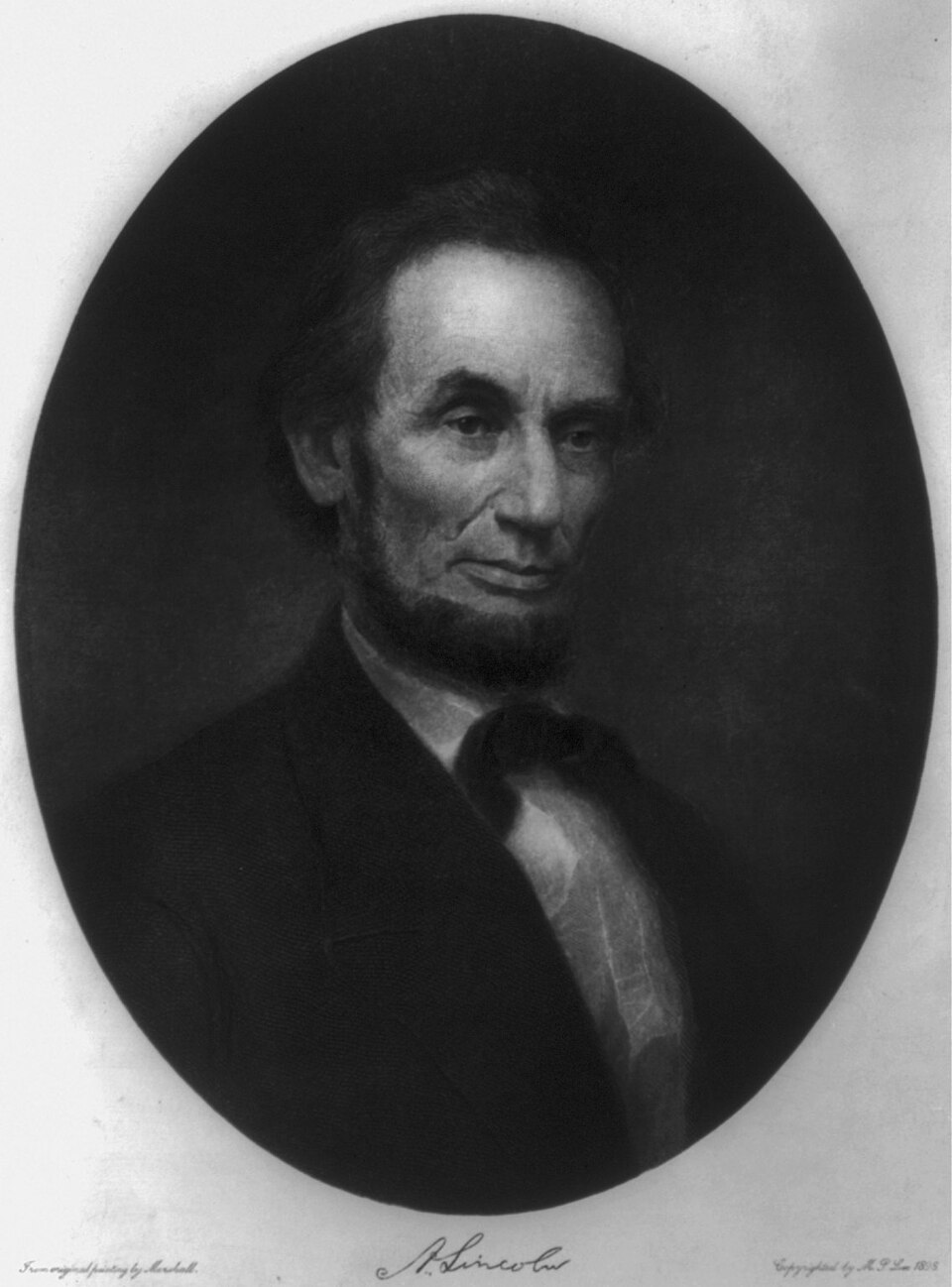
In my youth, I had commanded only a meager company of militiamen against the Indians, and even then without firing a single shot. Yet here I was, commander in chief of the largest army this continent had ever known. I had to learn war as I had learned law: from books, borrowing strategy treatises from the Library of Congress, reading them at night. My true torment was not the enemy, but my own generals — slow, cautious to the point of paralysis. How many times did I beg McClellan to advance! Preserving the Union required striking again and again, without retreating even after the worst days. I carried those dead as an intimate burden — every telegram bore a name, and every name a grieving home.
—What happened inside you on November 19, 1863, when you rose to speak on the field of Gettysburg?
That day, I stood on a hill at Gettysburg where, four months earlier, tens of thousands of men had fallen. I had been asked to offer 'a few appropriate remarks' after a famous orator who spoke for two hours. I spoke for two minutes. I said: 'Four score and seven years ago our fathers brought forth on this continent a new nation, conceived in liberty and dedicated to the proposition that all men are created equal.' Two hundred and seventy-two words, not one more. Before those still-fresh graves, before those grieving families, it seemed to me that grandiloquence would have been an insult. The dead had already said everything; all that remained for me was to promise that their sacrifice would not be in vain.
The dead had already said everything; all that remained for me was to promise that their sacrifice would not be in vain.

—Why does the idea that all men are created equal occupy such a central place in your thought?
That phrase is not mine; our fathers inscribed it in the Declaration of 1776, and my whole life I have returned to it as to a compass. During my debates with Douglas in 1858, before the crowds of Illinois, I hammered home that this proposition was not an accomplished fact, but a promise, a horizon toward which a nation must march without ceasing. They answered me that it applied only to men of my color; I could never accept that. For if you exclude a single man from this principle, who guarantees that you will not be excluded tomorrow? At Gettysburg, I wanted to remind that the whole nation was 'dedicated' to that idea, and that the war was testing whether such a nation could long endure.
—Your melancholy is often spoken of. How did you live with that shadow while carrying the country on your shoulders?
Yes, I have known that shadow since my youth; I call it 'the blues.' There were years when my friends hid knives and razors, so much did they fear for me. That melancholy never left me; it only learned to walk beside me. And, strangely, I believe it made me better at my office: a man who has touched the depths of despair is not easily frightened, and he senses the pain of others without needing it explained. In the evenings at the White House, when the weight of war became unbearable, I would read Shakespeare aloud, or sit in silence. My dear Mary, herself tormented, did not always understand these retreats. But it was there that I found the strength to go on.
That melancholy never left me; it only learned to walk beside me.
—Now that the war is ending, many call for vengeance against the South. What peace do you want to build?
In March 1865, at my second inauguration, everyone expected me to demand punishment of the South. I did not. I said: 'With malice toward none, with charity for all, with firmness in the right as God gives us to see the right, let us finish the work we are in.' My Reconstruction plan calls for clemency: to bind up the nation's wounds, to bring back the strayed states without humiliating them. Too much blood has already been shed to demand more in a spirit of reprisal. I dream of a peace where the master of yesterday and the slave of yesterday can live under the same flag, now washed of the shame of bondage. If God grants me life, it is to this task that I wish to devote what remains of me.
This imaginary interview was generated by artificial intelligence from sources documented in Abraham Lincoln's profile. It dramatises what the figure might have said based on what we know about them, but does not constitute attested historical testimony. For primary sources and factual documentation, refer to the full profile.