Kids interview Abraham Lincoln
by Charactorium · Abraham Lincoln (1809 — 1865) · Politics · 5 min read
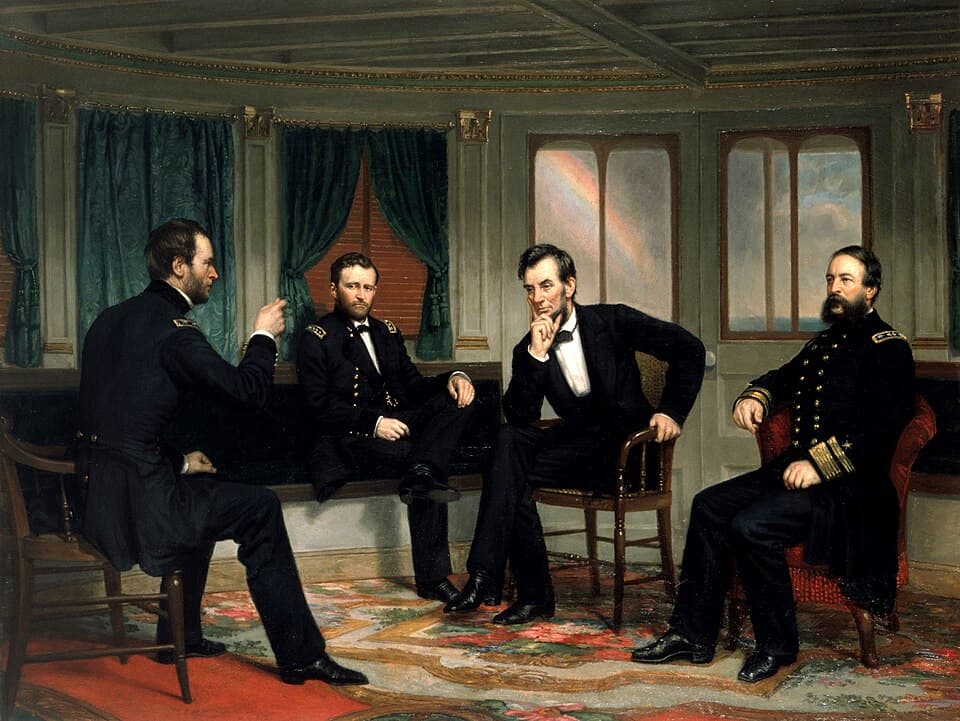
Two young visitors, each twelve years old, enter a White House office. A tall, thin man in a black top hat awaits them, his smile tired but gentle. He invites them to sit and says he likes children's questions.
—Is it true you were born in a wooden cabin?
Yes, my child, it's quite true. I was born in 1809 in Hodgenville, Kentucky, in a log cabin. Imagine a single room made of stacked logs, a dirt floor, and the cold seeping between the timbers. My parents were very humble pioneers. We had almost nothing. When I look at this grand office today, I sometimes find it hard to believe. You know, you don't choose where you are born. But you can decide, every day, to walk a little farther than the day before.
You don't choose where you are born, but you choose where you walk.
—You became a lawyer without ever going to school? How?
With books, my child, and a lot of candles! I hardly ever went to school. So I taught myself. In the evenings, after work, I read law by the firelight. Imagine a boy borrowing a heavy book from miles away, and returning it having learned it by heart. That was me. In 1837, I settled in Springfield, Illinois, as a lawyer. People came to see me because I explained things simply. You don't need a big school to learn. You need desire, and a candle that lasts through the night.
You don't need a big school, but a candle that lasts the night.
—At first, why did you want to save the country before freeing the slaves?
Ah, that's a fair question, and a hard one. In my time, eleven Southern states had decided to leave, to secede. The country was breaking in two. I once wrote to a journalist: "My paramount object in this struggle is to save the Union." You see, if the house collapses, you can't protect anyone inside. First, I wanted to keep the house standing. But in my heart, I had always hated slavery. Little by little, I saw that you couldn't save the country without breaking those chains. The two fights became one. Saving the Union also meant freeing men.
If the house collapses, you can't protect anyone inside.
—What exactly was the Emancipation Proclamation?
It was a decree, my child, a paper signed by my hand at the very beginning of 1863. It declared free the slaves in the states that had rebelled against us. Imagine a single document telling millions of men: you are no longer anyone's property. It was immense, but it wasn't finished yet. That decree only affected the rebel states. So I pushed to go further: the Thirteenth Amendment, in 1865, abolished slavery everywhere, forever, throughout the Constitution. The war was no longer just a war to keep the country. It had become a war for freedom.
A single paper telling millions of men: you are no one's property.
—How did you manage to run a war from your office?
Good question! I wasn't on the battlefields, you know. I was in Washington, in my office. But every morning, before dawn, I read the dispatches that had arrived overnight. They were messages from my generals, telling me how the fighting was going. Imagine a man bent over papers, trying to guess, hundreds of miles away, what was happening in the smoke and noise. I gave my orders, I appointed commanders, I dismissed others. Running a war isn't shouting on a horse. It's reading, thinking, and deciding when you are very, very tired.
Running a war isn't shouting on a horse. It's deciding when you're exhausted.
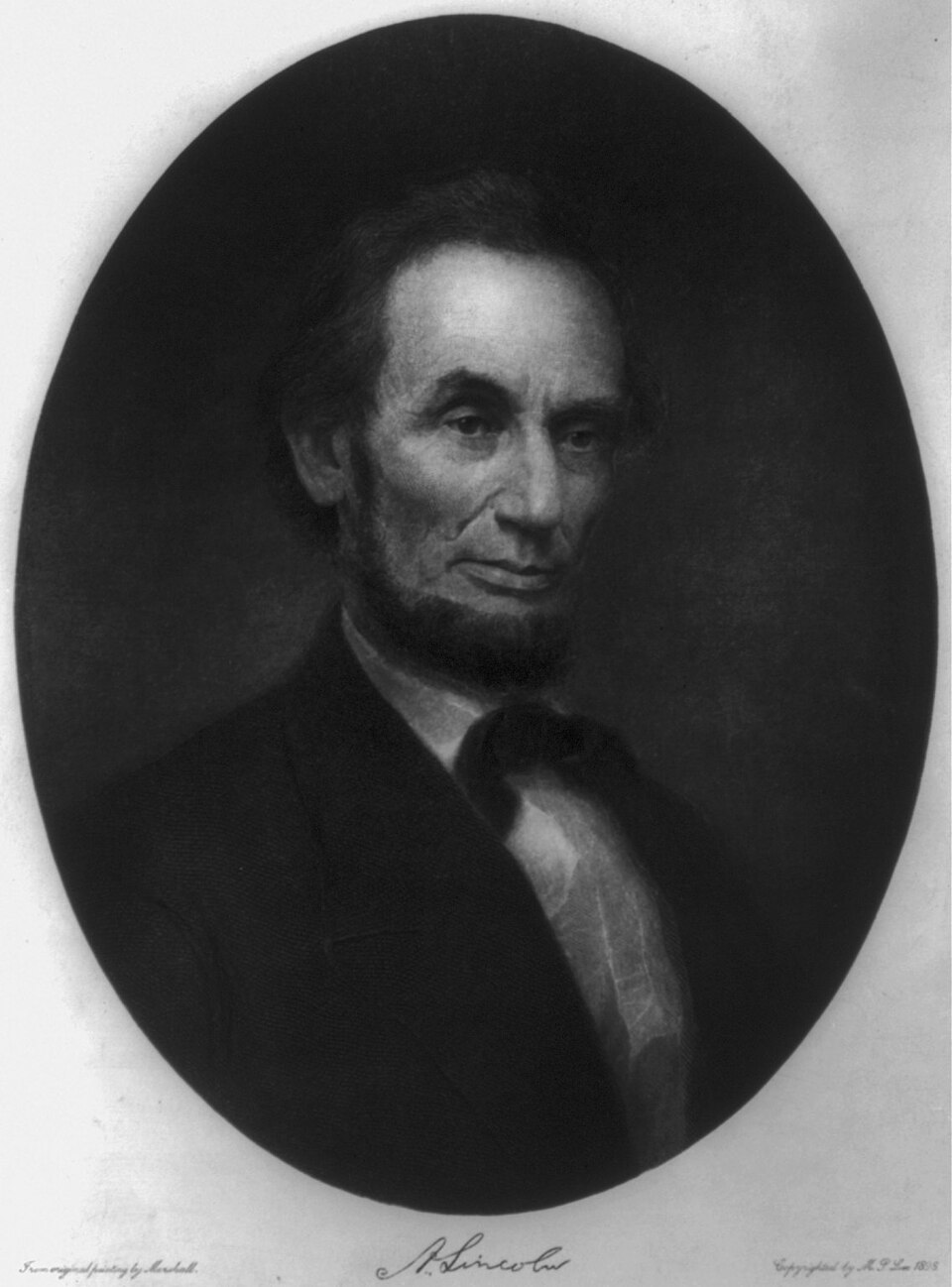
—What was the telegraph? What was it used for?
Ah, the telegraph! In my time, it was our greatest wonder. Imagine a metal wire strung on poles, crossing forests and plains. At the end of the wire, you tap little signals, short and long beats, and a message arrives almost instantly far away. Before that, it took a rider days to deliver news. Now, in minutes, I knew if a battle was won or lost. I often went to the telegraph office and waited, heart tight, for the machine's clicking. That's how I stayed in touch with my generals. Without that wire, I would have been blind.
Without that metal wire, I would have run the war blindfolded.
—The Gettysburg Address—did you think about it for a long time?
Longer than people think. In 1863, at Gettysburg, there had been a terrible battle. I was asked to say a few words to honor the fallen soldiers. Before me were grieving families, mothers, fathers who had lost everything. You know, it's heavy to speak to people who are crying. I didn't want to give a long, learned speech. I wanted true words. I began like this: "Four score and seven years ago, our fathers brought forth on this continent a new nation, conceived in liberty." I wanted those dead to serve a purpose: that the country might be reborn more just.
It's heavy to find the right words before people who are crying.

—Why was your speech only 272 words? That's very short!
You're right, it's very short! Many speakers that day spoke for two hours. I spoke for barely two or three minutes. 272 words, not one more. Why? Because I believe a simple truth strikes harder than a long sermon. Imagine a stone thrown straight: it goes far because it's small and dense. I wanted to say one thing, but say it so it would be remembered. That all men are created equal, and those soldiers died for that. Sometimes, my child, fewer words mean more heart. The silence around weighs more than chatter.
A simple truth strikes harder than a long sermon.
—Did the war make you sad deep down?
Yes, my child. I won't lie to you. I carried sadness all my life, a melancholy I called my "blues." And the war made it heavier still. Imagine that every day, they bring you the list of boys who died overnight. Thousands of broken families. I felt that weight on my shoulders like a lead cloak. Yet I rose before dawn and kept going. Why? Because men were counting on me. Being sad does not excuse you from moving forward. Quite the opposite: it is often those who hurt who best understand the pain of others.
Being sad does not excuse you from moving forward.
—In the evening, after those hard days, what did you do to feel better?
In the evening, I sought some calm, my child. Often I worked late, reading letters and thinking about the next day's decisions. But when my heart was too heavy, I would take a book of Shakespeare and read his plays aloud. His words comforted me. My wife, Mary, also suffered from great sadness, so we tried to keep each other warm, as best we could. You know, even a president needs gentleness in the evening. When the war was nearly over, I wanted a country without rancor: "With malice toward none, with charity for all." Forgiving was my way of healing.
With malice toward none, with charity for all.
This imaginary interview was generated by artificial intelligence from sources documented in Abraham Lincoln's profile. It dramatises what the figure might have said based on what we know about them, but does not constitute attested historical testimony. For primary sources and factual documentation, refer to the full profile.