Imaginary dialogue between Venkatraman Ramakrishnan and Ada Yonath
by Charactorium · Ada Yonath (1939 — ?) · Sciences · 5 min read
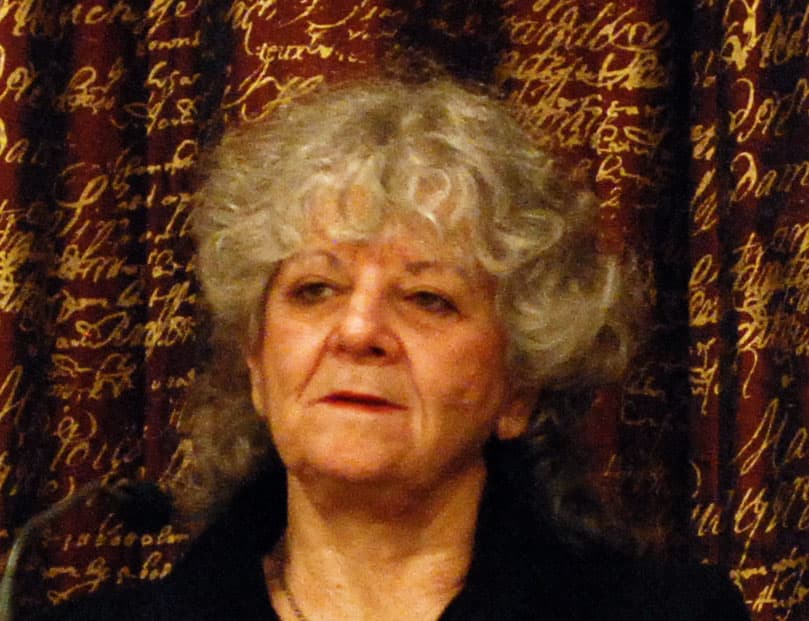
It is in a sunlit office at the Weizmann Institute in Rehovot that, one morning in the autumn of 2009, Venkatraman Ramakrishnan comes to meet Ada Yonath, just a few weeks after the announcement of the Nobel they share with Thomas Steitz. On the table, a model of a ribosomal subunit and the lingering smell of liquid nitrogen still floating in from the cold-room corridor. Longtime fierce rivals on the same mountain—the structure of the ribosome—they eye each other with that slightly rough respect of rivals turned accomplices. Venkatraman has come to push her on her methodological choices, as in the days when their teams competed for beamlines.
—Ada, when I started on the ribosome, people told me you had been pursuing it for twenty years under mockery. How did you hold on?
You who have known the skepticism of committees can barely imagine what it was like in 1980, Venki. They called me the Don Quixote of crystallography, talked about science fiction, the village fool. Crystallizing such a huge, unstable machine, so devoid of internal symmetry—no one believed it. For nearly twenty-five years, I moved forward, enduring smirks at every conference. But I knew one simple thing: if the cell produces these particles by the thousands in perfect order, then nature already organizes them. I just had to learn to speak to them. The first three-dimensional crystal of Bacillus stearothermophilus, diffracting beyond three and a half angstroms, silenced many laughs that day.
They talked about science fiction; I knew nature already organized them.
—Yet between that first crystal in 1980 and a real readable map, years passed. Did you ever think of giving up?
Never really, even when everything collapsed. Those crystals degraded under the beam in seconds, they didn't look the same from one sample to another—what we called severe non-isomorphism—and radiation burned them before we could measure anything. Every victory opened ten new obstacles. But you see, I grew up in Jerusalem climbing furniture to reach books too high; I even broke my arm once. You don't recover from that kind of curiosity. The first electron density maps, between 1984 and 1987, showed the internal organization of the particle. That day, the community understood the mountain was not insurmountable—and that's when, my friend, people like you arrived.
Every victory opened ten new obstacles.
—Let's talk technique, since you've always beaten me on that. This idea of freezing crystals in liquid nitrogen—where did it really come from?
From polar bears, believe it or not—and I know you only half believe me. I was reading an article about how these animals survive hibernation, how their tissues resist immobility and extreme cold. I thought: if I freeze my crystals at minus one hundred ninety-six degrees in liquid nitrogen, maybe I'll slow down radiation damage enough to measure clear diffraction. Cryocrystallography was born from that almost naive analogy. At first, people shrugged, another fad. Today, as you and I both know, no structural biology lab works any other way. The best ideas rarely come from pure reasoning: they come from what you read at night while thinking about your crystals.
Cryocrystallography was born from an article on polar bears read one evening.
—We both bet on exotic bacteria. You on extremophiles, me on Thermus thermophilus. Why did that choice matter so much?
Because the crystal forgives no fragility, Venki. A ribosome from an ordinary organism is soft, fluctuating, it refuses to align into a lattice. So I looked for microorganisms living in extremes: hot springs, very salty seas, environments where life shouldn't exist. Their ribosomes, shaped to endure heat or salt, are much more robust and let themselves be ordered. Bacillus stearothermophilus first, then Deinococcus radiodurans for the large subunit—that bacterium that survives lethal radiation. The structure we derived from it in 2001, in Cell, revealed the binding sites of antibiotics. Choosing the right bacterium was already solving half the problem. A biologist's trick as much as a chemist's—and you made the same bet on your side.
Choosing the right bacterium was already solving half the problem.
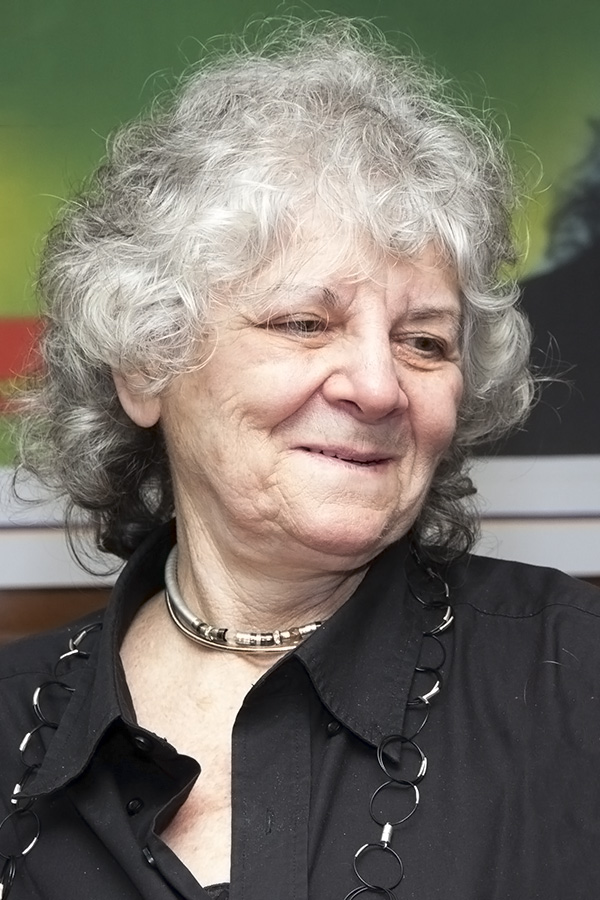
—Your structure of the small subunit in 2000 revealed the decoding center. Did you already sense what it would say about antibiotics?
Not in full scope, but the intuition was there. When the structure by Schlünzen et al. appeared in Cell at three point three angstroms, we saw for the first time, at atomic scale, the exact place where the ribosome reads the genetic message. And it is precisely there, and on the large subunit, that so many essential antibiotics bind. Understanding how a molecule attaches there is understanding how to treat—and how the bacterium defends itself. Our work up to 2009 showed how bacteria modify their own ribosome to resist, and how to design molecules that can circumvent that resistance. Seeing a therapeutic mechanism in an electron density map is the moment when crystallography stops being abstract. It saves lives.
Understanding how a molecule attaches to the ribosome is understanding how to heal.
—Our two teams, along with Steitz's, published almost simultaneously in 2000. Did that rivalry help or hurt you, frankly?
Frankly? Both, and I don't regret it for a second. You and Tom arrived with your synchrotrons and your fervor at a time when I had already broken ground for twenty years. There was bitterness, I won't hide it—you don't like seeing others run on the path you opened alone under mockery. But the competition accelerated discoveries; it forced us all to be more rigorous, faster, more honest. Without that three-team race, the ribosome structure would have taken ten more years to become atomic. Today we share the same reward, and I prefer a demanding rival like you a thousand times over a desert of polite silence.
I prefer a demanding rival a thousand times over a desert of polite silence.
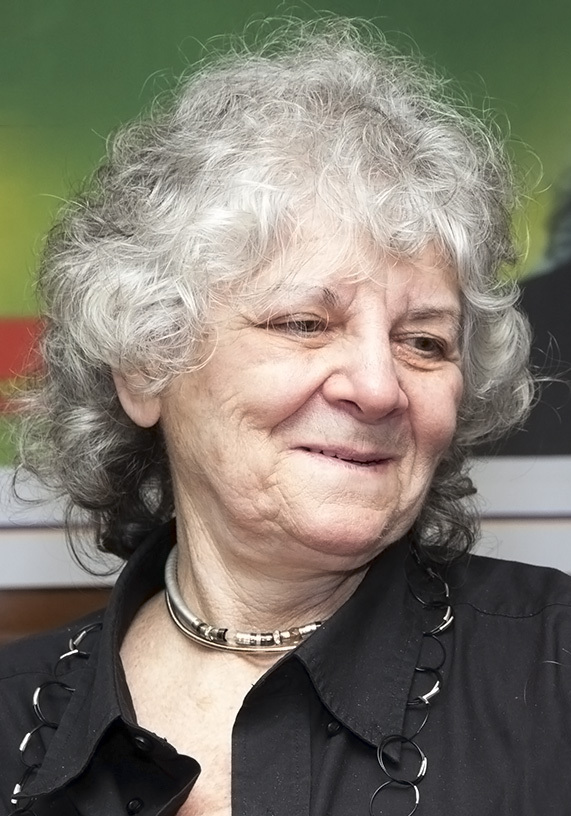
—And that call from Stockholm last October? I heard you were still asleep when it came.
It was five thirty in the morning in Israel, I was fast asleep. The ringing pulled me from a dream, and it took me a moment to realize it was real. First woman since Dorothy Hodgkin in 1964—forty-five years of waiting. People constantly ask me what I felt, and I always give the same answer: the real reward was the discovery itself, the day the electron density finally emerged. The Nobel is the icing on the cake. A huge honor, yes, but it comes after the joy, not before. You who received it the same day, Venki, know that it's not for the prize that you spend thirty years freezing crystals in the early morning.
The real reward was the discovery; the Nobel is just the icing on the cake.
—In December, you will step onto the podium in Stockholm for the Nobel lecture. What do you want the world to remember from these thirty years?
I want to tell the journey, not just the summit. My lecture will be titled From the evolution of ribosome crystallography to the elucidation of the ribosome function: from the evolution of ribosome crystallography to the understanding of its function. I insist that young researchers hear that at the start, the task seemed utterly impossible, and that the impossible is often just a lack of patience. The ribosome taught us that it is RNA, not proteins, that catalyzes the formation of bonds between amino acids—a revelation about the very origin of life. If a single student leaves that hall thinking they can tackle what everyone considers out of reach, then these thirty years will have borne fruit greater than the structure itself.
The impossible is often just a lack of patience.
This imaginary interview was generated by artificial intelligence from sources documented in Ada Yonath's profile. It dramatises what the figure might have said based on what we know about them, but does not constitute attested historical testimony. For primary sources and factual documentation, refer to the full profile.