Kids interview Ada Yonath
by Charactorium · Ada Yonath (1939 — ?) · Sciences · 5 min read
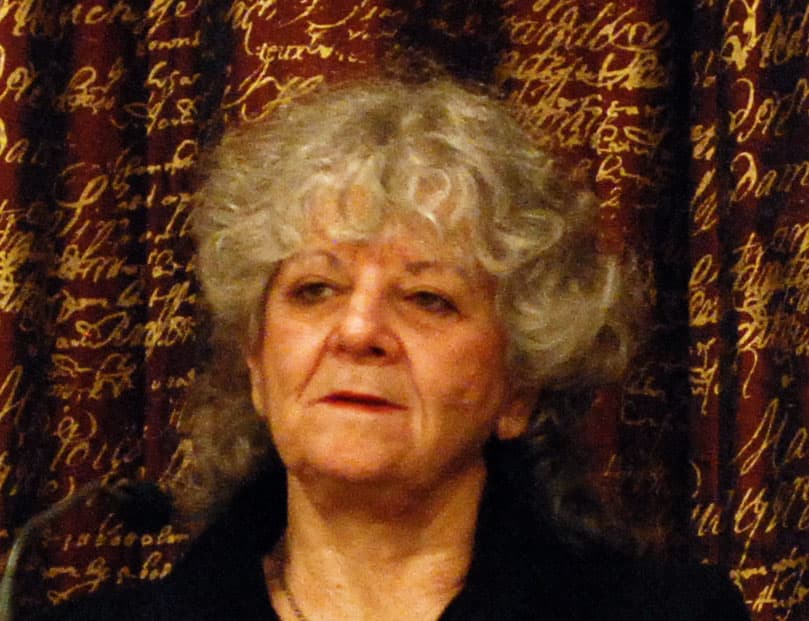
Two twelve-year-old visitors push open the door of a large, sunlit laboratory in Rehovot. A curly-haired woman greets them with a smile. Before her, under a magnifying glass, tiny crystals gleam more precious than gold.
—What were you like as a little girl in Jerusalem?
Ah, my child, we were very poor. Our apartment in Jerusalem was so small we all squeezed inside. You know what I did to reach the books on the highest shelves? I stacked furniture! A chair on a table, and up I climbed. One day, I fell and broke my arm. But that didn't stop me for a second. I wanted to understand why the world was the way it was. Imagine a little girl scaling her own living room just to read: that was me. Curiosity was stronger than the fear of falling.
Curiosity was stronger than the fear of falling.
—Is it true they made fun of you for years?
Yes, and for a long time! For nearly twenty-five years, many colleagues laughed at me. They called my work 'science fiction'. Some nicknamed me the Don Quixote of my field — you know, that character who fights windmills. They were sure what I wanted to do was impossible. I wanted to photograph a tiny machine inside cells, the ribosome, which makes the proteins in your body. Nobody believed it. It was hard, you know, hearing the laughter. But deep inside, a little voice said: 'Keep going, they are wrong.'
Deep inside, a little voice said: keep going, they are wrong.
—What was that impossible thing you wanted to do in 1980?
I wanted to turn the ribosome into a crystal. A crystal is like sugar or salt: lots of little pieces neatly arranged. In 1980, I succeeded in making the very first crystals of this cellular machine. Nobody had ever done that! Why is it important? Because when something is arranged as a crystal, you can shine X-rays on it and deduce its shape, atom by atom. Imagine you want to draw a statue hidden in the dark: well, the crystal was my way of turning on the light. After that, it took me twenty more years to see everything in detail.
The crystal was my way of turning on the light to an invisible machine.
—Is it true that bears gave you an idea?
Yes, polar bears! One day, I read how they survive winter by sleeping in the freezing cold. And then, click! I thought: what if I froze my crystals too? So I plunged my ribosome crystals into liquid nitrogen, at minus 196 degrees — a cold you can't even imagine. Without that, the X-rays damaged my crystals too quickly. But frozen, they held up and gave me sharp images. This is called cryocrystallography: 'cryo' means cold. A bear idea that changed all of biology, can you believe it?
A polar bear idea changed all of biology.
—Why did you choose weird bacteria for your experiments?
Good question! You see, all ribosomes are fragile, they break down quickly. So I was clever: I looked for bacteria that live in terrible places. Some live in boiling hot springs, others in super salty seas. They are called extremophiles, those who love extremes. Their ribosomes are tough like little soldiers, because they have to survive the heat. I used a bacterium that loves heat, Bacillus stearothermophilus. Its robust ribosomes were much easier to arrange into crystals. It was a cook's trick as much as a scientist's: choose the right ingredient before starting the recipe.
I chose my bacteria like a cook chooses the best ingredients.
—How do you see something as small as an atom?
You don't see it with your eyes, my child, not even with a normal microscope. It's far too small! I sent X-rays through my frozen crystal. As they passed through, they scattered and made spots. Then, with calculations and computers, I turned those spots into a map: the electron density. It's a kind of fog that shows where the atoms are hiding. In 2000, we finally saw the small subunit of the ribosome, so clear that we could make out the famous 'decoding center'. Imagine assembling a puzzle of thousands of pieces... without the picture on the box. That was my daily life.
It was a puzzle of thousands of pieces, without the picture on the box.
—What's the use of knowing this tiny machine?
Ah, it's used to heal you! Listen carefully. Many antibiotics, the medicines that kill microbes, attack the ribosome of bacteria. In 2001, with my team, I showed exactly where these drugs attach on the large subunit. So we understand how they work. And especially, sometimes bacteria change their ribosome just a little to resist the drugs — that's what we call antibiotic resistance. By seeing all this atom by atom, we can invent new, smarter medicines. My invisible machine was also a key to making remedies.
My invisible machine was also a key to making remedies.
—What was a normal day like in your lab?
I arrived very early at the Weizmann Institute, often before 8 AM. The first thing I did? Look at my crystals under the microscope, like one looks at treasures. In the afternoon, I spent hours in front of the computer arranging my atoms and helping my students. And sometimes, I left for weeks at a time to Hamburg, Germany, or Grenoble, France, near huge machines called synchrotrons — immense rings that produce very powerful X-rays. There, we never stopped, even to eat: sandwich and coffee in the control room! I thought about my crystals all the time, even in the evening over dinner.
I looked at my crystals like one looks at treasures.
—What were you doing when you got the Nobel Prize call?
I was sleeping, simply! It was 5:30 AM in Israel when the phone rang. The 2009 Nobel Prize in Chemistry! I was the first woman to receive it in forty-five years, since Dorothy Hodgkin in 1964. Can you imagine my surprise, still half asleep? But you know what I thought? That the real reward was not the medal. It was the day I finally saw the structure of the ribosome. The Nobel, for me, was just the cherry on the cake. All those years of mockery didn't matter that morning.
The real reward was the discovery. The Nobel, just the cherry on the cake.
—What would you say to a child who wants to give up?
I would say: never let go of your question. Me, they laughed at me for twenty-five years. Twenty-five years is longer than your age and your parents' combined! Many told me to stop, that it was hopeless. But every failed crystal taught me something for the next one. Science is not about succeeding on the first try. It's about making mistakes, starting over, making mistakes again, and one day... finally seeing what no one had ever seen. If something truly excites you, always keep a notebook nearby to jot down your ideas. And above all, let those who laugh laugh. One day, they will understand.
Never let go of your question, even if everyone laughs at it.
This imaginary interview was generated by artificial intelligence from sources documented in Ada Yonath's profile. It dramatises what the figure might have said based on what we know about them, but does not constitute attested historical testimony. For primary sources and factual documentation, refer to the full profile.