Imaginary dialogue between Charles de Gaulle and Ahmed Ben Bella
by Charactorium · Ahmed Ben Bella (1916 — 2012) · Politics · Military · 5 min read
It is on a terrace of a discreet estate, somewhere between Algiers and exile, that an aging General de Gaulle meets Ahmed Ben Bella. The low afternoon light falls on a tray of mint tea still steaming. These two crossed paths long before they fought each other: one decorated the other for his bravery, then opened the door to the independence that separated them. The old Frenchman has come, without cameras, to ask this respected adversary the questions he could never formulate at the negotiating table.
—Ben Bella, I remember presenting you with the Military Medal after Monte Cassino. How did the soldier of France become its enemy?
You pinned it on me yourself, my General, and I never disowned it — it was the courage of a man, not the allegiance of a people. At Monte Cassino, in 1944, I fought for a freedom that was promised to us and then denied us at home. The paradox is there: France taught me to bear arms, then acted surprised that I turned them against colonial injustice. When you decorate a man for his dignity, you must expect him to demand it for his own. The massacres of Sétif, the same year 1945, finally opened my eyes. I had been honored as a Frenchman; I remained, for the administration, a native.
France taught me to bear arms, then acted surprised that I turned them against injustice.
—I've heard about the hold-up of the Oran post office, then your escape from Blida. Were you a political leader or an outlaw?
A people denied a platform has only action to speak, my General. In 1949, the Special Organization lacked everything: we took the money where it served oppression, in a post office, to arm a cause. They called me a bandit; history will judge. And when I sawed through the bars of Blida to escape, I did not flee justice — I fled a justice that was not ours. You, man of the London appeal, know better than anyone that a rebel seen from one side is a patriot seen from the other. It is not the crime that defines a man, but what he risks it for. I risked Algeria.
A rebel seen from one side is a patriot seen from the other — you know that better than anyone.
—You co-founded the FLN in 1954, the year everything ignited. Did you measure the blood price you were committing?
One does not start a war of liberation with a light heart, General. On November 1, 1954, we were a handful of 'historic leaders' facing a vast army. We knew the price: first our own lives, then those of hundreds of thousands of our brothers. But what was the choice? Wait another century for a citizenship doled out drop by drop? The proclamation was clear: independence through the restoration of a sovereign, democratic, and social state. We did not hate the French people; we refused the colonial system. You yourself eventually understood that no force could hold back a nation determined to be born. The blood spilled, I still carry it. But prolonged slavery would have cost more.
We did not hate the French people; we refused the colonial system.
—Becoming president in 1963, you redistributed the settlers' lands. Wasn't that squandering a wealth that France had built?
Built by whom, General? By the arms of the Algerian fellahs on lands that were theirs. Self-management was not squandering, it was giving back. When the settlers left in 1962, entire estates lay abandoned; I entrusted these farms to committees of workers and peasants, and I spent my afternoons visiting them, so that the revolution would not remain a word in a newspaper. The Algiers Charter, in 1964, made it our doctrine: a socialist, popular path, adapted to us. It was imperfect, sometimes messy, I admit. But a man who finally tills his own land stands tall differently. Restoring dignity is worth a few lost yields.
Self-management was not squandering, it was giving back.
—You made Algiers a capital of Third World revolts, hosting Cuba and Africans. Weren't you afraid of becoming Moscow's pawn?
Neither Moscow's pawn nor Washington's vassal, General — that is the whole meaning of non-alignment. We had paid too dearly for our freedom to sell it off to a new master. Making Algiers a hub of liberation movements, supporting Cuba, Pan-Africanism, was staying true to what we had experienced: no people is truly free as long as others remain in chains. You seek France's greatness between the two blocs; I sought the dignity of the Third World in the same gap. Our paths diverge, but the idea is akin. The unity of the Maghreb, the solidarity of poor peoples: I never stopped believing in it, even later, in the solitude of exile.
Neither Moscow's pawn nor Washington's vassal: we had paid too dearly for our freedom.
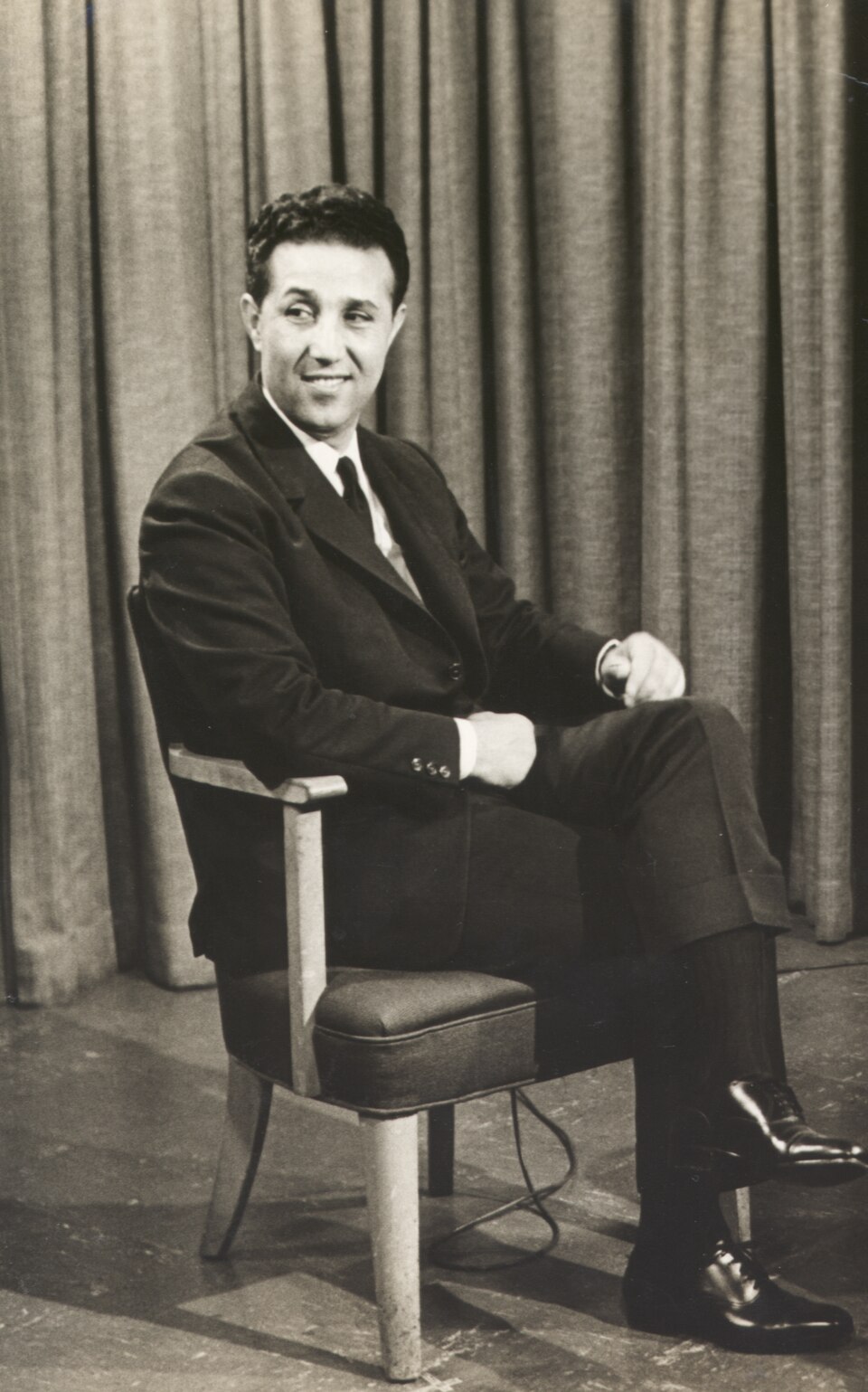
—You and I negotiated the separation at Évian. In hindsight, could France and Algeria have remained linked otherwise?
The Évian Accords, in March 1962, ended a terrible war; for that, General, I always acknowledged your courage — that of saying no to a French Algeria that had become impossible. Could we have remained linked otherwise? Yes, but not in subjugation. Two free nations can cooperate; a nation and its colony, never. I dreamed of a friendship between our peoples, free from contempt. Language, history, so much mixed blood bring us together despite everything. But first there had to be equality, full recognition. You had the lucidity to let go of what no longer held; I had the audacity to seize what was rising. Between us, it was a clash of statesmen, not of hatreds.
Two free nations can cooperate; a nation and its colony, never.
—There are whispers of tensions with your right-hand man, Colonel Boumédiène. Can a leader who made the revolution truly fear his own?
The revolution sometimes devours its sons, General — you know that old law. I governed in a very personal style, often alone, late into the night, surrounded by loyalties I thought were solid. But concentrating power also means designating those who will want to take it from you. Yesterday's brother-in-arms can become the man who closes the door. I will not speak to you of bitterness — a revolutionary does not weep over his rear. Only, he who sawed through the bars of Blida knows how to recognize the shadow of a prison being prepared. I led hard men in a hard war; it would be naive to think that such characters can be put away like rifles once peace comes.
The revolution sometimes devours its sons: you know that old law.
—If one day you were removed from power, would you keep faith in this Algeria you brought into the world?
A man can be overthrown; an idea, never, General. If I am removed, they may imprison me, silence me in house arrest — I have known enough cells to no longer fear them. But the Algeria I wanted does not reside in one man. It is in those peasants finally tilling their land, in that youth learning to read. The one-party system may have trapped us too much; if exile ever lets me speak again, I would demand pluralism, the democracy we were made to wait for. You can take away power from me, not conviction. You, who have known the wilderness years, know that a statesman always returns to his first truth.
A man can be overthrown; an idea, never.
—Between the young footballer from Marseille and the revolutionary president, what thread connects these two Ahmeds I struggle to reconcile?
The same taste for team play, General — that may make you smile. As a midfielder, I was taught that no player wins alone, that you must read the overall movement and serve others. Politics is not so different: you advance as a team or you lose. From Maghnia to Marseille, from the football pitch to the Italian trenches, then to the maquis, the same man sought his place in a whole larger than himself. I kept from sport the sense of shared effort and contempt for stars. As a leader, I supported stadiums, clubs, the youth that runs — because a people that plays is a people that breathes. The thread, my General, is this idea: nothing great is done alone.
No player wins alone: politics is not so different.
—You mixed the burnous of ceremonies with Western attire. Why hold on to this garment so much in an Algeria you wanted to be modern?
Because modernity without roots is mere imitation, General. The burnous, that great woolen cloak of our fathers, I wore at ceremonies not for folklore, but to tell the world: we enter the century while remaining ourselves. The suit to receive your diplomats, the burnous to honor my people — both spoke of the same Algeria, both forward-looking and faithful to its memory. Colonization had done everything to convince us that our culture was a backwardness. I wanted to prove the opposite. A new state needs factories and schools, yes, but also pride. Nothing lasting is built on the shame of what one is.
We enter the century while remaining ourselves.
This imaginary interview was generated by artificial intelligence from sources documented in Ahmed Ben Bella's profile. It dramatises what the figure might have said based on what we know about them, but does not constitute attested historical testimony. For primary sources and factual documentation, refer to the full profile.