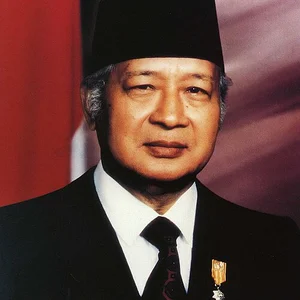

An Indonesian general and statesman, Suharto was the second president of Indonesia from 1967 to 1998. He came to power after a bloody anti-communist purge and established an authoritarian regime known as the “New Order” before being toppled by the Asian financial crisis.
Suharto(1921 — 2008)
Soeharto
Indonésie, Indes orientales néerlandaises
6 min read
Frequently asked questions
Key Facts
- Born in 1921 in Kemusuk, on the island of Java, in the Dutch East Indies
- 1965-1966: seizes real power after an attempted coup attributed to the PKI, followed by anti-communist massacres killing hundreds of thousands
- 1967: becomes acting president, officially elected in 1968, establishing the “New Order” regime
- 1975: orders the invasion and annexation of East Timor
- 1998: forced to resign after the Asian financial crisis and massive protests; dies in 2008
Works & Achievements
A centralized authoritarian regime that replaced Sukarno's “Old Order” and shaped Indonesia for three decades.
Successive economic programs aimed at industrialization and self-sufficiency, which carried Indonesia from famine to sustained growth.
A policy of relocating millions of inhabitants from overcrowded islands to less populated ones, with lasting social and environmental consequences.
Thanks to the Green Revolution, Indonesia achieved self-sufficiency in rice, an accomplishment praised even by the FAO.
The forced integration of the territory as the 27th province, marked by bloody repression and contested internationally.
A mandatory ideological training program imposing the official interpretation of the state's five principles on all of society.
Anecdotes
On the night of 30 September to 1 October 1965, six Indonesian generals were abducted and murdered during an attempted coup attributed to the “30 September Movement.” Suharto, then commander of the strategic reserve forces (Kostrad), was not on the list of targets and took the lead in the military counterattack, launching his meteoric rise to power.
Suharto grew up in a poor peasant family in central Java and had hardly ever travelled outside Indonesia before coming to power. Like many Javanese of his generation, he originally had only a single name, “Soeharto,” with no family name.
During his 32 years in power, the regime set up the “transmigration” program, relocating millions of inhabitants from overcrowded islands such as Java to emptier islands such as Borneo or Papua, in order to rebalance the population of the archipelago.
In May 1998, after riots and the occupation of Parliament by students, Suharto announced his resignation on television in just a few minutes, ending more than three decades of power. His vice-president Habibie succeeded him at once.
After his fall, the organization Transparency International ranked him among the world leaders who had embezzled the most public money, with estimates of the family fortune ranging from 15 to 35 billion dollars, although Suharto was never convicted, as his declining health brought the proceedings to a halt.
Primary Sources
President Sukarno is said to have authorized General Suharto to take “all measures deemed necessary” to restore order and security. The original document has disappeared, fueling debates over its exact contents.
“I have decided to declare myself resigned from my position as President of the Republic of Indonesia, effective from the moment I read out this statement.”
The Indonesian military was assigned a dual role, encompassing both military defense and direct participation in the country's political and social life — the ideological foundation of the “New Order” regime.
Key Places
Suharto's native village, where he was born in 1921 into a modest Javanese peasant family.
Seat of the Indonesian presidency, where Suharto held power for 32 years and announced his resignation in 1998.
The site where the bodies of the generals killed in 1965 were dumped, which became the central memorial for the regime's propaganda about the “communist betrayal.”
Capital of the territory invaded and annexed by Indonesia in 1975-1976, the scene of a deadly occupation under the New Order.
The family mausoleum complex where Suharto was buried after his death in 2008, near the royal tombs of Mangkunegara.
Typical Objects
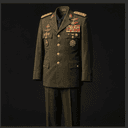
Ceremonial dress of the Indonesian Army, adorned with decorations, which Suharto wore to assert his authority as a military leader turned president.

Traditional black cap worn by men in Indonesia, a symbol of national identity that presidents wear at official ceremonies.
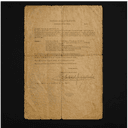
Written order of 11 March 1966 by which Sukarno is said to have delegated his powers to Suharto; its disappearance makes it a subject of historical inquiry.
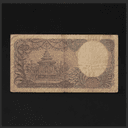
The national currency whose dizzying collapse during the 1997-1998 crisis precipitated the downfall of the New Order regime.
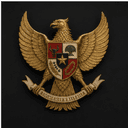
A mythical eagle holding the shield of the five founding principles (Pancasila) of the Indonesian state, brandished by the regime as a mandatory official ideology.
School Curriculum
Vocabulary & Tags
Key Vocabulary
Daily Life
Morning
A president deeply attached to his Javanese roots, Suharto often started early, receiving military briefings and ministers in the privacy of the palace. Known as a master of patience and silence, he would listen at length before making a decision.
Afternoon
His afternoons were devoted to audiences, the signing of decrees, and overseeing economic development plans. He liked to retreat to his ranch to tend to cattle, a passion he cultivated away from the cameras.
Evening
In the evening, in private, he favored family life alongside his wife Siti Hartinah, known as “Tien,” an influential figure within the clan. Power was also exercised through family and patronage networks woven in the intimacy of the home.
Food
His diet remained that of a Javanese man: rice at every meal, accompanied by spicy dishes such as tempeh, fish, and vegetables. He kept the simple tastes inherited from his rural childhood, far from the splendor expected of a head of state.
Clothing
Depending on the occasion, he alternated between the military uniform covered in decorations, the Western suit, and the long-sleeved batik shirt, Indonesia's official garment. The black peci completed his attire during national ceremonies.
Housing
Officially housed in the presidential palaces of Jakarta, he long kept a modest private residence on Cendana Street, in the Menteng district. The name “Cendana” became synonymous with the Suharto clan and its power.
Historical Timeline
Period Vocabulary
Liens externes & ressources
Références
Œuvres
Instauration de l'« Ordre nouveau » (Orde Baru)
1966-1968
Plans quinquennaux de développement (Repelita)
à partir de 1969
Programme de transmigration
années 1970-1980
Autosuffisance en riz (swasembada)
1984
Annexion du Timor oriental
1975-1976
Politique du « P4 » et endoctrinement au Pancasila
1978