Imaginary interview with Ai Weiwei
by Charactorium · Ai Weiwei (1957 — ?) · Visual Arts · Politics · Society · 6 min read
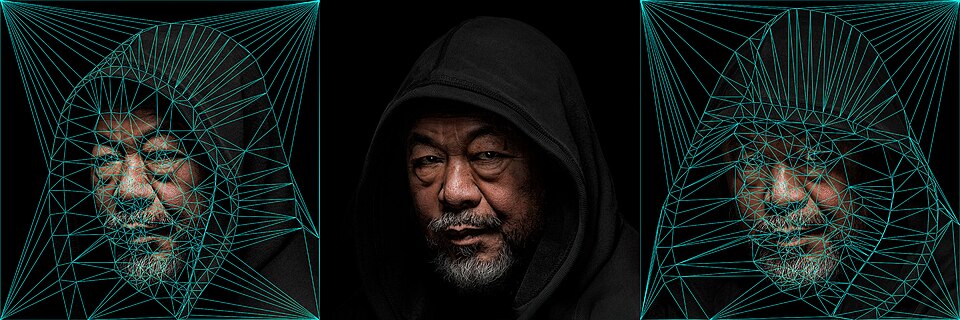
Berlin, a gray studio morning. Ai Weiwei welcomes us surrounded by his cats, a camera near the teapot, his phone screen permanently on. Gray beard, calm voice, he speaks of China as a country he still carries in his body.
—Do you remember the first place where you understood what power was?
It wasn't a courtroom, it was a hole. A real hole dug in the ground of Xinjiang, where my family lived when I was a child. My father, the poet Ai Qing, had been sent there for reeducation; he was forced to clean the village's public toilets, he whose verses were recited throughout the country. I grew up watching a great man reduced to a broom. That's how I learned power: it's not a speech, it's the ability to turn a poet into a laborer, and to make everyone believe that's normal. When I wrote 1000 Years of Joys and Sorrows, I wasn't trying to tell my own story. I wanted to understand how a father's silence becomes a son's anger.
Power is not a speech; it's the ability to turn a poet into a laborer.
—What do you keep from that childhood in the way you work today?
Distrust of what is called "official beauty." Out there in the desert, I was taught to own nothing, to show nothing, to disappear. So as soon as I returned to Beijing, I did the opposite: show, exhibit, occupy space. My own Cultural Revolution was that, in reverse. Later, when I dipped a Han dynasty urn in paint, or dropped it to break, people saw it as provocation against heritage. I saw the memory of that child who was taught that the past could crush you. Destroying a sacred object is refusing that an object, a leader, a tradition, should have more value than a human being.
—How did the idea of covering a museum floor with sunflower seeds come about?
In 2010, at the Tate Modern in London, I covered the floor of the Turbine Hall with one hundred million sunflower seeds. From afar, a uniform gray carpet, a mass. But each seed was porcelain, painted one by one, by hand, by artisans from Jingdezhen, the old potters' city. I wanted the visitor to walk on China: that immense crowd where each grain seems identical, yet none truly is. Under Mao, the people were the sunflower turning toward the sun of the leader. I reversed the image. Those millions of fragile little things are each of us, unique under the dust, and no one can claim to speak for that whole mass without lying.
I wanted the visitor to walk on China.
—Why this obsession with handwork, in a country that has become the world's workshop?
Because the hand keeps the memory that the machine erases. Making one hundred million porcelain seeds meant employing an entire village for months — an economic absurdity, a useless gesture from the factory's perspective. And that's precisely where art lies: in the embrace of uselessness. The same goes for my Forever Bicycles, that brand every Chinese of my generation knows, assembled by the thousands into a sculpture that goes nowhere. I've been accused of celebrating mass China; I think rather that I'm looking it in the face. Every everyday object carries the work of anonymous hands. My role is not to glorify them, but to make visible what mass production renders invisible: someone, somewhere, made this.
The hand keeps the memory that the machine erases.
—What happened on the day of your arrest at Beijing airport?
April 2011. I was about to take a flight to Hong Kong when I was taken aside, without a warrant, without explanation. For 81 days I disappeared. No one knew where I was, not even my mother. Outside, a campaign was organizing, "Where is Ai Weiwei?", people around the world demanding a name, a sign of life. Inside, I was watched day and night by two guards who never left me more than a meter, even to sleep, even in the shower. It's that obscene proximity that I later recreated in S.A.C.R.E.D., six iron dioramas where you have to press your eye to a slit to see me eat, sleep, be interrogated. The spectator in turn becomes the jailer. Surveillance, when you experience it, you understand that its real violence is not fear: it's never being alone again.
Its real violence is not fear: it's never being alone again.
—How do you turn such an ordeal into art rather than bitterness?
Upon my release, I was given back only half: free to walk, but passport confiscated for four years. A man who cannot cross a border is not entirely a free man. I said at the time that detention had taught me the fragility of life and the necessity of defending human dignity — that wasn't a phrase, it was a clinical observation. Making art out of those 81 days wasn't revenge; it was refusing the oblivion they wanted to impose on me. The regime erases, dissolves, makes people disappear like closing a file. I rebuild the cell to the millimeter, I put it before the public's eyes. Art is my way of saying: this happened, and you cannot say you didn't know.
A man who cannot cross a border is not entirely a free man.
—It's said that you made Twitter both a workshop and a platform. What were you looking for there?
When censorship shut down my blog in 2009, I switched to Twitter, and then something changed. In China, the "Great Firewall" filters everything; but a few thousand messages, photos taken with my phone, could get over the wall. I posted relentlessly: my tailings, the police outside my door, my arrest selfies. For me, this wasn't separate from my art. "Everything is art. Everything is politics," I said at the time — everything is art, everything is politics. A tweet, a porcelain seed, a broken urn, it's the same gesture: occupying the public space that power wants to empty. Social media gave me what a dissident had never had: millions of witnesses in real time.
A tweet, a porcelain seed, a broken urn: it's the same gesture.
—Why refuse to be just an artist, and expose yourself as an activist?
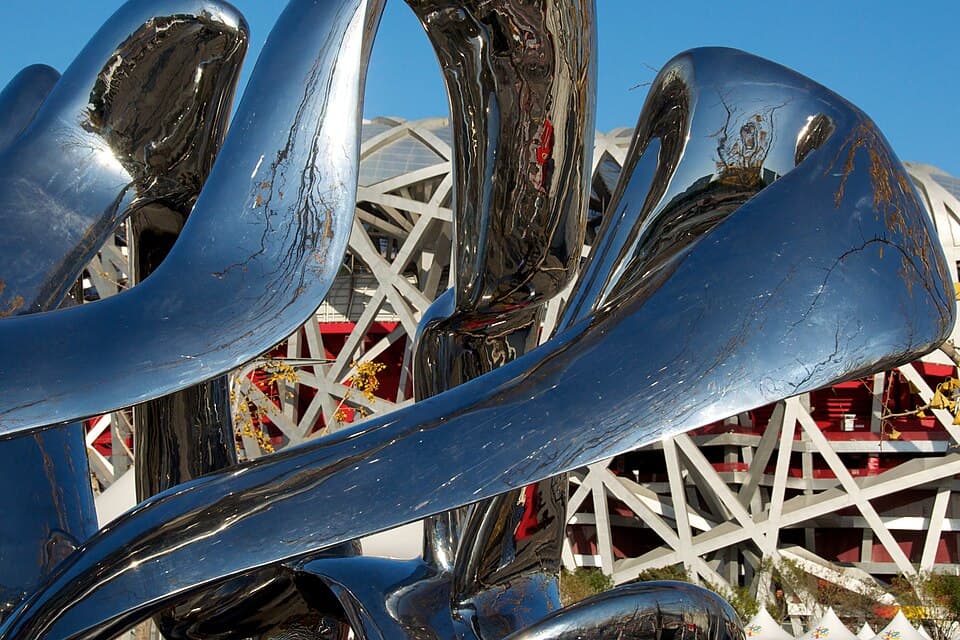
Because I don't believe in the boundary between the two. I was offered official glory: I had participated, with Herzog & de Meuron, in the design of the Beijing National Stadium, the "Bird's Nest," for the 2008 Games. And then I publicly dissociated myself, because that stadium served as a propaganda backdrop for a regime while it crushed every free voice. Refusing that honor was my artwork as much as the building. An artist who remains silent when their neighbor is imprisoned is not neutral: they collaborate. As I told Alison Klayman for her film, if you cannot act, you are not truly free — freedom is the possibility to ask questions.
An artist who remains silent when their neighbor is imprisoned is not neutral: they collaborate.
—What would you say to those who think art can do nothing against a state?
Let them look at what a state fears. You don't confiscate an inoffensive man's passport for four years. You don't secretly detain someone whose work would be futile. The fear of power is the best art critic there is: it tells you exactly where you hit the mark. Of course, an installation doesn't topple a regime, a porcelain sunflower seed doesn't stop a tank. But it plants an image in people's memory, and an image cannot be imprisoned, cannot be made to clean toilets in Xinjiang. My father survived his exile because his poems still circulated. I learned from him that what a man creates can live longer and travel farther than the body that is locked up.
The fear of power is the best art critic there is.
—Today in exile, between Berlin and Portugal, how do you keep your connection with China?
Since 2015, when my passport was finally returned, I live far away: Berlin first, then Cambridge, now Portugal, vast studios where I continue to conceive, film, document. But you don't leave China; it remains in the language, in the food I cook myself for friends around a large table, in the studio cats, in the morning gestures where I still reflexively check the news and my phone. Exile is not a rupture, it's a shift in perspective. From afar, I was able to film the refugees of Lesbos, those orange life jackets I hung on museum facades. I understood that my China, that wall, that surveillance, that denied dignity, was not a Chinese exception: it was the whole world seen through a slit.
Exile is not a rupture, it's a shift in perspective.
This imaginary interview was generated by artificial intelligence from sources documented in Ai Weiwei's profile. It dramatises what the figure might have said based on what we know about them, but does not constitute attested historical testimony. For primary sources and factual documentation, refer to the full profile.