Imaginary dialogue between Alison Klayman and Ai Weiwei
by Charactorium · Ai Weiwei (1957 — ?) · Visual Arts · Politics · Society · 6 min read
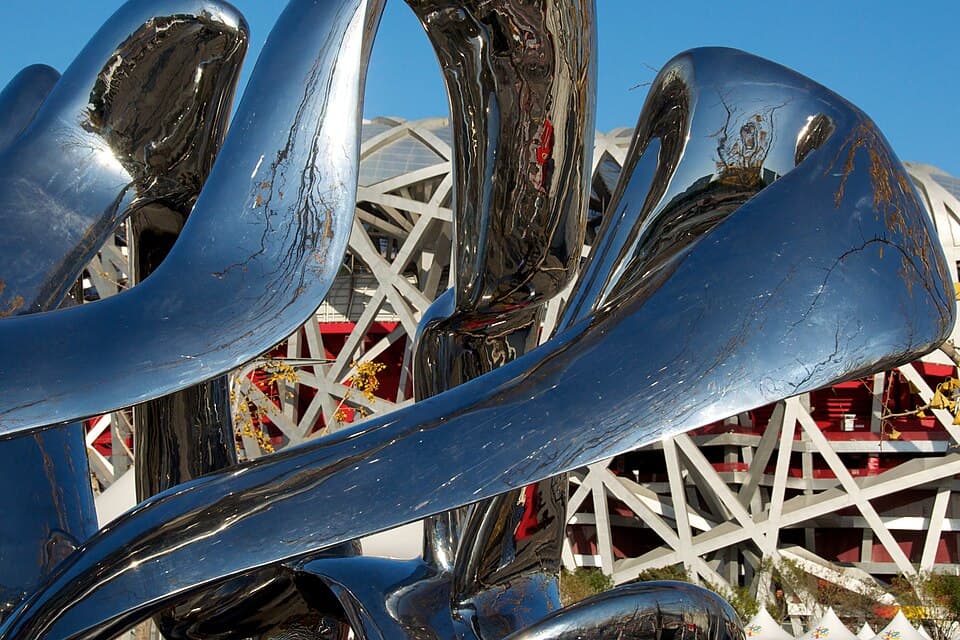
It's in the vast gray-brick studio of Caochangdi, on the outskirts of Beijing, that Alison Klayman meets Ai Weiwei at the end of 2010. Cats slink between crates of porcelain seeds just returned from London, and the winter light falls directly on the large table where tea will soon be shared. Alison's camera has been following him for over two years, in protests as in silences; today she is here not to film, but to understand the man behind the work. Outside, two cars parked a bit too long remind that nothing here escapes surveillance.
—Weiwei, I filmed you this fall at the Turbine Hall. One hundred million porcelain seeds — why this excess, and why painted one by one?
You were there, Alison, you saw the gray field stretch to infinity. Each seed was shaped and then hand-painted by artisans from Jingdezhen, a city that has lived off porcelain for a thousand years. From afar, you think it's an identical carpet, a uniform mass — like people look at the Chinese people: a billion interchangeable anonymous faces. But come closer, take a seed between your fingers: no two are alike. That's exactly what I wanted to say. Power loves crowds because it believes a crowd has no face. I start from the opposite: behind every grain, there is a hand, a wage, a day's work, a person. Quantity does not crush the individual; it reveals them.
From afar, an identical mass; up close, no two seeds are alike.
—You told me one evening about your childhood in the desert. Before the camera rolls, I'd like to really hear it: what was that Xinjiang like?
My father, Ai Qing, was one of China's greatest poets. During the Cultural Revolution, he was sent to Xinjiang to clean the village public toilets, day after day, he whose verses were recited across the country. We lived in a hole dug in the ground, with a simple tarp for a roof. I had lice, I was cold, but above all I saw a man methodically humiliated, like a state project. As a child, you don't understand politics; you understand the injustice done to your father. That is not learned from books; it is inscribed in the body. When today I document an arrest, a collapsed school, an erased name, I am in fact continuing the same sentence my father could not finish.
As a child, you don't understand politics; you understand the injustice done to your father.
—Your father wrote poems that were burned. You make installations that are exhibited everywhere. This gap between you two, how do you carry it?
It is not a gap, Alison, it is a continuity. My father paid for words with his freedom; he was forbidden to write for twenty years. I am lucky to have several languages: sculpture, photography, soon these networks we'll talk about. But the price remains the same — speaking always costs something in China. When I walk through my studio in Caochangdi, I think of that hole in the desert, and I measure the distance. He crawled under the tarp; I build large spaces of light. Yet the same cars watch us both, fifty years apart. The history of this country is that repetition. My work is to refuse that it be forgotten.
My father paid for words with his freedom; speaking always costs something in China.
—I filmed your investigation after the Sichuan earthquake. You were demanding names of children. Why this obsession with simple lists?
Because the government counted everything — except the dead children. In 2008, thousands of schoolchildren were crushed under schools built on the cheap, while other buildings stood. They refused to say how many, they refused to say who. A child without a name is a child who can be erased twice: by poor construction, then by silence. With volunteers, we recorded over five thousand names, one by one, calling families. Those names became Remembering, that facade of nine thousand backpacks in Munich. You remember that in Chengdu, the police entered our hotel room at night and beat me on the head — I had surgery for a cerebral hemorrhage in Germany a few weeks later. A name frightens power. That says how much it matters.
A child without a name is a child who can be erased twice: by concrete, then by silence.
—Those nine thousand backpacks on a museum wall: is it still art, or already a political act? Where do you draw the line?
I draw no line, Alison, and you know that better than anyone since you film me on both sides at once. Everything is art, everything is politics — the two words mean the same thing: giving form to what matters to humans. A child's backpack is a banal object, almost mute. But put nine thousand on a facade, let them spell out a bereaved mother's sentence, and the object becomes an accusation no official speech can cover up. Art is not a decoration above life; it is a means of making visible what they want to hide. If my work makes power uncomfortable, it is not because I seek it: it is because truth, in China, is already an artistic gesture.
Art is not a decoration above life; it is a means of making visible what they hide.
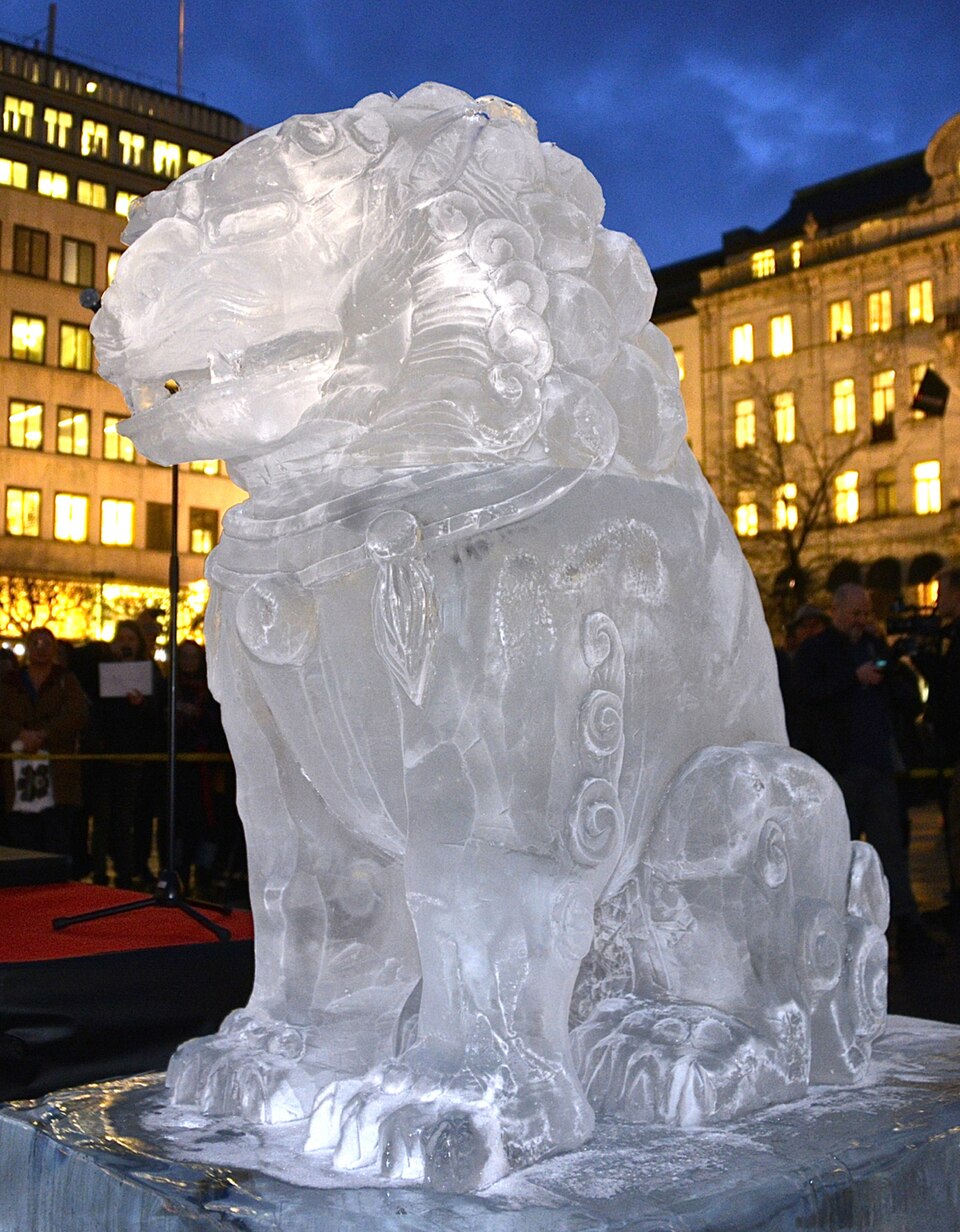
—Since I've been following you, you never let go of your phone. They shut down your blog last year — why persist with these screens?
They shut down my blog in 2009, so I moved to Twitter, and they can't shut down Twitter as easily. That's the whole story. In China, there is an invisible wall, the 'Great Firewall,' which decides what a billion people have the right to know. My phone is my hammer against that wall. I photograph everything: the police who follow me, my studio, my face. Every published message is proof that cannot be denied later. You have your camera; I have this device in my pocket, and we are essentially doing the same job — preventing forgetting in real time. The regime thinks it controls information because it controls newspapers. It hasn't yet understood that every citizen now carries a studio in their hand.
My phone is my hammer against the Great Firewall.
—Some abroad find you too present, too talkative on these networks. Doesn't that dilute your work?
Talkative? Perhaps. But silence, in China, is not a virtue, it is a capitulation. Those who criticize me for being too present live in countries where you can remain silent without danger — a luxury I do not have. Each photo, each message is another thread in a net; taken individually, it seems trivial, but the whole holds. I do not separate my installations from my online messages: they are the same gestures, at different scales. A porcelain seed, a backpack, a tweet — each is tiny, each counts because it adds to the others. If I am accused of taking up too much space, perhaps it is because too many people here have learned to take up too little.
Silence, in China, is not a virtue, it is a capitulation.
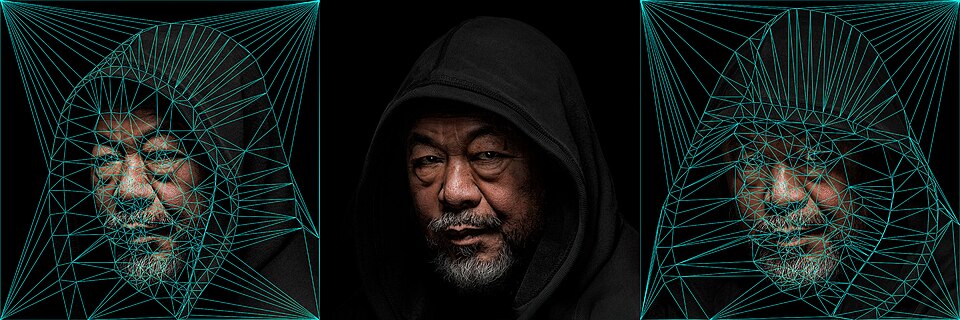
—Weiwei, a worry crosses my mind as I film you: those cars outside, those summons. What do you really fear when you walk out the studio door?
I fear what every watched man ends up fearing: to disappear without a sound. You've seen them like I have, those cars parked too long, those men noting who comes and goes. They don't hide their presence — on the contrary, they want you to feel it, because fear is more effective than prison. They can search my studio, seize my hard drives, forbid me to travel. What protects me, paradoxically, is you and your camera: what is seen cannot be denied as easily. An unknown artist who is silenced, no one notices. An artist exhibited in London and Munich who is silenced becomes an international issue. My fame is not vanity, Alison: it is a fragile bulletproof vest.
Fear is more effective than prison — they want you to feel their presence.
—Imagine the worst: they lock you up, without trial, without news. What can an artist still do with a cell?
An artist can make a work of art from it, Alison. If they lock me up, they will give me a subject despite themselves. The body within four walls, the counted light, the guard one meter away watching you eat, sleep, walk — all of that can be reconstructed, shown, brought back to everyone's sight. A cell wants to make you invisible; art can turn invisibility into testimony. If that day comes, I don't want to be pitied as a mute victim. I want people to enter the exact reconstruction of my detention as they would enter a room, and to understand, physically, what the state does to a man it has decided to erase. Power has the walls; the artist has memory. In the end, it is memory that remains on display.
A cell wants to make you invisible; art turns invisibility into testimony.
—One last thing, Weiwei, before tea. You who just covered an English floor with Chinese porcelain — do you still feel from here, or already from elsewhere?
I am deeply from here, and that is precisely the regime's problem with me. My seeds come from Jingdezhen, my bicycles are Forever bikes our fathers rode, my urns come from my ancestors' soil. I do not betray China; I love it too much to leave it to silence. They would like to present me as a man turned toward the West, seduced by New York where I lived for ten years. But what I brought back from there is not a renunciation, it is a very simple question I ask here: does a human being have the right to speak? As long as it is denied to me, I will remain a Chinese artist working on China, wherever they force me to live. My raw material is not porcelain — it is my country.
I do not betray China; I love it too much to leave it to silence.
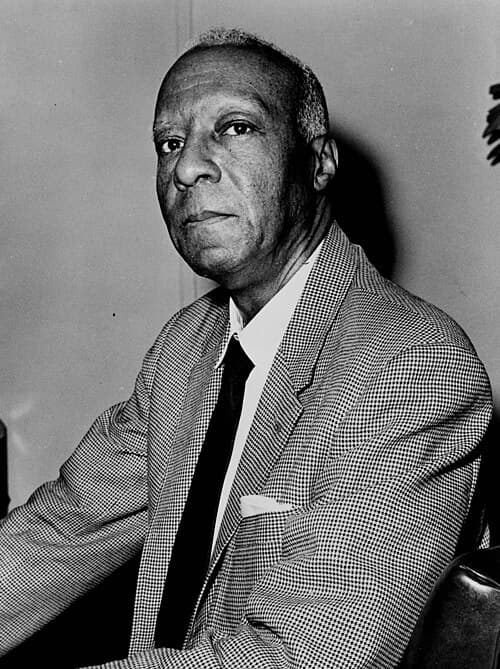
This imaginary interview was generated by artificial intelligence from sources documented in Ai Weiwei's profile. It dramatises what the figure might have said based on what we know about them, but does not constitute attested historical testimony. For primary sources and factual documentation, refer to the full profile.