Imaginary interview with Al-Farabi
by Charactorium · Al-Farabi (870 — 951) · Philosophy · Sciences · Music · 6 min read
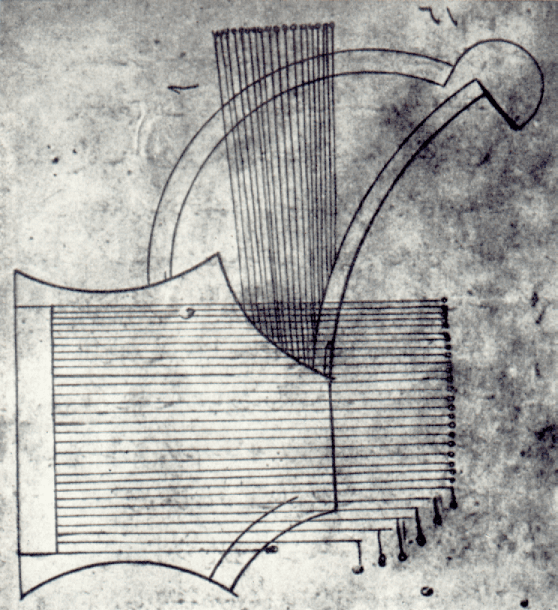
Damascus, the final years of the reign of gardens and streams. In a shaded courtyard where a canal murmurs, an old man in a woolen robe rests an oud on his knees. They call him the Second Master; he calls himself only a servant of the wisdom of the Ancients.
—How did a man born on the frontiers of Central Asia end up debating logic in the capital of the caliphs?
I came from Farab, that oasis town set on the Silk Roads, where people speak Turkish more readily than the language of scholars. But knowledge had gathered in Baghdad, under the Abbasids, in the wake of the Bayt al-Hikma where the Greeks had been translated into Arabic. I went there as a youth, around the year three hundred of the Hijra, to learn mantiq, the science of right reasoning. My first masters were Nestorian Christians, faithful guardians of Aristotle's Organon; they taught me to dissect a proposition as a physician dissects a body. I spent my mornings bent over manuscripts of parchment and paper, that new paper from the East which multiplied books. Falsafa, you see, belongs to no nation: it passes from hand to hand, from Greek to Syriac, from Syriac to Arabic, like a lamp passed through the night.
Philosophy passes from hand to hand, like a lamp passed through the night.
—What did you find in the Ancients that your own time could not give you?
Order, my friend. The world buzzes with disputes, everyone shouts his truth in the mosques and in the squares, but Aristotle built an instrument to sort the true from the plausible. His logic is not one opinion among others: it is the scale that weighs all opinions. In my Enumeration of the Sciences, I sought to place each branch of knowledge in its proper rank, from grammar to divine science, like a steward arranging the provisions of a palace. I believe that the disorder of minds comes from a disorder of words; that is why I wrote on letters and the origin of language. For before reasoning rightly, one must name rightly. The Nestorian masters taught me this humility: one does not correct Aristotle; one strives to penetrate his meaning, even if it means rereading the same page a hundred times.
The disorder of minds comes from a disorder of words.
—You were given a title no one else received: the Second Master. Do you remember what it cost you?
Many vigils, above all. It is said—and I do not deny it—that I read the treatise On the Soul more than a hundred times, and the Physics forty times. This is not vanity: a Greek text, passed through so many translations, keeps its shadows, and one must return to it as one returns to the edge of the same well until the water becomes clear. Aristotle is the First Master, the one who opened the doors; I am only the second, the one who relit the lamps behind him so that others might enter. My commentaries on the Organon had no other purpose: to make readable what distance and time had obscured. If a title honors me, let it first honor those of whom I am only the transmitter. One day, perhaps, a younger man will read my glosses and go further.
Aristotle opened the doors; I only relit the lamps behind him.
—You sought to reconcile Plato and Aristotle, whom many oppose. Why did this work seem necessary to you?
Because it would be unworthy of wisdom that its two greatest men contradict each other on essentials. In my essay on The Harmony of the Opinions of the Two Sages, I showed that their disagreements often stem from their language, their manner of speaking, not from the core of their thought. Plato looks toward eternal models, Aristotle toward the things of this world; but both climb the same mountain from two slopes. A logician does not merely oppose; he seeks the hidden agreement beneath the quarrel of words—again mantiq, always it. I spent entire afternoons in Baghdad, and later here, debating this with scholars both Christian and Muslim, around the same table. Those who pit the Ancients against each other have read neither the one nor the other.
Plato and Aristotle climb the same mountain from two slopes.
—They tell of an evening concert where your music made the court laugh, weep, and then sleep. What happened that evening?
They make a legend of it; I see a demonstration. At the court of Emir Sayf al-Dawla, I took the oud, that lute with a pear-shaped body, and played according to the modes I had studied in my Great Book of Music. You must know that each mode touches the soul like a key touches a lock: one excites gaiety, another melancholy, another soothes even to sleep. I made the assembly pass through these three doors, one after the other, and they laughed, wept, and then dozed off. It was not sorcery but science: the intervals, the proportions of strings, obey numbers, like the stars read with an astrolabe. Music is not a courtly diversion; it is a medicine of the soul that knows its own remedies.
Each mode touches the soul like a key touches a lock.
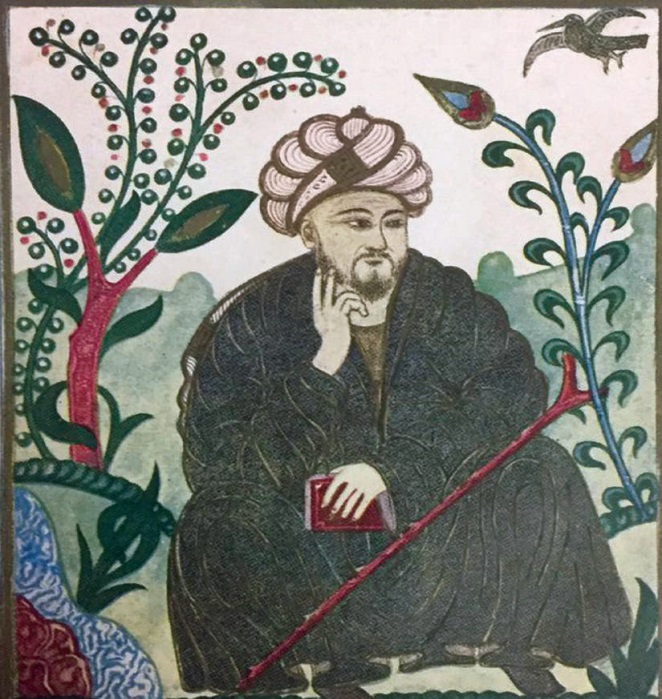
—You speak of music as a science. What is there to know in a simple sound?
Far more than one thinks. I wrote in my Great Book of Music that this art encompasses the knowledge of sounds, their causes, and everything related to them, so that the soul may find pleasure and perfection therein. A sound is not a chance: it is born from a string stretched to a precise length, and two well-proportioned strings harmonize like two friends, while two ill-tuned ones quarrel in the ear. I measured these intervals on the oud, I described the instruments, I sought the numbers hidden beneath pleasure. For the entire world is built on proportions, and music is its sounding mirror. When I tune my lute in the evening, by the light of an oil lamp, I feel I am touching the very order that the Creator placed in things.
—In your most famous work, you describe an ideal city. What does this virtuous city look like?
It resembles a healthy body, where each member serves the whole. In The Ideas of the Inhabitants of the Virtuous City, which I composed a few years ago, I wrote that the city where men associate in order to help each other acquire happiness is the virtuous city. Everything lies there: mutual aid and happiness. A city is not a heap of houses; it is a common soul. At its head, there must be a leader who unites the wisdom of the philosopher and the authority of the inspired guide, for to govern without knowledge is to lead a flock in the night. I drew from Plato this madîna fâdila, but I thought it for our world, where caliphs and emirs quarrel over provinces. Faced with this disorder, imagining the just city is not an idler's daydream: it is the duty of the sage.
A city is not a heap of houses; it is a common soul.
—You constantly link politics to happiness. What do you mean by this word that everyone thinks they understand?
The word is on every lip, yet few know what it designates. In my treatise On the Attainment of Happiness, I said that happiness is the good sought for its own sake, and which is never sought to attain anything else; there is nothing greater beyond which man can reach. Wealth, power, the splendors of the court are only steps, never the summit. True happiness arises from virtue and knowledge, when the soul, through philosophy, harmonizes with the order of things as the strings of the oud harmonize with each other. That is why a city must be virtuous to make its inhabitants happy: one does not cultivate wisdom in disorder. The philosopher and the legislator, ultimately, pursue the same goal by two paths.
Wealth and power are only steps, never the summit.
—You frequented the most sumptuous courts, yet they say you live in great poverty. How do you live?
On little, and I give thanks for it. Sayf al-Dawla gives me a few dirhams, a modest sum with which I am content, never asking for more. My robe is simple wool, my table is reduced to bread, a few dates, dried fruits, perhaps a little meat. I leave splendor to princes, to whom it suits, and I prefer the company of a stream to that of courtiers. You see, the man who has tasted the pleasure of understanding no longer finds great taste in the pleasures of the mouth. What would I do with a palace? I would carry the same questions everywhere, and questions weigh nothing in luggage. Here, under these trees of Damascus, with my reed pen and inkwell, I possess all that a man needs to be free.
Questions weigh nothing in luggage.
—Where do you find rest, when the treatises are set down and the court is asleep?
By the water, almost always. I have spent more hours than one might think sitting near a canal, in Damascus as once in the gardens of Baghdad, letting a thought ripen like fruit on its branch. In the morning, I read and reread my Greeks; in the afternoon, I discuss with those who are willing to think with me; but the evening is mine. I take up the oud, or I dip my reed pen in the inkwell and write by lamplight, as long as the oil burns. People sometimes pity me for living so alone. But I am never alone: Aristotle is at my right, Plato at my left, and the murmur of the stream is worth more than all the speeches of flatterers. A man who knows how to be content with a garden and a book has already found his share of the virtuous city.
Aristotle at my right, Plato at my left, and the murmur of the stream is worth more than flatterers.
This imaginary interview was generated by artificial intelligence from sources documented in Al-Farabi's profile. It dramatises what the figure might have said based on what we know about them, but does not constitute attested historical testimony. For primary sources and factual documentation, refer to the full profile.