Kids interview Al-Farabi
by Charactorium · Al-Farabi (870 — 951) · Philosophy · Sciences · Music · 5 min read
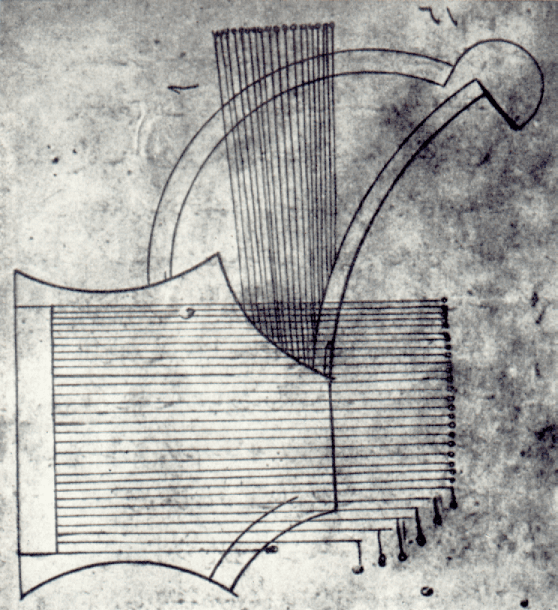
Two 5th-graders visit an exhibition on the golden age of Islam. In front of an old lute and manuscripts, a scholar in a woolen robe welcomes them with a smile. It is Al-Farabi, and he has promised to answer all their questions.
—Where were you born, really? Was it far from Damascus?
You know, I was born very far from here, in a region called Farab, in Central Asia. Imagine a land of oases, with merchant caravans crossing vast steppes laden with silk and spices. My name comes from there: Al-Farabi, the man from Farab. To come to Baghdad to study, it took months of travel, on foot and by camel. In my time, we did not move fast: between two cities, there was only dust, stars, and the steps of beasts. But I wanted to learn, and nothing stopped me.
My name comes from an oasis: Al-Farabi, the man from Farab.
—What did you study in Baghdad? Was it with teachers?
Yes, my child, and very curious teachers! In Baghdad, I learned logic from Christian masters, called Nestorians. Imagine that: a young man from the steppes, sitting at the feet of old scholars of another religion, all bent over the same Greek books. Logic is the art of reasoning without error, what was called mantiq. There we learned to build an idea like a wall, stone by stone, without it collapsing. Those masters gave me a key. And that key opened the door to a treasure: the thought of the ancient Greeks.
Logic is building an idea like a wall, stone by stone.
—Is it true that you read the same book more than a hundred times?
Ah, you have heard that story! Yes, it is true. A great Greek scholar, Aristotle, had written a treatise on the soul. Well, I read it more than a hundred times. And another, on nature, forty times. You find that crazy? Listen: a beautiful text is like a very deep well. The first time, you bring up a little water. The tenth, you go down lower. Each rereading taught me something I had missed. That is why I was given a unique title in all the world of my time: the Second Master, right after Aristotle, the First. No one else ever received it.
A beautiful text is a deep well: each reading takes you lower.
—Why did everyone talk so much about this Aristotle?
Good question! Aristotle had lived more than a thousand years before me, among the Greeks. He had observed everything: animals, stars, the way to think well. His books on logic, grouped under the name Organon, were like a toolbox for the mind. The problem is that they were written in Greek, a language few people read. So translators put them into Arabic, and I wrote explanations to make them clear. Imagine a treasure locked in a chest whose key has been lost: my work was to remake the key for everyone.
My work was to remake the key to a treasure whose lock had been lost.
—They say you made people laugh and cry with your music. Is it true?
Ha! That story follows me everywhere. They say that one day, before the court, I took my instrument. First, I played a melody, and everyone laughed. Then I changed the rhythm, and the same people began to cry. Finally, I played very softly, and I put them all to sleep! True or exaggerated, this story says something accurate. I had written a Great Book of Music, where I explained that sounds act on our heart. An instrument like the oud, this pear-shaped lute, does not just make pretty noise: it touches the soul, as the wind bends the wheat.
Sounds touch the soul as the wind bends the wheat.
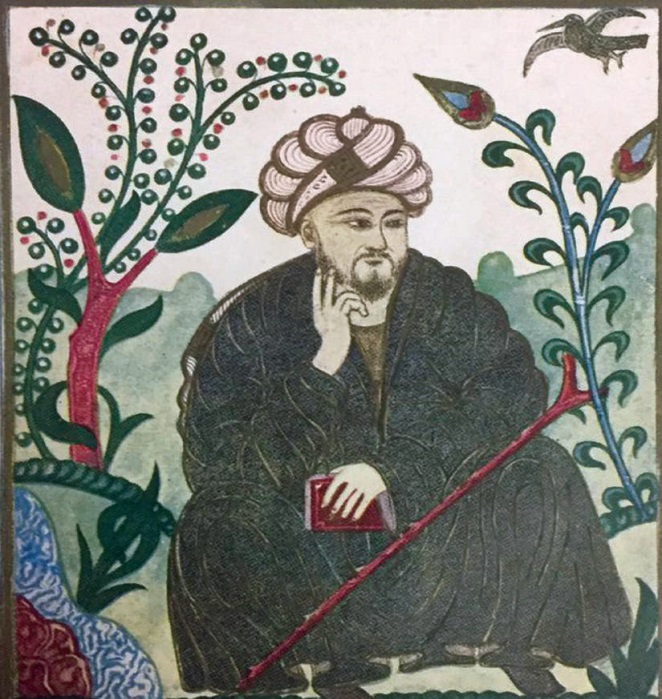
—Would you rather be remembered as a philosopher or as a musician?
What a clever question! But you know, for me, it is not separate. Music and philosophy seek the same thing: harmony. In philosophy, I wanted to tune ideas together, without false notes. In my Great Book of Music, I measured sounds, intervals, what makes a melody sound right. It is the same gesture! Understanding why two notes go well together, or why two thoughts agree. A scholar who knows only his head forgets his heart. I wanted to nourish both. So keep of me the image of a man who listened, as much as he thought.
In philosophy as in music, I sought the same thing: harmony.
—What was your most important book?
Without hesitation: The Opinions of the People of the Virtuous City. I wrote it around 940. In it, I dream of a perfect city, where people do not live each for themselves. Imagine a village where each person helps the other: the baker, the doctor, the schoolmaster, all turned toward the same goal, to be happy together. For me, a good city is like a healthy body: each member does its part, and the whole is well. One of the words I loved is madīna fāḍila, the virtuous city. It was not a real place. It was a model, a star to guide oneself.
A good city is like a healthy body: each member does its part.
—What did it mean for you to be happy?
Ah, the greatest of questions! I wrote a whole treatise on that, On the Attainment of Happiness. For me, happiness is not having many things. It is the good sought for itself, and nothing above it. Think: you eat to live, you work to earn a living. But happiness, you do not seek it to obtain something else. It is the final goal. And how to reach it? Through knowledge and virtue, becoming better, day after day. Like climbing a mountain: each step of knowledge brings you closer to the summit, where the air is purest.
Happiness is the only goal that is not sought to obtain something else.
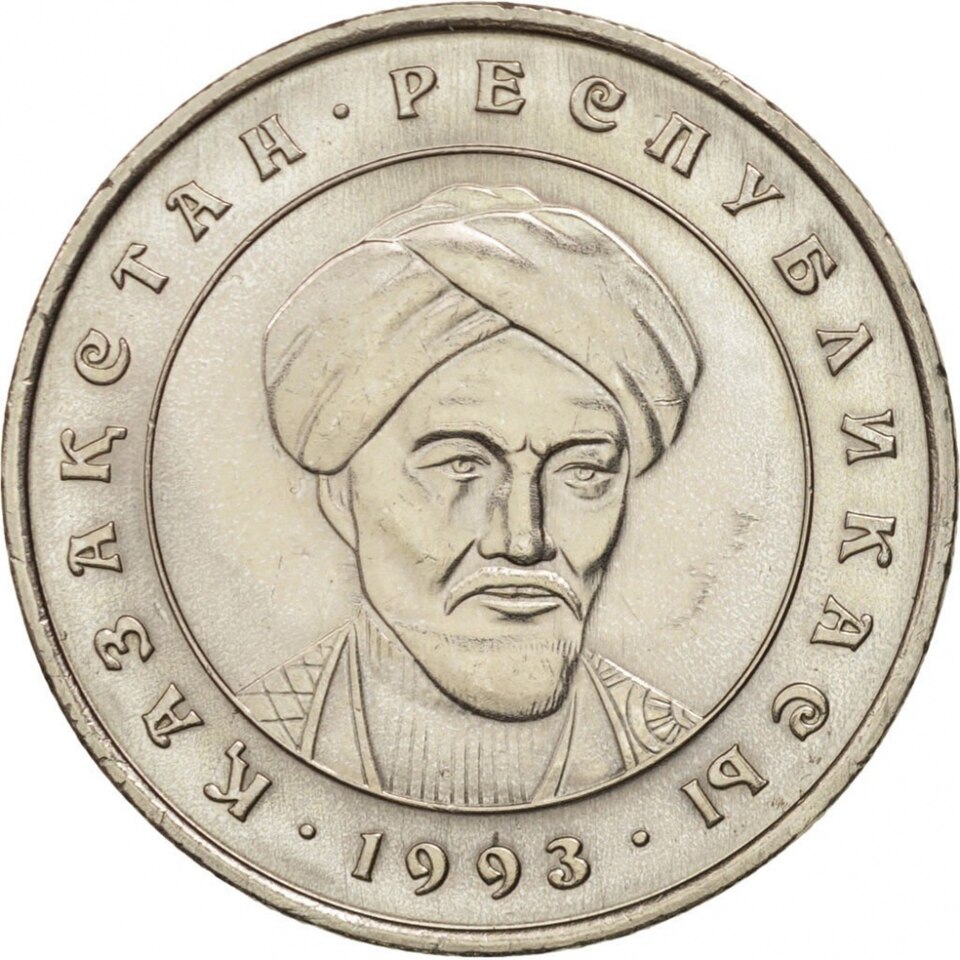
—You lived at the court of a prince? Were you rich then?
Rich? Oh no, my child, not at all! I lived near an emir, Prince Sayf al-Dawla, a word meaning commander. He gave me small sums to live on, and that was quite enough for me. Around me, the court glittered with gold, silks, and feasts. I wore a simple woolen robe and ate bread, dates, some vegetables. Luxury never tempted me. I preferred to go sit in a garden, by a stream, and think to the sound of water. A scholar needs calm, not gilded cushions.
Luxury never tempted me: a scholar needs calm, not gilded cushions.
—What did you eat in the morning? And what was your house like?
In the morning, I ate very simply: a little bread, some dates, sometimes dried fruits. Nothing more. I lodged modestly, often thanks to the generosity of my protector. My real wealth was in a corner of the room: my manuscripts, my books copied by hand. My tools were a cut reed, called a calamus, and an inkwell. In the evening, by the light of a small oil lamp, I dipped my calamus and wrote my treatises, one by one. Imagine the silence: no sound outside, just my pen scratching the paper. Those were my favorite hours.
My real wealth was not gold: it was my books copied by hand.
—Where did you end your life? Were you happy at the end?
I ended my days in Damascus, Syria, and I died there in 951, already quite old. Do you know what I did in my last times? I walked in the gardens, I sat by streams, and I thought. Yes, I was happy, in my own way. I had transmitted the wisdom of the Greeks to those who would come after me. Shortly after my death, a great scholar, Avicenna, would be born, who would build on my work. A master never really dies: he continues to live in the minds of his students. And you, today, you are still listening. So I am still a little alive.
A master never really dies: he lives in the minds of his students.
This imaginary interview was generated by artificial intelligence from sources documented in Al-Farabi's profile. It dramatises what the figure might have said based on what we know about them, but does not constitute attested historical testimony. For primary sources and factual documentation, refer to the full profile.