Imaginary dialogue between Sayf al-Dawla and Al-Farabi
by Charactorium · Al-Farabi (870 — 951) · Philosophy · Sciences · Music · 5 min read
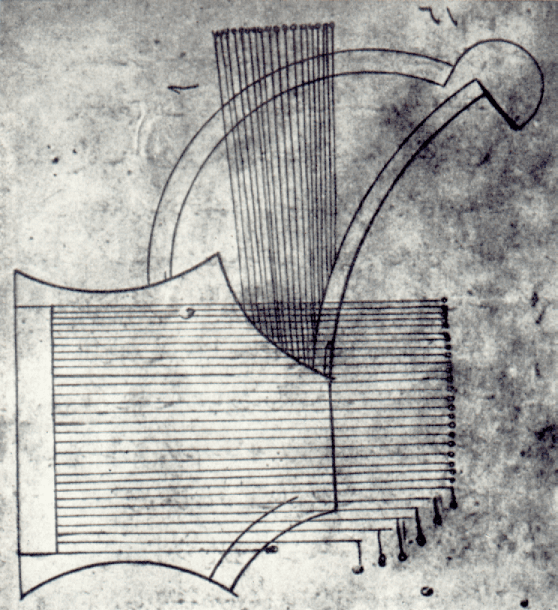
It is in a garden of Damascus, in the shade of orange trees and near a stream whose murmur mingles with the wind, that Sayf al-Dawla meets Al-Fârâbî in this year 950. An oud rests on a cushion, its strings still warm. The emir and the philosopher have known each other since the days of Aleppo, where the prince offered the old scholar his protection and a modest income. This evening, the learned sovereign comes not so much to command as to listen, eager to grasp the man behind the master.
—Old master, everywhere they call you the Second Master, the one who comes right after Aristotle. How does such a title fall to a man?
This title, prince, embarrasses me more than it flatters me. He is called the First Master, he who first ordered thought through logic, the Mantiq. I merely followed him step by step, commenting on his Organon so that men of the Arabic tongue could enter it without getting lost. Do you know that I reread his treatise on the soul more than a hundred times, and the Physics forty? I sought not glory, only to leave nothing obscure. A text is not read, it is dug, as one digs a well until one finds clear water. If I am placed second, it is because I loved the First so much that I wore out my eyes on his pages.
A text is not read, it is dug, as one digs a well until clear water.
—Do you remember that evening at my court, when you took up the oud: you made us laugh, then weep, then sleep. Did you want to dazzle me, or to demonstrate something?
Neither, friend — I wanted to show you a truth that does not fit in a book. In my Kitâb al-mûsîqâ al-kabîr, I maintain that sounds have causes, and that these causes touch the soul as surely as a remedy touches the body. That evening, each mode I played struck a chord in you: joy, then sadness, then sleep. You were the living proof of my theory. Music is not a mere ornament for your feasts; it is a science of the passions. You who govern men know better than anyone how important it is to know what moves them, calms them, or puts them to sleep.
Music is not an ornament of feasts; it is a science of the passions of the soul.
—I who rule over very real cities, tell me: this madîna fâdila, your virtuous city — is it only a philosopher's dream?
A dream, perhaps, but one that serves as a measure for reality, as the star guides without being reached. In The Ideas of the Inhabitants of the Virtuous City, I describe a society where men associate to help each other toward happiness, as the members of a body serve the whole body. The prince is like the heart: he gives order and life. In On the Attainment of Happiness, I show that this happiness is not wealth or glory, but the good sought for its own sake, beyond which there is nothing. You, Sayf al-Dawla, hold in your hands a fragment of this city: it is yours to choose whether you govern it by virtue or by force alone.
The virtuous city is one where men help each other to attain happiness.
—You were born so far from here, at Farab, on the edges of the Silk Roads. Do you sometimes miss that oasis, you whom I have seen so frugal at my table in Aleppo?
Miss it? No — a thinking man is at home wherever a stream flows and a tree grows. From Farab I went to Baghdad, where Nestorian Christian masters taught me logic, then fate and your kindness led me to Syria. You have seen me eat little: bread, dates, some dried fruit. The splendor of your court, prince, I admire but do not envy. What you give me is more than enough. Give me a garden, shade, the sound of water, and a lamp in the evening to write — I need nothing else. Wealth encumbers the soul that seeks to rise.
A thinking man is at home wherever a stream flows and a tree grows.
—They say Plato and Aristotle are enemies. You who have read the Greeks so much, why do you persist in trying to reconcile them in your treatises?
Because their quarrel, prince, is often that of their readers, not their own. In The Harmony of the Opinions of the Two Sages, I show that they look at the same truth through two different windows. All this Greek knowledge, the Falsafa, has reached us thanks to the translators of the Bayt al-Hikma, the House of Wisdom of Baghdad. Al-Kindî before me had opened the way. In The Enumeration of the Sciences, I wanted to classify all the knowledge of my time, from grammar to metaphysics, as a steward arranges a treasure. I am only a ferryman: with one hand I receive the wisdom of the Ancients, and with the other I pass it on to those who will come, to the young minds of the East yet unborn.
Plato and Aristotle look at the same truth through two different windows.
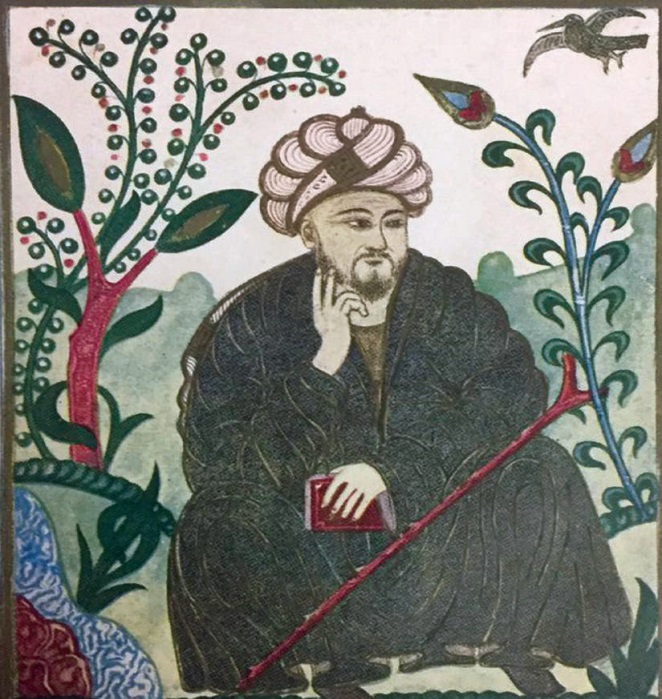
—When you comment on the Mantiq, that arid logic, are you not afraid of boring men, who prefer stories to syllogisms?
Logic seems arid, prince, as water seems tasteless to one who is not thirsty. Yet it is the instrument without which all thought stumbles. It is the balance of the mind: without it, how to distinguish truth from falsehood, the sophist from the sage, the flatterer from the loyal counselor? You who judge disputes and hear pleadings practice logic without knowing it. Aristotle founded it in his Organon, and I have spent my life illuminating every turn for my contemporaries. A people that reasons poorly lets itself be governed by fine words rather than by justice. That is why I persist with these pages that others deem boring.
Logic is the balance of the mind; without it, all thought stumbles.
—Your servants say you prefer to meditate by the water rather than attend my receptions. Should I be offended, my friend?
Do not be offended at all, Sayf al-Dawla, for it is a hidden homage. In the morning, I read manuscripts; in the afternoon, I debate with scholars, Christians as well as Muslims; but in the evening, I need the silence of gardens to let all this noise of ideas settle. The murmur of a stream is worth more than a concert for one who wants to think. Your festivities are splendid, but they fill the ear and empty the mind. By withdrawing from them, I return to you better, with pages written and thoughts matured. A wise prince prefers a counselor who has meditated alone to a courtier who has only applauded. That is my way of serving you.
The murmur of a stream is worth more than a concert for one who wants to think.
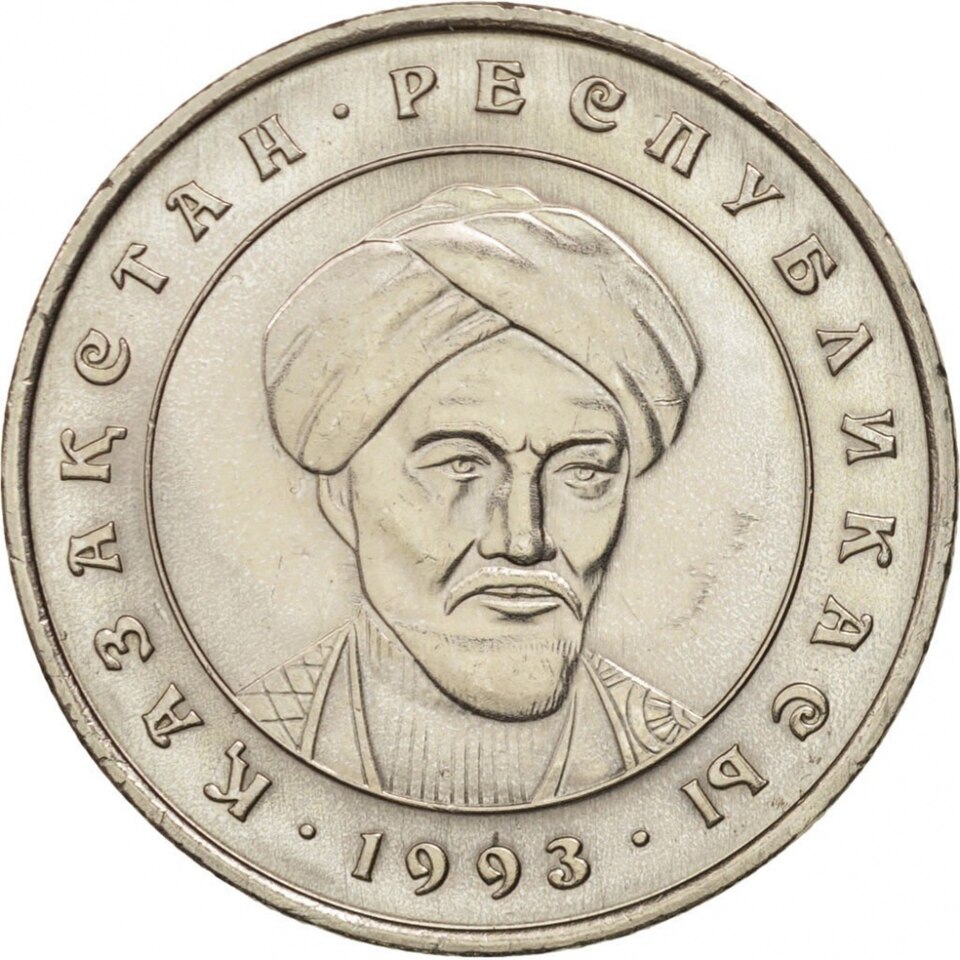
—In your ideal city, you place a philosopher-prophet at its head. Is that a veiled reproach to princes like me, who are neither?
Not a reproach at all, but an ideal to strive toward. The first leader of the virtuous city combines the wisdom of the philosopher and the inspiration of the guide: he knows the good, and knows how to make it loved. Few men unite these two gifts, I admit. But a prince who surrounds himself with sages, who listens to reason before anger, who seeks the happiness of his people and not his own pleasure — that prince approaches the model. You welcomed me, you listen to me this evening: that is already the gesture of a sovereign who does not want to govern blindly. The perfect city is rare, almost impossible — but every step toward it is already a virtue.
The first leader of the city knows the good and knows how to make it loved.
—You who have ordered all the sciences in a single book, tell me: which one dominates the others, which one should a man cherish above all?
A king's question, who wants to know where to place his treasure. Each science has its place and rank, like the officers of an army. Grammar and language guard the gate; logic arms the mind; mathematics and astronomy measure the world. But at the summit sits metaphysics, the divine science, which deals with the first principles of being and God. It is this that everything else serves, as roads lead to the capital. Yet none stands alone: to neglect the first is to want to build a palace without foundations. That is why, in my Ihsâ' al-'ulûm, I enumerated them all — so that one knows where to begin and toward what to rise.
At the summit sits metaphysics, as roads lead to the capital.
—One last thing, old master: when your fingers ran over the oud that evening, was it the scholar playing, or the man forgetting himself?
Both, prince, and that is the whole secret. The scholar knows why a certain string moves and another soothes; but if he did not forget himself while playing, his fingers would remain cold and his music dead. Theory enlightens the hand, the hand frees the soul. That evening before you, I ceased for a moment to be the commentator of Aristotle and became only a man seeking, through sounds, that same happiness of which my books speak so much. Music offered me in an instant what a thousand pages pursue: the rest of the soul in its just harmony. That is perhaps, friend, the truest teaching I have ever given you.
Theory enlightens the hand, the hand frees the soul.

This imaginary interview was generated by artificial intelligence from sources documented in Al-Farabi's profile. It dramatises what the figure might have said based on what we know about them, but does not constitute attested historical testimony. For primary sources and factual documentation, refer to the full profile.