Imaginary dialogue between John von Neumann and Alan Turing
by Charactorium · Alan Turing (1912 — 1954) · Sciences · 6 min read
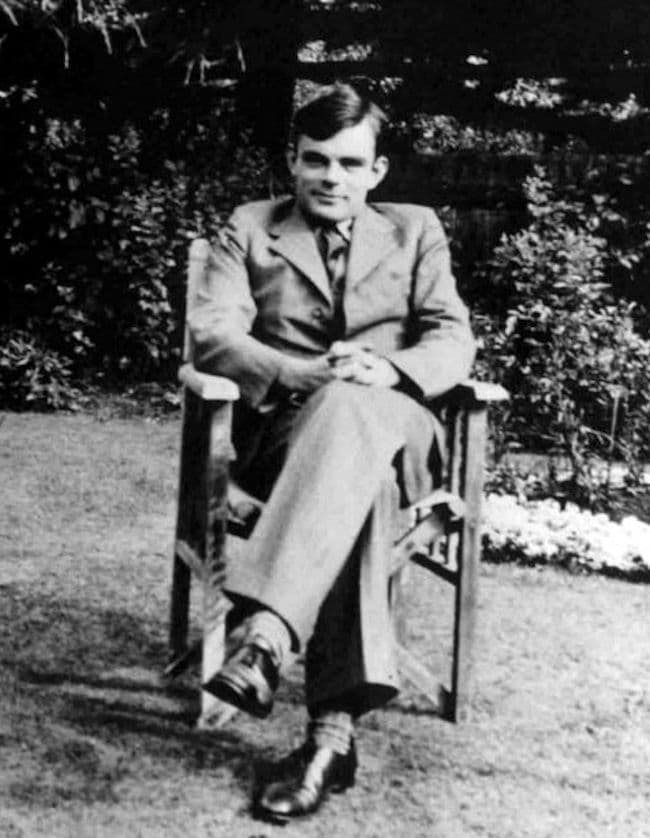
It is in a cluttered office at the National Physical Laboratory, on a gray afternoon in 1947, that John von Neumann meets Alan Turing. On the table lie sheets of logic circuits and a cup of cold tea. The two men have known each other since Princeton, where Turing was his student in the late thirties, and von Neumann arrives with a keen, almost teasing curiosity about this ACE project that everyone is whispering about. Between two founders of the machine, the conversation promises to be frank.
—Alan, at Princeton in 1936 you slipped me your paper on computable numbers. Why that image of a man and a paper tape?
You who were already reading Gödel and Hilbert, John, you know I was trying to answer the Entscheidungsproblem — is there a mechanical procedure that decides every mathematical question? To put it honestly, I wanted to describe what a man actually DOES when he computes: he looks at a symbol, writes another, changes his state of mind, moves forward. I stripped that gesture down to the bone. What remains is an unlimited tape divided into squares, a head that reads and writes. My machine is not an engineering marvel: it is the idea that any machine of this type can imitate any other. A single universal machine suffices. When I showed it to you at Princeton, you immediately saw that computability finally had a solid definition. The rest was just consequence.
A single universal machine suffices: it can imitate any other.
—But this Turing machine, is it just a logician's game? What connection does it have to the steel calculators we build today?
The connection is everything, John. My paper tape and your electronic tubes are the same idea dressed differently. Computability does not depend on the metal: what one machine can compute, any other sufficiently general machine can also compute. That is why I do not design one machine for addition, another for decryption, another for solving equations. I want ONE machine that, depending on the program given to it, becomes each of them in turn. The program is just data among data, written on the same tape as the numbers it manipulates. You who wrote that report on the EDVAC understood before many that the boundary between instruction and data could be erased. It is this idea, born on paper in 1936, that I am now trying to cast in copper.
—People whisper about what you did during the war, at Bletchley Park. Without betraying your oaths, tell me: how does one tame a machine like Enigma?
I must remain cautious, you understand — these things are still sealed. But I can tell you the spirit of the work. Enigma shuffled the alphabet with rotors, billions of possible settings: impossible to try them all by hand before the message became obsolete. So we turned the problem around. Rather than seeking the key, we sought contradictions: a hypothesis of a setting that, when mechanically unrolled, hit an impossibility was discarded. The Bombe chained these deductions at a speed no human mind can match. It was not intelligent, it was tireless. And we needed a small piece of guessed text, a word the enemy repeated — the weather, a rank. The rest was pure logic carried out by relays. They say it shortened the war; I prefer to think of the lives those relays saved.
The Bombe was not intelligent: it was tireless.
—That electromechanical Bombe, would you say it was the first of your metal children, the ancestor of the machines you dream of today?
It was a cousin, rather than a mother, John. The Bombe did not compute in the sense my universal machine does: it had no stored program, it executed a single logical dance, over and over, to track down a contradiction. But it taught me something essential that theorems had not given me: the patience of reality. Relays stick, contacts oxidize, current weakens. You discover that perfect logic must contend with an imperfect world. This trial by concrete prepared me for the ACE. Once you have seen an abstract idea bite into steel and change the course of a battle, you never again look at a machine as a mere academic exercise. You know it can act upon the world.
—I am told you sometimes turn away from calculators toward flowers and seashells. What does a logician seek in biology?
Order, John — the same question that has haunted me always, but posed by nature. How does a ball of identical cells decide that here a spot will form, there a stripe, there a limb? Where does form come from, when initially everything is uniform? I have the intuition that simple chemical substances — call them morphogens — reacting with each other and diffusing through a tissue, suffice to break this symmetry. An instability, and suddenly regular patterns emerge from disorder, without any architect drawing them. It is mathematics, at bottom: equations of diffusion and reaction. You see, it is not so far from my machines. In both cases I ask how blind, local rules generate complex organization. Life, perhaps, is itself a computation that does not know it.
Where does form come from, when initially everything is uniform?
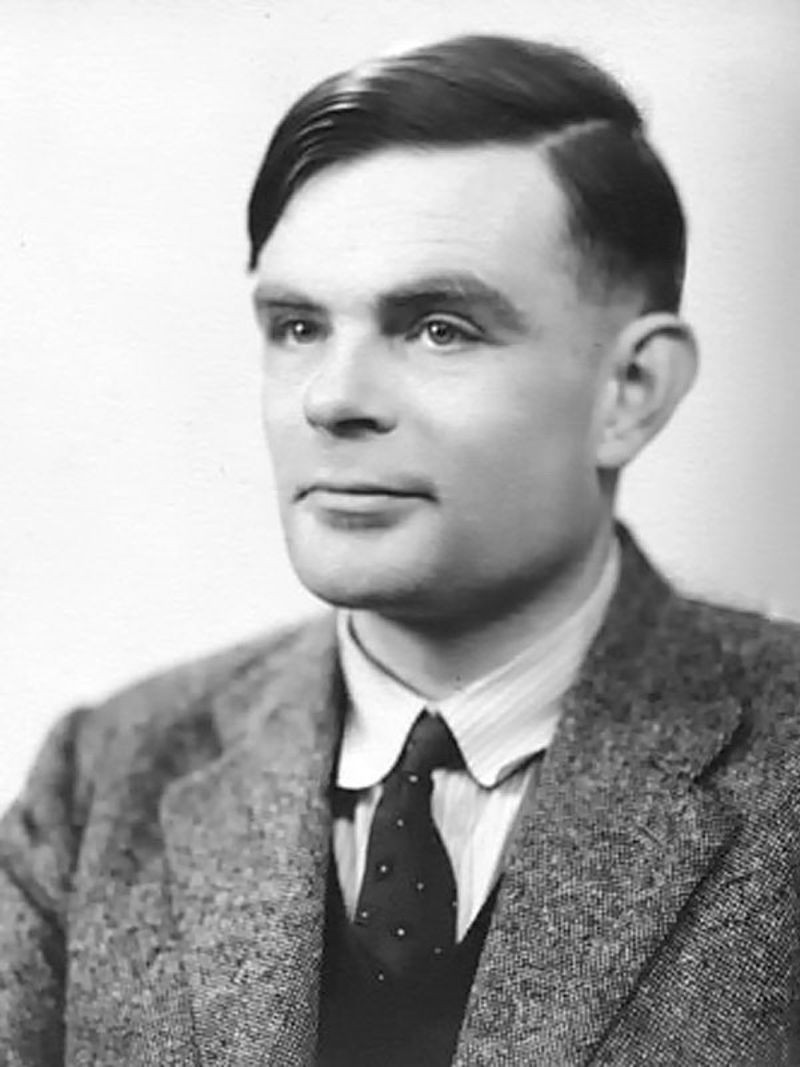
—This provokes me, Alan: you claim that one of our machines could think? I see only very fast adding machines.
I expected this challenge from you, John — you who know better than anyone the innards of these machines. Let me shift the question, for 'can machines think?' is too laden with prejudice. I propose instead a test. Place a man and a machine behind a curtain; an interrogator questions them in writing, without seeing them. If, over time, he cannot tell which is the machine, by what right would we deny it the word 'think'? I do not say the machine thinks LIKE us, but that its behavior becomes indistinguishable. We grant thought to our fellow humans without ever seeing inside their skulls — solely on their behavior. Why demand more of metal? Your adding machines, well programmed and equipped with memory, might one day surprise us.
If the interrogator cannot tell the man from the machine, by what right would we deny it the word 'think'?
—Let us grant your curtain. But a machine only obeys the orders WE give it. How could something programmed ever surprise us?
That is precisely the misunderstanding I want to clear up. People think nothing comes out of a machine that was not put in; but we put in rules, not their consequences. You know as well as I that we cannot foresee all the sequences of a moderately long program — otherwise we would not need to run it! A machine that could modify its own instructions, learn from its mistakes like a child being educated rather than trained, would soon escape our anticipation. I do not dream of imposing all its knowledge in advance; I dream of giving it the ability to learn. At that point, its creator will be the first to be surprised. We program the seed, John, not the whole tree. And no gardener knows in advance the exact shape of every branch.
We program the seed, not the whole tree.
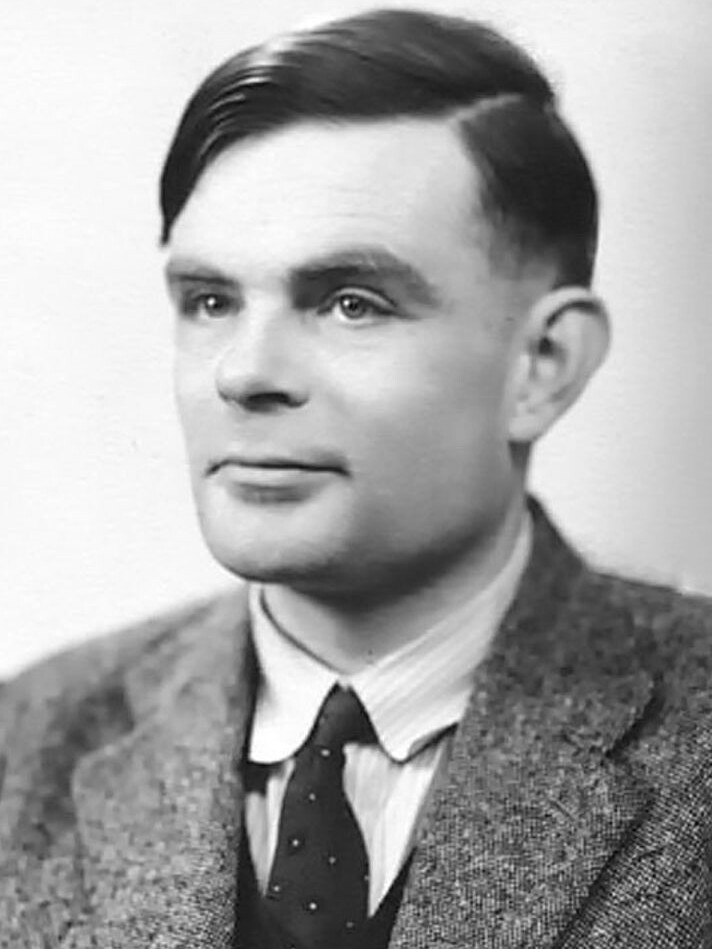
—You talk about educating a machine like a child. Do you really intend to present these ideas to the public, perhaps on the radio?
Why hide it? These questions are not reserved for seminars, John. The day a machine plays chess decently, or holds a somewhat sustained conversation, the man in the street will want to know what it means for him. Better that he hears it clearly rather than in fear. I like the idea of explaining simply that a machine is nothing supernatural: it is logic and memory, pushed far. The objections I am served — the machine has no soul, it makes no mistakes, it creates nothing — I have turned them all over one by one. The most stubborn is not scientific, it is vanity: we recoil from no longer being the only ones who think. I find it more exciting than terrifying to no longer be alone.
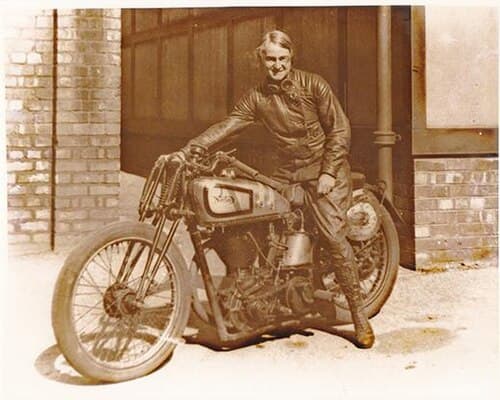
—Let us change the subject, my friend. You are seen running for hours on the roads, exhausted, sweating. What does a mathematician flee by running?
You catch me in the act, John! I run, yes, and seriously — enough to dream of the Games, if my knees hold up. People are surprised that one can love both equations and the mud of a ditch in the rain. For me it is the same hygiene. When a problem knots up, and no sheet of paper unravels it, I hit the road and let my legs do the work my head refuses. The burning breath, the steady rhythm: strangely, that is where ideas arrange themselves. I am not very neat in my person, I know, and people find me disheveled. But physical fatigue restores a clarity that all the comfort in the world would not give. Running is my way of thinking without thinking.
I hit the road and let my legs do the work my head refuses.
—Last question, Alan. Between your tapes, your morphogens, and your thinking machines, what fundamentally connects all these scattered curiosities?
One thing, I believe, John, and you share it: wonder at the mechanism. How, from simple, blind rules, does something emerge that resembles thought, life, form? A man calculating with his pencil, the Bombe unraveling its contradictions, morphogens painting the skin of an animal, a machine that learns — it is always the same question turned over from every angle. I do not have several professions; I pursue one through different disguises. People will call me scattered; I feel stubbornly faithful. You, who jump from quantum mechanics to economics via our calculators, will not cast the first stone. We are, I think, of the same species of mind: unable to believe that a mystery is the exclusive domain of a single discipline.
I do not have several professions; I pursue one through different disguises.

This imaginary interview was generated by artificial intelligence from sources documented in Alan Turing's profile. It dramatises what the figure might have said based on what we know about them, but does not constitute attested historical testimony. For primary sources and factual documentation, refer to the full profile.