Kids interview Alan Turing
by Charactorium · Alan Turing (1912 — 1954) · Sciences · 5 min read
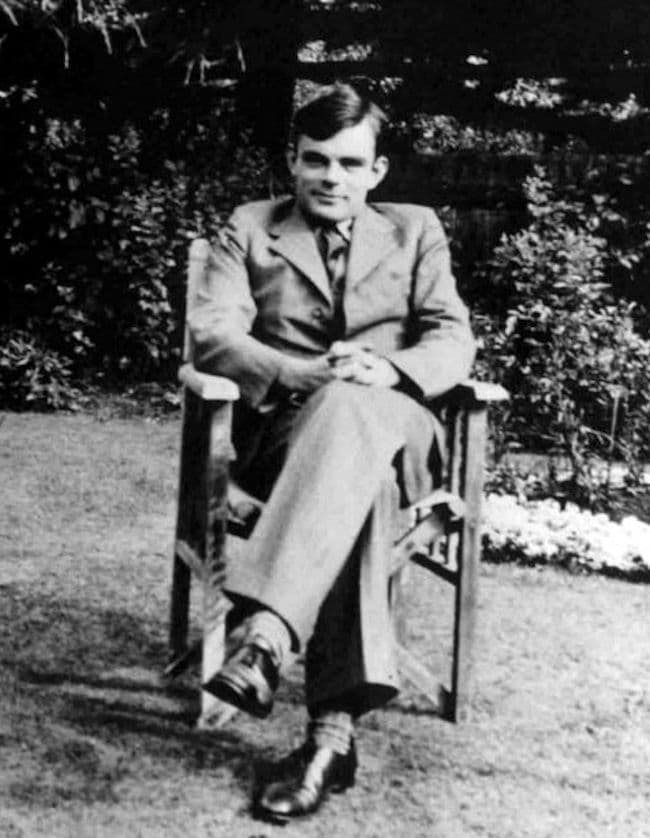
Two twelve-year-old visitors push open the door of a small office cluttered with papers and chalk. A man with disheveled hair greets them with a smile. His name is Alan Turing, and he agrees to answer all their questions.
—What was your secret work during the war?
You know, my child, I worked in a hidden place in the countryside, Bletchley Park. No one outside knew what we did there. The Germans sent coded messages with a machine called Enigma. Imagine a box full of gears that scrambles letters: every day, the code changed. Our mission? Break it before evening. So I built an electromechanical machine, the 'Bombe', that tested thousands of settings for us. When a message finally became clear, we held our breath. They say this work shortened the war by two years. Two years of lives saved, from a room where everything had to be kept silent.
We broke every morning a code that changed every night.
—Were you afraid the Germans would discover you were reading their messages?
Yes, that was our greatest fear. If the enemy guessed we were reading Enigma, they would have changed everything, and our work would have been lost. So we hid our secret behind other secrets. Imagine you know the end of a story, but you have to pretend you know nothing, sometimes even when ships were in danger. It was terrible. At Bletchley Park, we signed papers that forbade us from talking about it, even to our families. My parents never knew what I did. Keeping such a heavy secret, day after day, weighs more than a difficult equation.
—Is it true you invented the computer with just paper?
Almost, my child! In 1936, well before the war, I wrote a paper with a complicated title, On Computable Numbers. In it, I imagined a very simple machine. Imagine a man sitting, with a long paper tape divided into squares. He reads a symbol, erases it or writes another, then moves one square forward. That's all. And yet, with these tiny repeated actions, you can solve any possible calculation. That's computability: knowing what a machine can, or cannot, compute. That little man with the paper tape is the ancestor of all computers.
With a paper tape and tiny gestures, you can compute anything.
—Why did you imagine a man and not a real machine?
Good question! In my time, real calculating machines were heavy, full of gears, and very limited. To think, I didn't need metal. I needed a clear idea. So I thought of you, me, anyone who calculates on paper by following precise rules, one by one. That's what we call an algorithm: a sequence of instructions you apply without thinking, like a recipe. My imaginary man never got tired and had an endless tape. By describing him, I understood what a machine could one day do. Think first, build later.
—Do you really believe a machine can think?
That's exactly the question I asked myself in 1950, in a paper that began with these words: '« Can machines think? »', that is, 'Can machines think?' Rather than argue about the meaning of the word 'think,' I imagined a game. Imagine you write messages to someone hidden behind a wall. You don't see them. In the end, you have to guess: is it a human or a machine? If you can't tell the difference, then the machine is pretty clever! That's what we call the Turing Test. I didn't give the answer. I wanted everyone to think about it.
If you can't distinguish it from a human, then it's pretty clever.
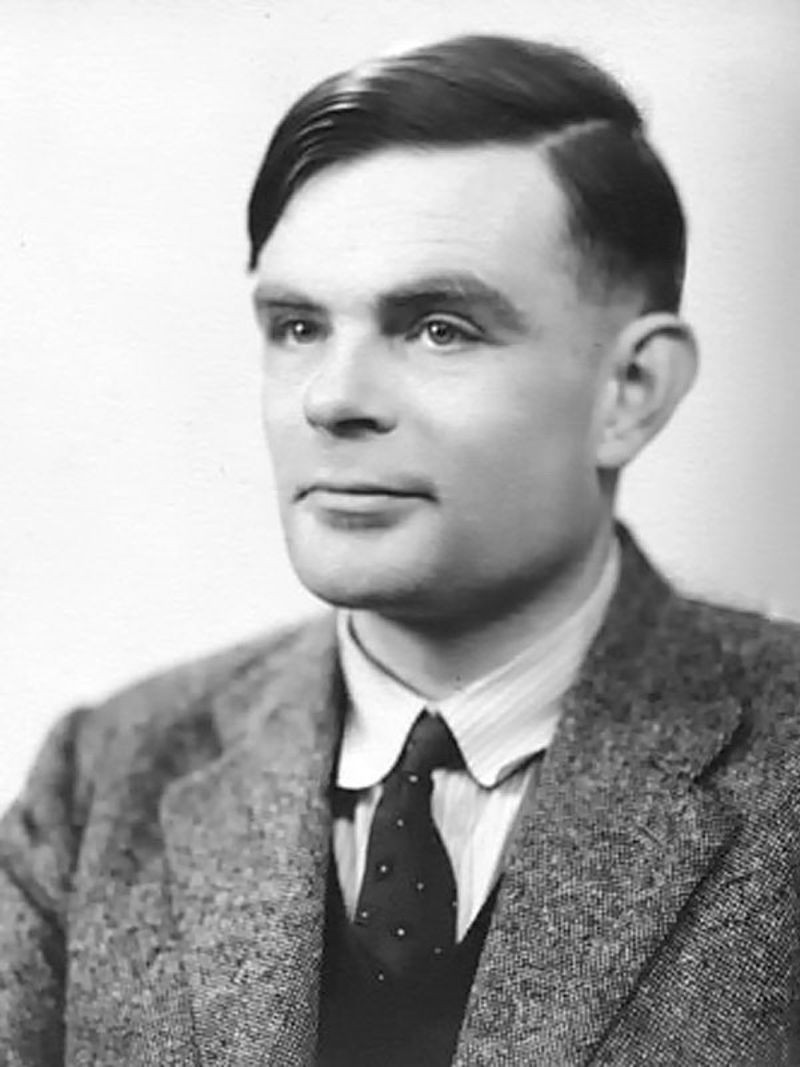
—And weren't you afraid of machines as intelligent as us?
Afraid, no. Curious, yes, terribly. You know, many people in my time found this idea ridiculous, even dangerous. A machine that thinks, what nonsense, they said! But I thought: if a child learns by making mistakes, why couldn't a machine also learn little by little? Imagine a machine that we teach, like you are taught at school, by gently correcting it. I found that wonderful, not frightening. What scared me was rather closed-minded people, those who refuse to imagine. Novelty does no harm. It's the refusal to think that does.
—We've been told you ran marathons, is that true?
Ha! It's true, and I'm quite proud of it. Many people imagine me hunched over numbers all day. But I loved running, really running, for hours, until exhaustion. I was fast, you know! I even considered the Olympics for a moment. In the morning, sometimes, I would run to work across the countryside. It surprised my colleagues. For me, running and calculating were the same: you have to sustain effort for a long time, keep the rhythm, never give up before the finish line. When a problem resisted me, a long run often helped me see clearly. Body and mind move together.
Running and calculating are the same: sustaining effort until the finish line.
—What were you like in everyday life?
Not very tidy, I admit! My hair was always a mess, my clothes a bit wrinkled. I wore the dark suit of gentlemen of my time, but without caring. In the morning, I had a very simple breakfast, and during the war there was rationing: bread, tea, eggs, little meat. We wasted nothing. I preferred a fascinating conversation to an elegant dinner. My desk overflowed with papers and chalk. You know, I didn't waste time choosing a tie when an idea was waiting for me. Appearances bored me. Ideas, never.
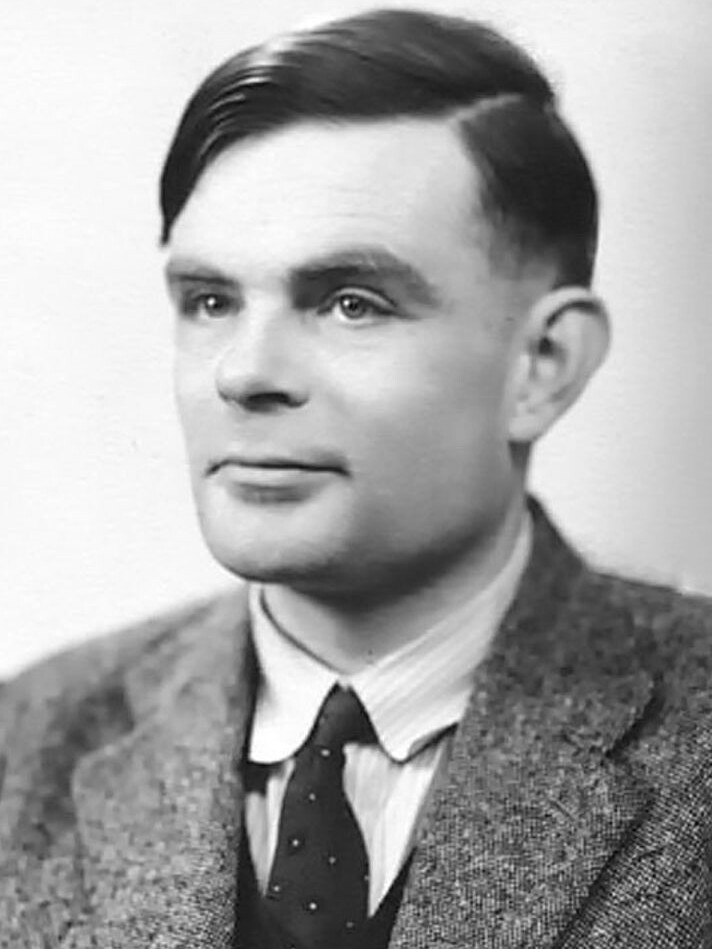
—Is it true you were also interested in flowers and animals?
Yes, and that always surprises! Around 1952, I wondered a very simple thing while looking at nature. Why does a leopard have spots? Why does a flower draw such regular patterns? I imagined that tiny chemical substances, morphogens, mix and spread in living tissues. By meeting, they draw shapes: stripes, spots, spirals. Imagine two drops of color spreading in water and creating a pattern without anyone deciding it. That's it: order can arise on its own, from disorder. Mathematics hides even in petals.
Order can arise on its own, from disorder, even in the petals of a flower.
—Why would a mathematician be interested in how things grow?
Because everything is alike, deep down, my child. A machine that computes, a code to break, a flower that opens: behind every thing, there are hidden rules. My job was to look for those rules. When I looked at a plant, I didn't just see something pretty. I saw a question: what simple law can produce such a complicated shape? I had already looked for the rules of computation, so why not those of life? I believe a curious mind has no boundaries. Numbers led me from secret machines to the patterns of seashells. And each time, the same joy: understanding.
—If we grow up, what would you like us to remember about you?
Above all, remember this: never believe a question is too stupid to be asked. I dared to ask if a machine could think, and many laughed. I dared to imagine a man computing on an endless paper tape, and it seemed useless. Yet those ideas changed the world. You see, great discoveries don't start with big words. They start with a 'what if...?' whispered by someone curious enough to believe in it. You too have the right to ask your 'what ifs'. Keep them precious. One day, one of them might enlighten others.
Great discoveries begin with a 'what if...?' that no one dares to say.
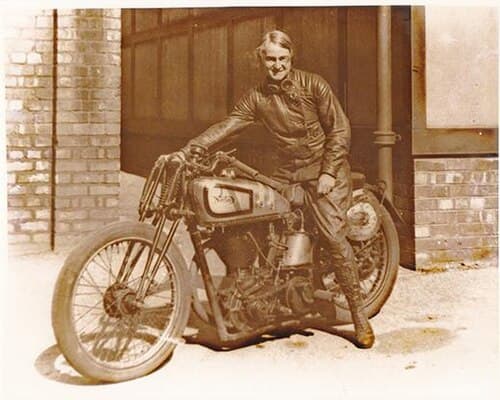

This imaginary interview was generated by artificial intelligence from sources documented in Alan Turing's profile. It dramatises what the figure might have said based on what we know about them, but does not constitute attested historical testimony. For primary sources and factual documentation, refer to the full profile.