Imaginary interview with Albert Einstein
by Charactorium · Albert Einstein (1879 — 1955) · Sciences · 5 min read
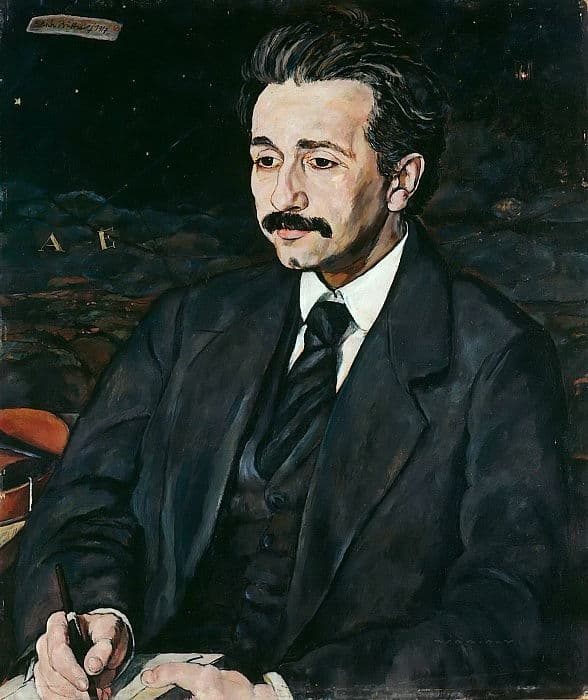
Princeton, late winter 1955. In an office cluttered with papers where a violin lies, an old man with wild white hair receives his visitor without a tie, his pipe unlit in his hand. The conversation, slow and precise, drifts from the light of Bern to the shadows of Hiroshima.
—How could a simple office clerk revolutionize physics in a single year?
People always imagine science in lecture halls; mine was born behind a counter. In Bern, between 1902 and 1909, I examined patents — clock mechanisms, devices for synchronizing station pendulums. It was while weighing what it really means to say 'two events are simultaneous' that everything shifted. In 1905, at twenty-six, I wrote in the evenings, after hours, four papers in the calm of that Swiss city. Special relativity needed neither laboratory nor funding: only a train schedule, a ray of light, and the audacity to believe that the speed of light never lies, no matter which train car you board.
My science was not born in a lecture hall, but behind a counter examining clock patents.
—What does that equation, which has become the very symbol of modern science, mean to you?
E=mc² fits in a few signs, and yet people project immense things onto it. Originally, in 1905, it was almost a modest remark, an appendix to special relativity. I simply noted that if a body radiates energy, it becomes lighter: 'if a body gives off energy L in the form of radiation, its mass decreases by L/c²'. Mass and energy are but two faces of the same reality. I did not suspect then that a factor as colossal as the square of the speed of light would transform a gram of matter into a power for which humanity would have to answer. The equation is beautiful; what was made of it still troubles me.
Mass and energy are but two faces of the same reality.
—You described gravity in an entirely new way. How did you arrive at this vision?
Newton imagined an invisible force pulling bodies toward each other through empty space. That always seemed to me a convenient ghost. In 1915, in Berlin, after years of groping and much recalcitrant mathematics, I understood otherwise: there is no force, there is geometry. Celestial bodies hollow out spacetime like a marble pressing on a stretched canvas, and planets merely follow the folds of this fabric. I summarize it thus: matter tells space how to curve; space tells matter how to move. Gravity is not a rope, it is a landscape.
Gravity is not a rope, it is a landscape.
—Do you remember the moment your theory was confirmed by astronomers?
1919. An English team went to observe a total solar eclipse, to measure whether the light of distant stars would bend as it grazed our star, exactly as my general relativity predicted. When I was told the plates matched, I was happy, certainly — but not surprised. One of my students asked me what I would have felt if the eclipse had contradicted the theory. I replied that I would have felt sorry for the good Lord, because the theory is correct. It is a strange and exhilarating thing: a calculation scribbled in Berlin dictates its law to the light of stars, and the sky obeys.
I would have felt sorry for the good Lord, because the theory is correct.
—You are often seen with a violin. What role does music play in your work?
The violin has accompanied me since childhood, and it is never far from my desk, here in Princeton. When a physics problem knots up and refuses to yield, I do not force it: I take the bow, I play Mozart, and often the solution appears at the turn of a musical phrase, like a door opening by surprise. People think science is pure calculation; it is also a matter of intuition, a sense of proportion, harmony. A good theory sounds right, exactly like a chord. Music and physics draw from the same source in me: the need to find the hidden order beneath the apparent disorder of the world.
When a problem refuses to yield, I take the bow, and the solution appears at the turn of a musical phrase.
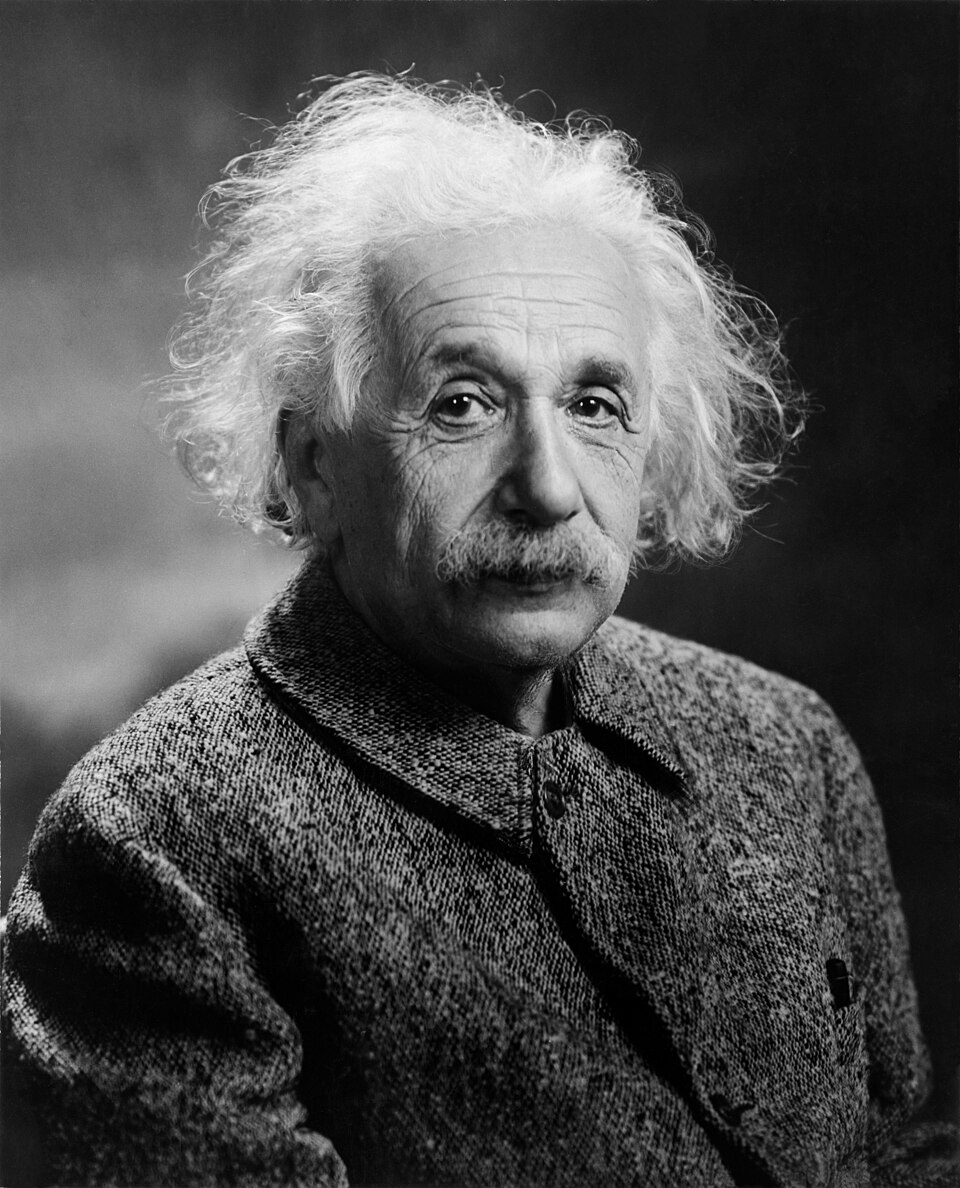
—Many see you as the very image of the eccentric scientist. How do you live with this reputation?
My unruly hair and rumpled clothes make people smile, I know. They reproach me for wearing neither tie nor socks; I reply that is that much time saved for thinking. This unkempt appearance is not a pose: it comes from a deep indifference to conventions, the same that allowed me to doubt Newton without trembling. In the morning, I wake early, have coffee, smoke my pipe, and with a fresh mind I tackle the equations. Fame has become a suit as ill-fitting as my jackets. They photograph my hairstyle; I wish they would take more interest in what is underneath.
They reproach me for wearing neither tie nor socks; that is that much time saved for thinking.
—In 1933, you left Germany for good. How did this break impose itself on you?
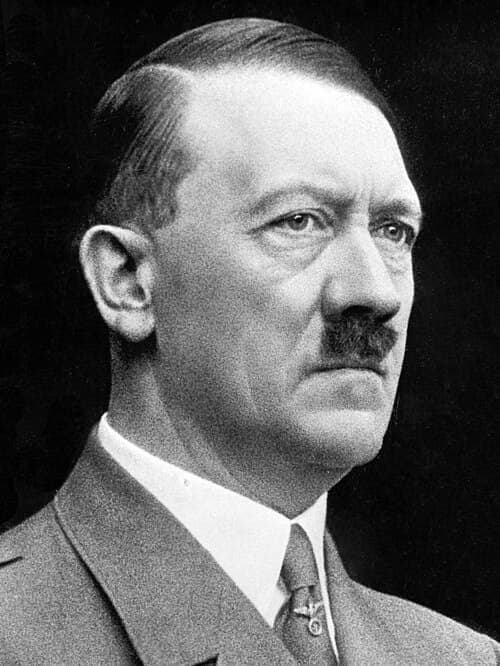
1933: Hitler came to power, and the Germany I loved became a land that wanted me dead. My books were burned in public squares, a bounty placed on my head, my physics called 'Jewish science'. I did not hesitate: I never returned to the land of my birth. I crossed the ocean to Princeton, to the Institute for Advanced Study, where I was offered an office and, above all, peace. But exile is never light. To see an entire nation sink into barbarism, and to know that colleagues, friends, remained trapped — that leaves a wound that neither equations nor the violin have ever quite closed.
The Germany I loved was becoming a land that wanted me dead.
—You who signed a pacifist manifesto during the Great War, how do you reconcile that ideal with the era you are living through?
In 1914, when almost all German intellectuals signed belligerent appeals, I put my name to a pacifist manifesto — we were only a handful. Pacifism has remained my compass. But faced with Nazism, I had to acknowledge a bitter truth: there exists an evil against which turning the other cheek amounts to complicity. You cannot reason with a pack. So I nuanced my absolute refusal of violence without renouncing my horror of war. That is the tragedy of my generation: to have loved peace so much that sometimes we had to consent to defend it by arms. Nothing in my equations had prepared me for such a rending.
There exists an evil against which turning the other cheek amounts to complicity.
—You wrote to Roosevelt in 1939 about the atomic bomb. What did you think you would accomplish with that letter?
In 1939, physicists alerted me: uranium fission made conceivable a weapon of unheard-of power — and Nazi Germany might already be working on it. So I signed a letter to President Roosevelt, warning him that 'heavy elements could be broken by neutron bombardment' and that this 'could also lead to the construction of extremely powerful bombs'. My intention was defensive: to prevent Hitler from alone possessing such a fire. I did not participate in the Manhattan Project, but my signature weighed. Had I known the Germans would fail, I would never have lifted a finger. That letter is the only act of my scientific life I truly regret.
Had I known the Germans would fail, I would never have lifted a finger.
—At the end of your life, you devote your strength to disarmament. What do you hope to leave as a final message?
Hiroshima and Nagasaki, in 1945, showed the world what matter releases when unleashed. Since then, I never stop repeating that humanity must choose between wisdom and annihilation. Most recently, I co-signed with Bertrand Russell an urgent appeal to scientists and governments to renounce nuclear weapons. This is surely my last battle. I have always thought, as I wrote before the war, that school should cultivate 'love of truth and independence of thought' rather than obedience: for it is free minds, not docile technicians, that will save the species. I depart worried, but not without hope.
Humanity must choose between wisdom and annihilation.
This imaginary interview was generated by artificial intelligence from sources documented in Albert Einstein's profile. It dramatises what the figure might have said based on what we know about them, but does not constitute attested historical testimony. For primary sources and factual documentation, refer to the full profile.