Imaginary dialogue between Bertrand Russell and Albert Einstein
by Charactorium · Albert Einstein (1879 — 1955) · Sciences · 5 min read
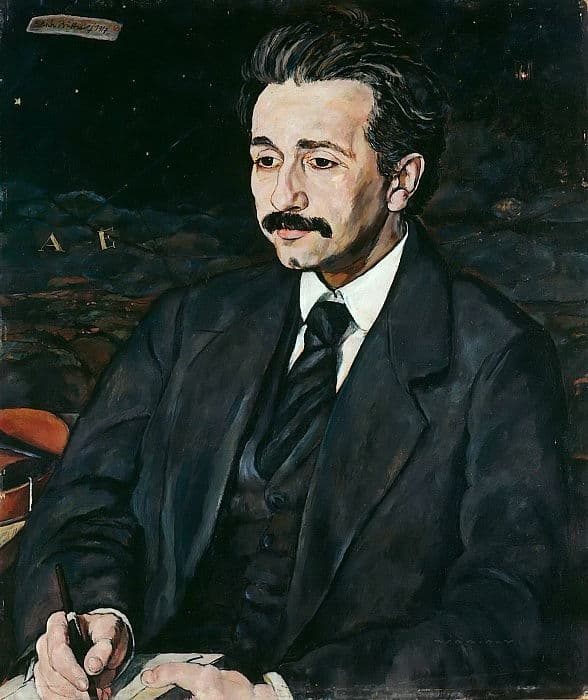
It is in the cluttered office at Princeton that Bertrand Russell meets his old friend Albert Einstein in the spring of 1955, shortly after they have finalized the text of their joint manifesto. Light falls on a desk where a violin rests, and silence is broken only by the ticking of a clock. The two men have known each other for a long time, united by the same anxiety over the atomic bomb. Russell comes less as a philosopher than as a fellow campaigner, to listen one last time to the man who overturned Newton.
—My dear Albert, when I think of your name, I see that young clerk at the Patent Office in Bern. What were you doing in 1905, in that little office?
You who love paradoxes, Bertrand, here is one: it was far from professorships and laboratories that everything came. I examined patents from eight to six, and between two files, I let my thoughts run on light and time. That year, I wrote four papers: special relativity, the equivalence of mass and energy, the photoelectric effect. I was only twenty-six and no one expected me. The office left my mind free; a university post would perhaps have smothered me under obligations. They speak of a miracle year, but there was no miracle, only a stubborn man who had the leisure to dream seriously.
It was far from professorships and laboratories that everything came.
—You wrote then that the laws of physics do not depend on the coordinate system. How did you arrive at such a counterintuitive idea?
I began with a child's question, Bertrand: what would I see if I ran alongside a ray of light? The answer troubled me, because the speed of light stubbornly refused to change. I then understood that I had to abandon the idea of absolute time, that old immutable stage inherited from Newton. If the speed of light is the same for everyone, then space and time must bend. It was an intellectual tearing as much as a liberation. It took me years to dare to draw the consequence: two observers in motion do not have the same measure of duration. Common sense protests, but nature never asks our opinion.
—Ten years later, in 1915, you went even further with gravitation. Tell me, how did you come to curve space itself?
Special relativity left me unsatisfied, because it ignored gravitation. The illumination came when imagining a falling man: he no longer feels his own weight. I understood that gravity is not a force pulling at a distance, as Newton believed, but a curvature of spacetime caused by mass. Matter tells space how to curve, and space tells matter how to move. It took years of arduous mathematics, and I nearly gave up. When the equations finally predicted the motion of Mercury, I had palpitations. Nature had answered me, and its answer was of a beauty that surpassed me.
Matter tells space how to curve, and space tells matter how to move.
—I remember the emotion that seized our friends in London in 1919. How did you feel when the eclipse confirmed your calculations?
People always ask if I triumphed that day, Bertrand, but the truth is quieter. When I learned that the expedition had measured the deflection of starlight near the Sun, exactly as my equations predicted, I was not surprised. I was sure of the theory; it was too coherent to be false. I was asked what I would have thought if the observation had contradicted it: I would have felt sorry for the dear Lord, because the theory was correct. What struck me was the uproar that followed: overnight, my name was in newspapers around the world. A physicist become famous like an actor — that never ceases to amaze.
—That violin on your desk has accompanied you since childhood. What role does it play when you are stuck on a stubborn problem?
Ah, you noticed my old companion. Music and physics inhabit the same corner of my mind, Bertrand. When an equation resists, I put down the pen and take up the bow; Mozart relaxes me, and often the solution emerges while I play, through a door that reason alone could not open. The deepest thought is not always verbal; it is made of forms, rhythms, images. I care little about my appearance, my unkempt hair and wrinkled jackets, but never about an out-of-tune violin. It is a tool of work as much as a pleasure. Without music, I believe I would have found nothing at all.
Music and physics inhabit the same corner of my mind.
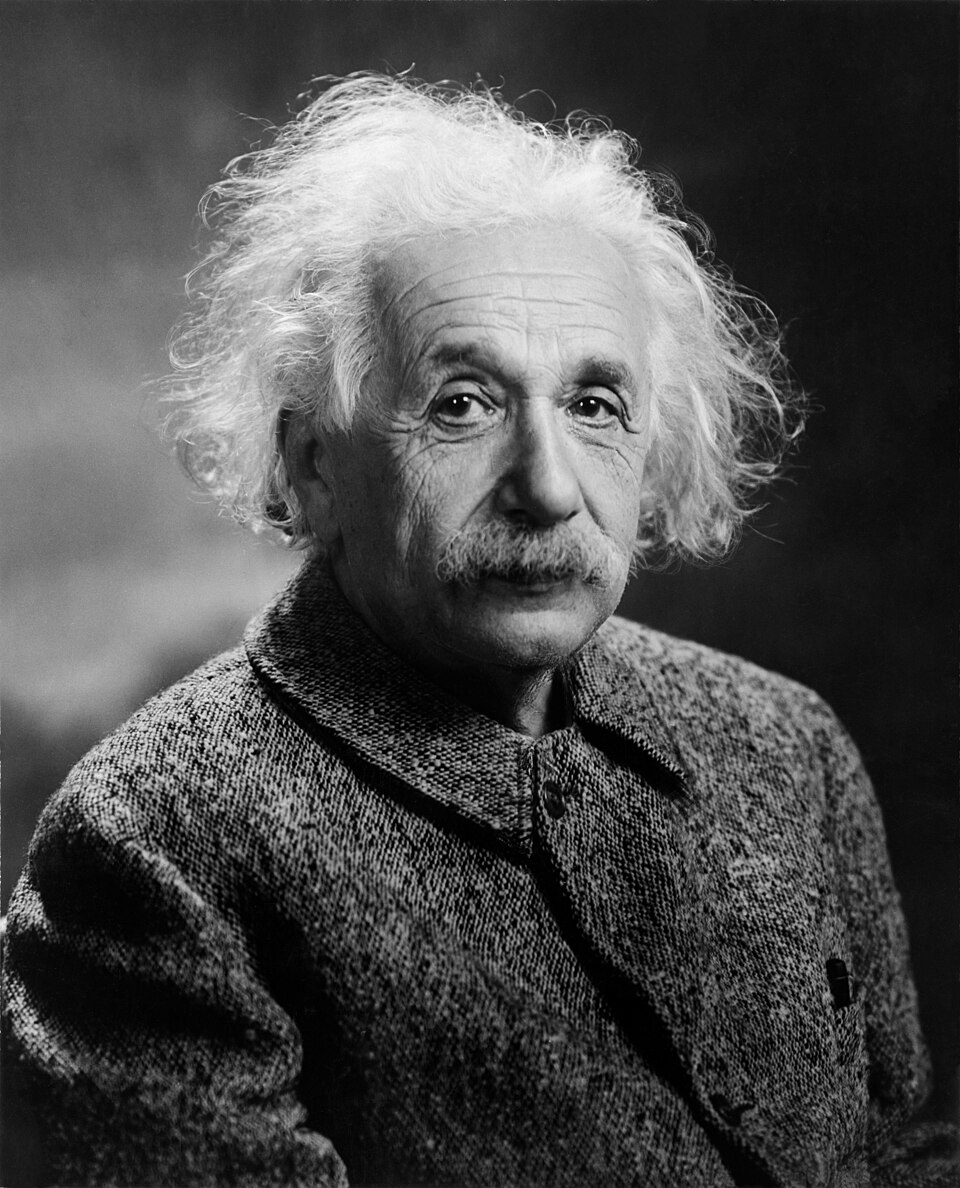
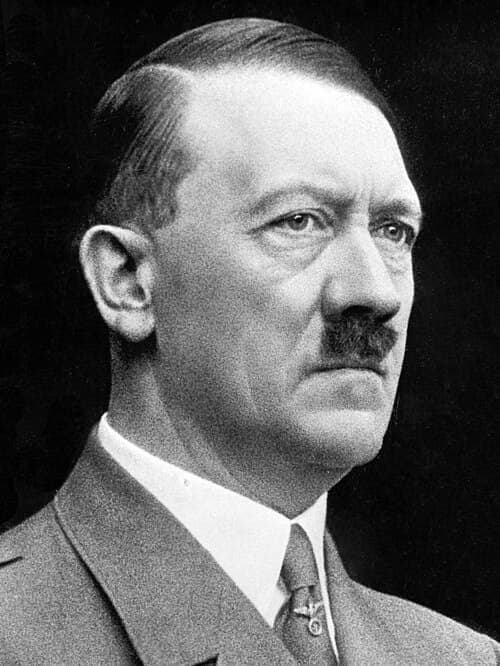
—When Hitler came to power in 1933, you left Germany forever. How did you experience that rupture, you who directed the institute in Berlin?
It was a tearing, but one I saw coming. I was director at the Kaiser Wilhelm Institute in Berlin, surrounded by colleagues, at the heart of German science. Then the regime burned my books and put a price on my head, because I was Jewish and thought freely. I was abroad; I understood that I would never return. The homeland that had honored me suddenly declared me an enemy. I set down my bags in Princeton, and America offered me what Europe refused: the peace to work. But exile, you see, never fully closes. One carries one's language, one's dead, one's memories, and remains a stranger everywhere, even under a hospitable sky.
The homeland that had honored me suddenly declared me an enemy.
—You were successively German, Swiss, then American. What did that word naturalization ultimately mean for the man you became?
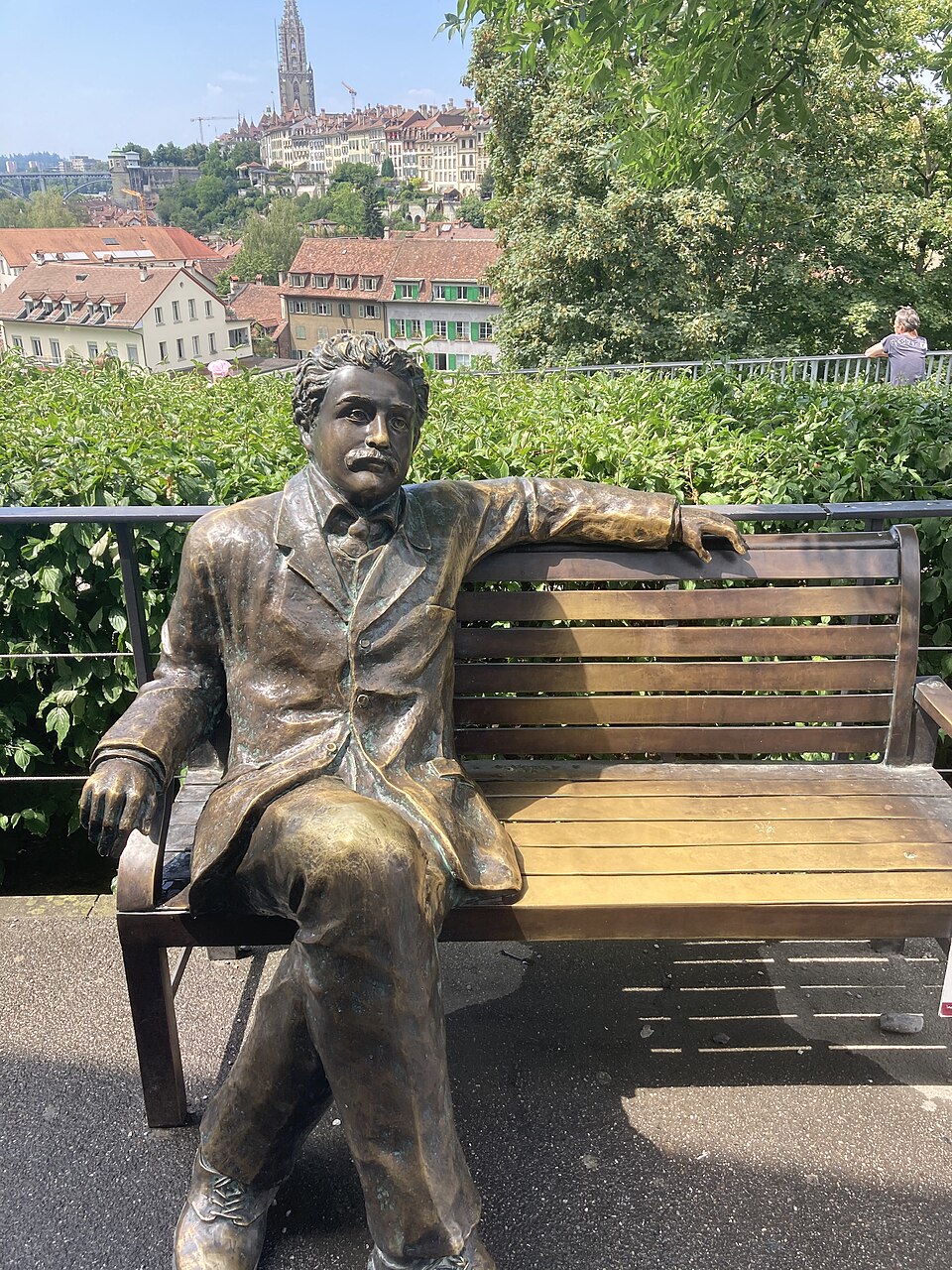
Papers change, Bertrand, but the man remains. I renounced German citizenship very young, became Swiss in Zurich, and now I am an American citizen. Yet I have never felt like a man of a flag. I distrust borders and patriotic fanfares, which have so often led peoples to massacre. My true homeland would be all of humanity, and the community of those who seek truth regardless of their passport. Science ignores customs: an equation is as true in Bern as in Princeton. If I value my American citizenship, it is because it welcomed me when I was driven out; but my heart belongs to a country that does not yet exist.
—Let us come to what brought us together. In 1939, you wrote to Roosevelt about the bomb. In hindsight, do you regret that letter?
Deeply, Bertrand, and you know how much it weighs on me. In 1939, we feared that Nazi Germany would be the first to master fission. I signed that letter to the president so that it would not get ahead; it seemed the lesser evil then. But the German weapon never existed, and America struck Hiroshima and Nagasaki. If I had known that the Germans would fail, I would never have lifted a finger. I did not build the bomb, I am not a military laboratory man; but my signature opened a door, and that, I do not quite forgive myself. A scientist has a conscience, and mine gives me no rest.
My signature opened a door, and that, I do not quite forgive myself.
—We have just finalized the text of our joint appeal. Why did you insist, despite fatigue and illness, to add your name to it?
Because, Bertrand, it is perhaps the last service I can render. Men have made a weapon capable of wiping out the entire species, and they keep brandishing it like a toy. You and I have spent our lives seeking truth; it would be monstrous to remain silent when our civilization plays for its existence. Our appeal asks the powerful to remember that they are men before being nations. I have put my signature where it might perhaps make a conscience think. I know my time is short, but no matter: a life is not measured by its duration, but by what one has attempted for one's fellow beings. That is my part, and I give it without hesitation.
It would be monstrous to remain silent when our civilization plays for its existence.
—At the end of all this, my friend, what would you like to pass on to young minds, you who have meditated so much on what school should be?
I distrust schools that believe they instruct by filling heads, Bertrand. The essential is not to accumulate knowledge, but to awaken in each young person the love of truth and independence of mind. Curiosity is a fragile plant; constraint and fear kill it. I myself never had any special gift, only a childlike stubbornness to wonder at what others take for granted. Let them teach young people to doubt, to imagine, to play with ideas as I play my violin. The rest — facts, formulas — they will find on their own. Forming free men is a thousand times more important than forming docile scholars.
Let them teach young people to doubt, to imagine, to play with ideas.
This imaginary interview was generated by artificial intelligence from sources documented in Albert Einstein's profile. It dramatises what the figure might have said based on what we know about them, but does not constitute attested historical testimony. For primary sources and factual documentation, refer to the full profile.