Kids interview Albert Einstein
by Charactorium · Albert Einstein (1879 — 1955) · Sciences · 5 min read
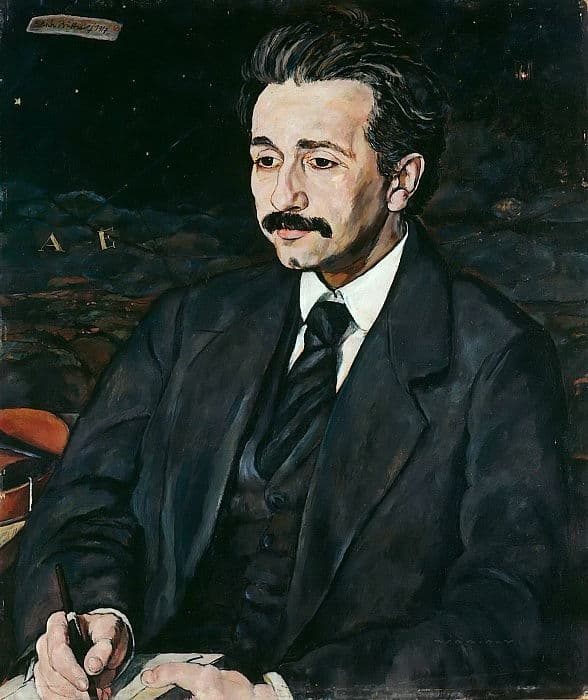
Two young visitors, on a school field trip, push open the door of an old man with disheveled hair. On the blackboard, half-erased equations. Albert Einstein sets down his violin and waves them over: today, they are the ones asking the questions.
—How old were you when you changed everything in physics?
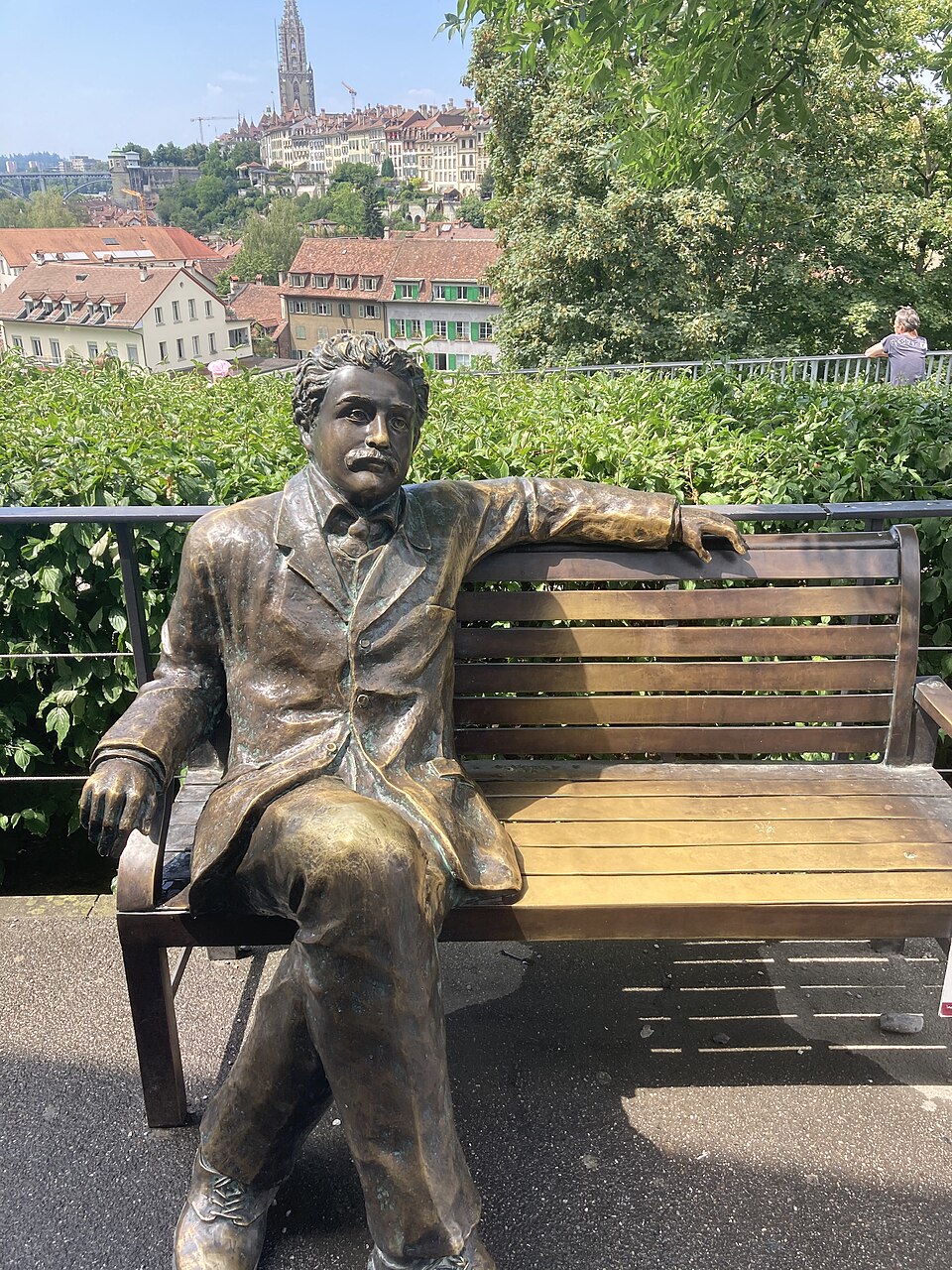
I was 26, my child. And you know what? I wasn't at a big university. I was working in Bern, Switzerland, as a lowly patent clerk. Picture a quiet room, stacks of files, inventors coming in to show their machines. During my breaks, I would think. And in a single year, 1905, I wrote four papers that shook up all of physics. They called it my “miracle year.” I still laugh thinking about it: people think you need a grand castle for great ideas. I just had a pencil, a corner of a table, and a head that never stayed still.
People think you need a castle for great ideas. I just had a pencil.
—What was your day like when you had those brilliant ideas?
In the morning, I'd wake up around seven. I'd have coffee, a bit of bread, nothing more. And that's when, with a fresh mind, I thought best. I'd smoke my pipe, stare into space, and in my head I'd run experiments. Not with apparatus! Just by imagining. For example: “What would you see if you ran as fast as light?” That's called a thought experiment. You don't touch anything, you just imagine, very, very intensely. My best discoveries were born that way, sitting quietly, without even leaving my chair.
My greatest experiments, I did them without leaving my chair.
—Is it true you said space could bend?
Yes! And I know, it sounds crazy. Listen carefully. In my time, people thought gravity was a force that pulled objects, like an invisible rope. I, in 1915, proposed something else. Imagine a large, taut sheet. Place a heavy ball in the middle: the sheet sinks, doesn't it? Well, space is the same. The Sun curves space around it, and the Earth rolls along that curve. Matter tells space how to curve, and space tells matter how to move. We call it spacetime. Time is part of the fabric too, you see.
Matter tells space how to curve, space tells matter how to move.
—How did you know you were right?
Ah, that's the real question! An idea is nice, but you have to test it. My idea said something strange: light from a distant star should bend as it passes near the Sun. In 1919, scientists set out to observe an eclipse. When the Moon hides the Sun, you can see stars right next to it in broad daylight. And you know what? The stars were shifted, exactly as I had calculated! The day I received the news, I knew nature had said “yes.” That is the most beautiful moment for a scientist: when the sky itself proves you right.
The most beautiful day for a scientist is when the sky itself proves you right.
—Why did you play the violin all the time?
Because music and physics, for me, are the same family! I've played the violin since I was little. When a problem stumped me, I'd put down my pencil and pick up the bow. I'd play, and play... and often, in the middle of a melody, the solution would come on its own, without warning. It's curious, isn't it? As if my mind worked in secret while my fingers had fun. The violin was one of my most faithful companions, more faithful than many people. The beauty of an equation and the beauty of a melody, you see, they resemble each other: there is order, harmony, and a little thrill at the end.
A beautiful equation and a beautiful melody are the same family.
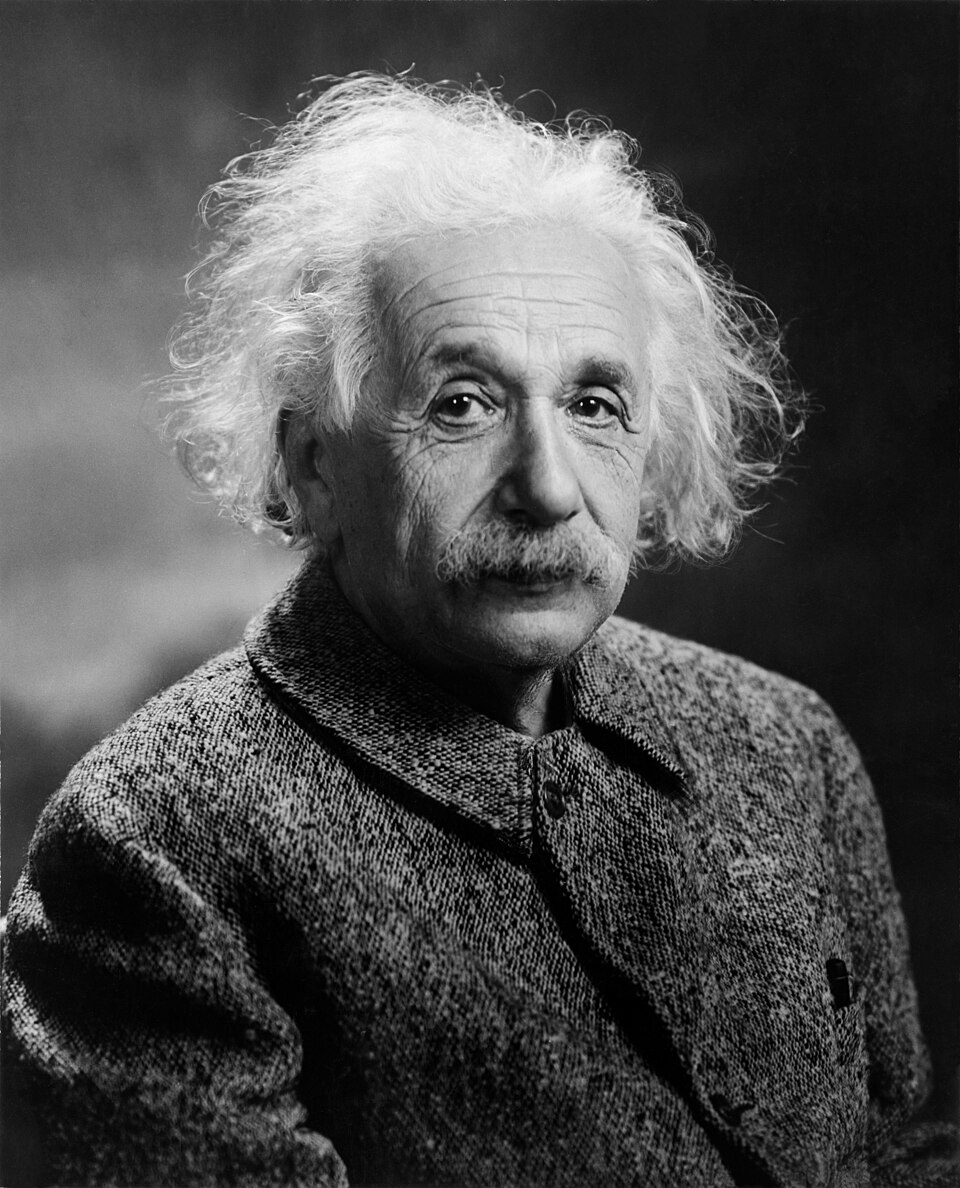
—What did your home look like in the evening?
A house full of books, my child. Everywhere! On tables, on the floor, papers covered in numbers. Not many precious objects: I never liked fancy suits or fine things. You would have found me messy-haired, in a sweater a bit too big. In the evening, after a day of discussions with colleagues, I'd have a simple dinner, often with friends. And then came my favorite moment: I'd pick up my violin, or take a walk looking at the stars. Comfort didn't interest me. What I wanted was a chair, some peace, and something to think about quietly.
A chair, some peace, and something to think about: that was all my wealth.
—Why did you have to leave your country?
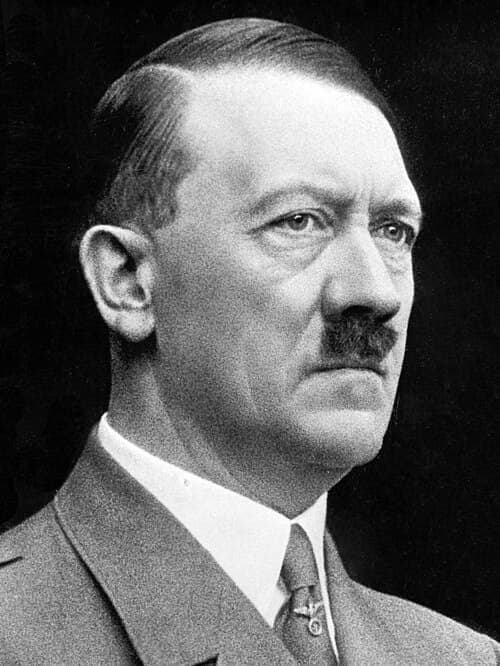
That's a sad story, and I'll tell it to you honestly. In 1933, a very dangerous man, Hitler, came to power in Germany. I am Jewish. And that regime hated Jews. They burned my books in great public fires. They even offered money for my arrest. Can you imagine? Having a bounty on your own head, just because of your origins. So I left, forever, across the ocean, to Princeton, in America. I left behind my language, my friends, my habits. But I kept my freedom to think. And that, no one could burn.
They burned my books. My freedom to think, they couldn't burn that.
—Were you afraid when you left so far away?
Of course I was afraid. Starting over elsewhere, at my age, in a country whose language I barely spoke... it's not nothing. But at Princeton, I was welcomed into a place made for thinking, the Institute for Advanced Study. I had an office, a blackboard, and the right to search in peace. You know, when you lose your home, you learn one thing: what really matters is in your head, not in walls. My ideas, my memories, my love of calculation—I carried those everywhere. Fear was there, yes. But curiosity was stronger. It always has been.
When you lose your home, you understand that what matters is in your head.
—Is it true you wrote a letter to a president?
Yes, in 1939. And it's the heaviest decision of my life. We had just understood that by splitting the core of certain very heavy atoms, you could release enormous energy. I feared that Nazi Germany would build a terrible weapon with it. So I wrote to the American president, Roosevelt, to warn him of the danger. I thought I was protecting the world. But that letter pushed the United States to build the atomic bomb. You see, my child, sometimes you want to put out a fire, and without meaning to, you start another. An idea can heal... or destroy. It all depends on the hands that take it.
The same idea can heal or destroy. It all depends on the hands that take it.
—And afterward, did you regret writing that letter?
Very much. When I saw what the bomb had done, I carried that weight until the end. But you know, regretting is not enough: you must act. So I spent my last years crying out for peace. A few days before my death, in 1955, I signed a great appeal with other scientists, begging the world to stop the race for terrible weapons. That was my way of making amends. I want you to remember this: a scientist is not just someone who discovers. It's someone who must answer for what they discover. Science without conscience is nothing at all.
A scientist must not only discover: they must answer for what they discover.
—If we had to remember just one thing about you, what would it be?
Not my formulas, not even the famous E=mc²! No. Remember this instead: stay curious. All my life, I remained a child who asks “why?” and “how?”. Adults often stop asking those questions. Not me. That's why I wanted schools to develop in everyone a love of truth and a desire to think for themselves, rather than cramming lessons by heart. You, sitting here in front of me, already have the most important thing: you ask questions. Guard that preciously. It's the most beautiful machine in the world: a head that still wonders.
The most beautiful machine in the world is a head that still wonders.
This imaginary interview was generated by artificial intelligence from sources documented in Albert Einstein's profile. It dramatises what the figure might have said based on what we know about them, but does not constitute attested historical testimony. For primary sources and factual documentation, refer to the full profile.