Kids interview Alexis de Tocqueville
by Charactorium · Alexis de Tocqueville (1805 — 1859) · Philosophy · Politics · 5 min read
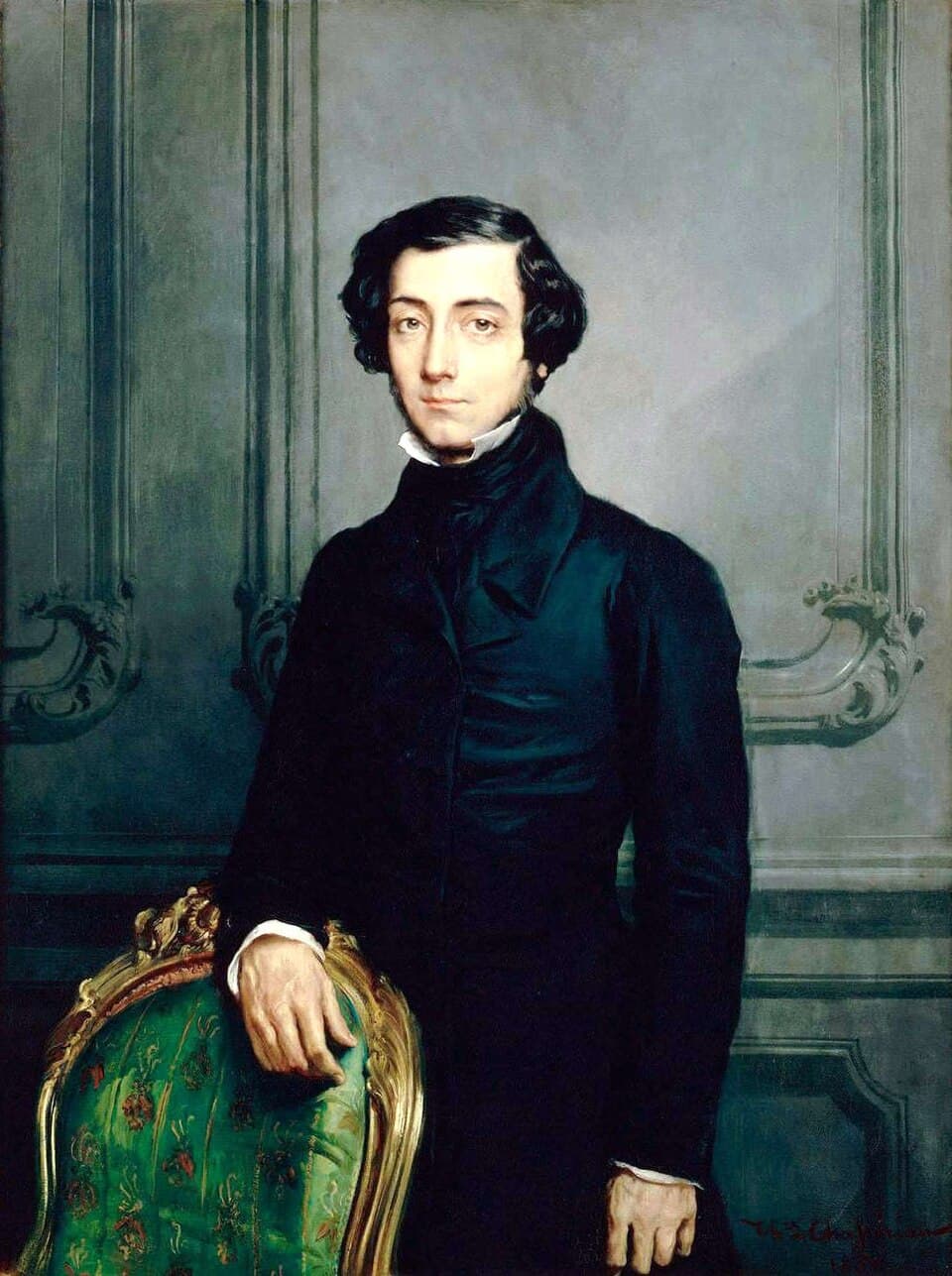
Two ten-year-old students visit the Château de Tocqueville in Normandy that morning. In the library, an elegant old gentleman awaits them, his gaze gentle. His name is Alexis de Tocqueville, and he agrees to answer all their questions.
—Where were you born, and what was your family like when you were little?
You know, my child, I was born in 1805, into an old Norman noble family. Imagine large, cold rooms, portraits of ancestors on the walls, and a lot of silence. My parents had known fear during the Revolution: some of our kin had lost their heads on the scaffold. Little was said to me about all that, but I could feel it. I was a serious little boy who loved to read. This château where we are is the cradle of my family. I am attached to it like a root. But very early on, I understood one thing: the world of my grandparents, that of all-powerful nobles, was disappearing forever.
The world of my grandparents was disappearing forever.
—Why did you go so far away, to America, to look at prisons?
Ah, that's a funny story! I was only 26 years old. With my friend Gustave de Beaumont, we asked the government for an official mission: to go study American prisons. Officially, that's why we went. But in my head, I had another idea. America was a new country, where people governed themselves, without a king. I wanted to see with my own eyes what a free people looked like. The journey lasted nine months. I noted everything in a notebook: the cities, the farms, the people voting. Prisons were the excuse. The real adventure was understanding how a democracy lives.
Prisons were the excuse. The real adventure was freedom.
—What was it like crossing the ocean by boat for so long?
Imagine, my child: no engine, no noise, just the wind in the sails and the water slapping against the hull. The crossing of the Atlantic took more than a month. We were sick, tossed about, sometimes scared when the storm roared at night. But what time for reflection! I read, I wrote, I stared at the empty horizon. My travel notebook never left me; I scribbled my first ideas in it. When we finally spotted the American coast, my heart leaped. I felt I was arriving in the country of the future. And everything I saw there later became my great book.
—You saw many kings and revolutions. Were you afraid of change?
Oh yes, sometimes. You know, I lived in an era that kept tipping over! As a child, it was the Restoration and the Bourbon kings. In 1830, a revolution drove out Charles X. Then in 1848, another revolution: the streets rumbled, barricades were raised, and I walked through it all, an elected representative of the people. I was an aristocrat, but I believed in liberty. I even served, for a time, as Minister of Foreign Affairs. It was strange: a Norman noble serving the Republic. But I understood that resisting was useless. The world was changing. It was better to go along with it than to cling to a crumbling past.
Better to go along with the world than to cling to the past.
—What is democracy to you? Was it a good thing?
Good question! Democracy is when power belongs to the people, not to a king or a few nobles. And yes, I found that just. I once wrote that free peoples naturally love liberty: “they seek it, they love it, and they only leave it with regret.” Imagine a village where everyone decides together, votes, and handles common affairs. It's beautiful! But be careful, my child: a good thing can go wrong. Liberty is like a garden. If no one tends it, weeds choke it. I wanted us to learn to take care of it.
Liberty is like a garden: without care, weeds choke it.
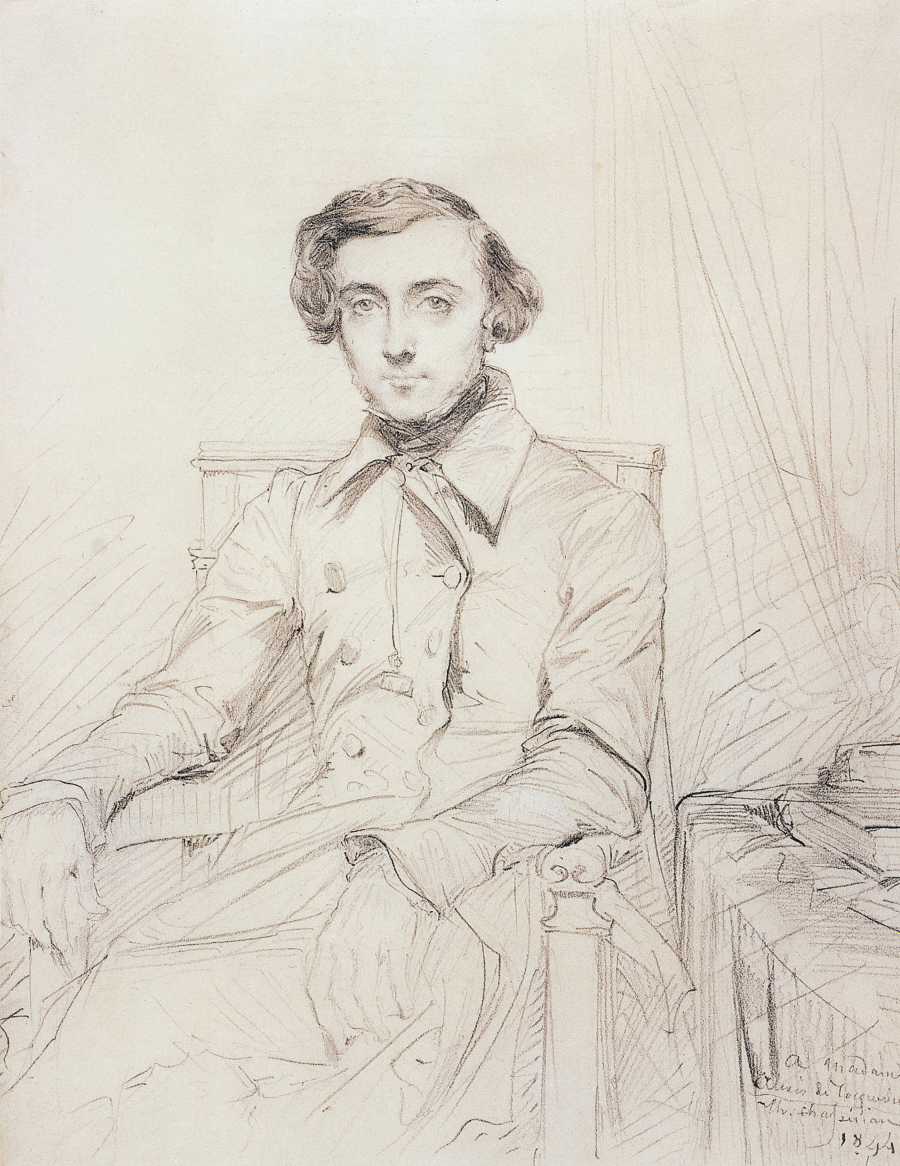
—Why were you afraid that the majority might become a kind of tyrant?
Because I saw a danger that few people saw. Imagine a class where everyone decides by majority. That's fair, isn't it? But if the majority decides to bully the only child who thinks differently, who protects him? That's what I called the tyranny of the majority: when the great number crushes those who don't think like them. I had another fear as well: a central state so strong that it would decide everything for us, gently, like a shepherd with his sheep. In America, I admired decentralization: each small town handled its own affairs. That protects liberty far better than a distant great leader.
Tyranny can come not from a king, but from the great number.
—You also wrote about the French Revolution. What did you want to understand?
Yes, toward the end of my life, in 1856, I wrote The Old Regime and the Revolution. I wanted to answer a burning question: why did this revolution break out? Everyone believed it had destroyed everything, started from scratch. But by digging through old papers and archives, I discovered something surprising. The state that decides everything from Paris, that great central machine, already existed before the Revolution, under the kings! The Revolution didn't destroy it: it strengthened it. Do you understand? The past never completely disappears. It hides in the present, like an old root under new grass.
The past never disappears: it hides beneath the present.
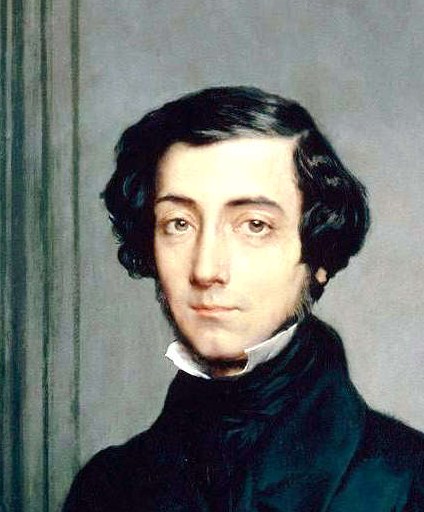
—They say you were often ill. Did it prevent you from working?
It's true, my child. Starting in 1837, a chest disease, tuberculosis, took hold of me and never let go. I coughed, grew exhausted, sometimes had to stop for weeks. There was no cure in my time. I had to interrupt my political life several times to rest. But do you know what I did when my body failed me? I wrote anyway. My pen and inkwell never left my table. My mornings were sacred: reading, reflection, letters to friends. The disease weakened my body, never my mind. I worked almost to the very end.
The disease took my body, never my mind.
—What was a typical day like when you were writing your books?
I'll tell you. I got up early, around seven or eight o'clock. A light breakfast: coffee, bread, butter. Nothing more. Then came the best time: my writing mornings. I locked myself in my library, surrounded by books, and worked in silence. In the afternoon, I saw friends, went to the Assembly, or chatted in the salons of Paris. In the evening, I dined more heartily with my wife Marie, and we talked at length. Imagine: no electric light, just flickering candles. I wrote, crossed out, started over. Writing a good book, you see, is slow. It's like carving stone.
Writing a good book is slow: it's like carving stone.
—If you were still alive today, what would you want to tell us?
I would tell you this, my young friends. Liberty is a fragile treasure. People think it lasts on its own, but no: it must be defended every day, even when it's tiring. Beware of two things. First, the crowd that would silence those who think differently. Second, a power too kind that would decide everything for you, to spare you from thinking. Learn to handle common affairs yourselves, even the small ones. That is where true liberty is born. And read, discuss, doubt. A people that thinks remains free. A people that falls asleep wakes up enslaved. That is my last piece of advice.
A people that thinks remains free; a people that falls asleep wakes up enslaved.
This imaginary interview was generated by artificial intelligence from sources documented in Alexis de Tocqueville's profile. It dramatises what the figure might have said based on what we know about them, but does not constitute attested historical testimony. For primary sources and factual documentation, refer to the full profile.