Imaginary dialogue between Gustave de Beaumont and Alexis de Tocqueville
by Charactorium · Alexis de Tocqueville (1805 — 1859) · Philosophy · Politics · 6 min read
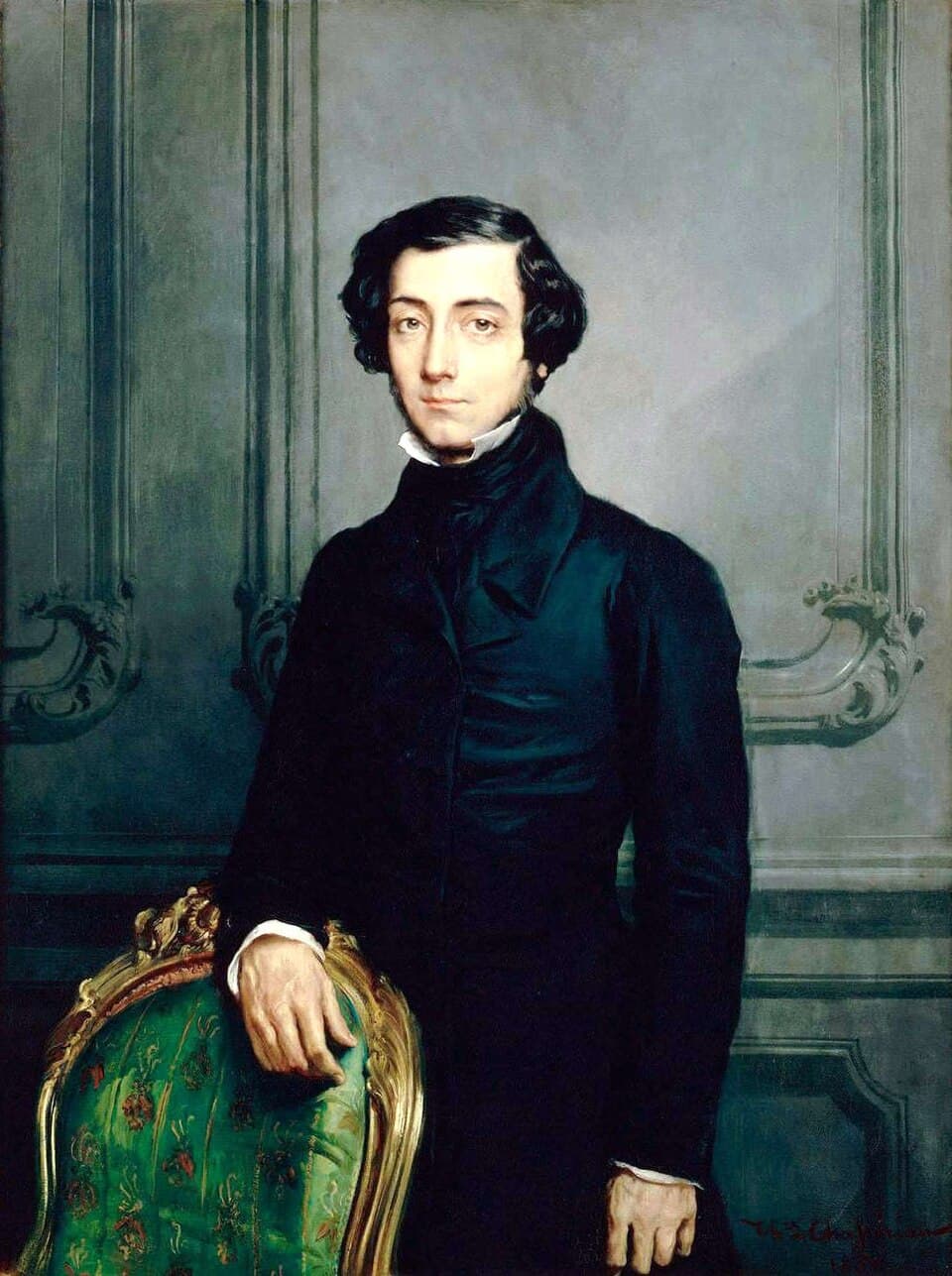
It is in the library of the Château de Tocqueville, in Normandy, that one autumn evening in 1857 Gustave de Beaumont meets his old companion. Rain beats against the windows, a lamp lights the proofs of The Old Regime and the Revolution still covered in corrections. The two men have known each other since their years in the magistracy and have never stopped writing to one another; Beaumont, who shared the crossing of 1831, comes to grasp what, behind the work, remains of the friend. Alexis's cough, which he knows too well, sometimes punctuates the silence.
—Alexis, do you remember our embarkation in 1831? They sent us to study prisons, and you were already looking far beyond the bars.
How could I forget it, my dear Gustave? We were twenty-six years old and had a mandate on the penitentiary system in our pocket, which gave us an honest cover to observe everything. But as soon as we set foot on American soil, I understood that prisons were only a pretext. It was democracy itself unfolding before our eyes, in the customs, the townships, the courts. You sometimes reproached me for filling my notebooks with notes that had nothing to do with our official report. Those nine months were the most instructive of my life. Without you at my side to discuss each evening what we had seen, Democracy in America would never have taken this form. America served me as an image to think about our own future.
Prisons were only a pretext: it was democracy itself unfolding before our eyes.
—You have often confided to me your fear that a majority could become tyrannical. Does this concern still hold you, or did America reassure you?
It holds me more than ever, Gustave, and I believe it will follow me to the end. You see, I first feared the tyranny of the majority, that pressure of opinion that silences minds before they even dare to speak. But over the years, a more insidious fear has come to me: that of a central power, gentle, tutelary, that would infantilize men by taking charge of everything. Democratic peoples love liberty, I maintain, but they love equality even more, and they will accept servitude provided it is equal for all. That is why I so admired American decentralization, those townships where everyone learns to govern themselves. Without these local liberties, the sovereignty of the people is just a word inscribed on the pediment of a prison.
Peoples will accept servitude provided it is equal for all.
—We were born into a family that had known the scaffold. How did you experience this tossing between the Restoration, July, and the Republic?
Like a man placed between two worlds, my friend, belonging fully to neither. I was born an aristocrat, my ancestors mounted the scaffold, yet my reason convinced me that equality was the future and that it must be served rather than cursed. The July Revolution forced me to take an oath that cost me; I preferred to leave for America rather than betray my conscience. In 1848, I saw the streets roar with my own eyes, and I sat in the Assembly among men drunk on promises. I even became Minister of Foreign Affairs in 1849, a brief and bitter charge. All these shocks I recorded in my Recollections, without complacency for anyone, not even for myself.
I am a man placed between two worlds, belonging fully to neither.
—These Recollections of 1848, you keep them secret. Why write so frankly about men we still meet in salons?
Precisely because they are intended for no one, Gustave — neither for you, nor for the press, nor for posterity. I write for myself alone, as one confesses, and this solitude is the condition of my frankness. If I thought a reader were judging me, I would touch up my portraits and lie about others as about my own vanity. In February, I saw ambitious men draping themselves in virtue and honest people losing their heads. I wanted to fix those faces before legend embellished them. You know how much I distrust the grand phrases that the actors of revolutions forge after the fact. These pages will remain in a drawer; they are true only because they will not be read in my lifetime.
I write for myself alone, as one confesses, and this solitude is the condition of my frankness.
—These proofs on your table deal with the Old Regime. Why go back so far, you who have scrutinized the democratic future so much?
Because the future sinks its roots into a past we believe abolished, my dear companion. People imagine that the Revolution razed everything at once, that it made a clean slate of monarchy and feudalism. That is an illusion. By digging into the archives of the intendancies, I discovered that administrative centralization, attributed to Napoleon, was already the patient work of the kings. The Revolution only inherited and completed a machine that preceded it. There are, I believe, things in our nature and in our institutions that survive all political changes. Understanding the Democratic Revolution is neither to admire nor to curse it, but to follow its patient thread through the centuries. That is why I go back so far: to better illuminate where we are going.
People imagine that the Revolution razed everything at once. That is an illusion.
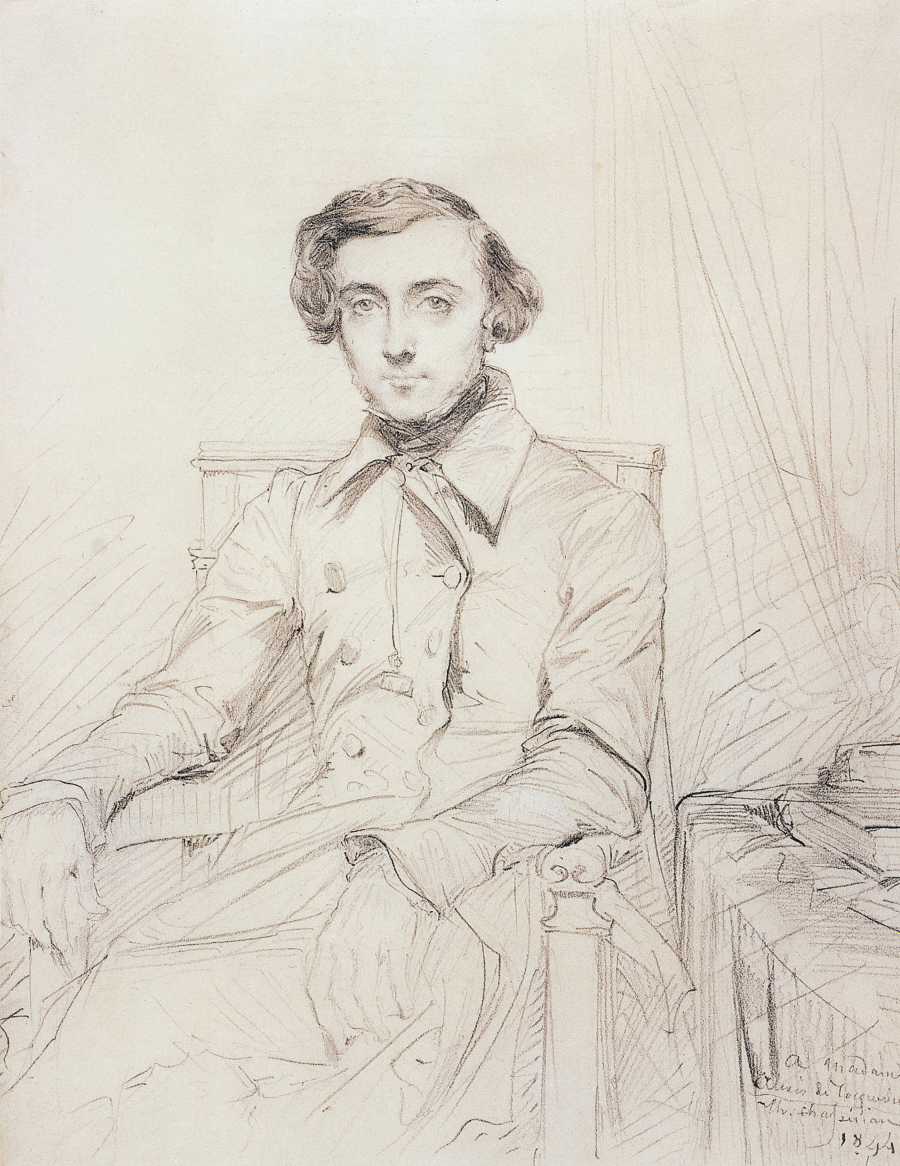
—In our letters, you spoke to me of the vestiges of the Middle Ages that the Revolution could not destroy. Does this idea still haunt your work?
It is its very heart, Gustave, and you were the first to whom I confided it. When we traveled through the countryside, here in Normandy as once in America, I saw everywhere habits inherited from another age, tenacious under the veneer of new laws. The feudal regime had this peculiarity: hierarchy did not stop at nobles; it descended to the peasant and took root in customs. Now it is customs that govern men far more surely than constitutions. One can abolish a privilege by decree; one cannot abolish centuries of habit in a single night. My research in the archives only confirmed what our conversations had already made me sense: the past never quite dies.
One can abolish a privilege by decree; one cannot abolish centuries of habit in a single night.
—You once told me you loved those early morning hours for writing. Does the castle finally offer you the peace that Paris denied you?
It offers it, and I cling to it like a fragile good. In the morning, around seven or eight, after coffee and a little bread, I retire to this library while the house still sleeps. It is the hour when the mind is clear, when thoughts come without the tumult of business. In Paris, the salons, the Assembly, visits devoured my days; here, within these walls where my ancestors lived, I find the silence necessary for work. Marie sees that I am not disturbed. The pen and inkwell, you see, are my only true instruments of combat now. I believe a patiently matured book weighs more, in the long run, than a speech applauded one evening and forgotten the next.
The pen and inkwell are my only true instruments of combat now.
—This cough that interrupts you, I have heard it for years. How do you still work with a body that betrays you so?
By imposing my will on it, Gustave, as long as I have any left. This malady has been gnawing at me since 1837, you know it better than anyone, you who have seen me more than once forced to leave Paris to seek milder air. There are weeks when I cannot hold the pen for an hour without exhausting myself. But the idea that I would leave a work unfinished is more unbearable to me than fatigue. So I work in fragments, especially in the morning, and I entrust to patience what strength denies me. This illness has taught me one thing: time is short and duty long. I prefer to spend my last strength saying what I believe true rather than saving them for an idle old age that may never come.
Time is short and duty long.
—Of all we saw over there, what comes back to you most often when you close your eyes?
The town meetings, my friend, those simple men deliberating their affairs without waiting for an order from a prefect. Remember those villages where they voted on the maintenance of a road or the salary of a schoolmaster as we would have debated a state affair. There I saw liberty not proclaimed in books, but practiced every day, at the level of man. That is where the citizen is formed, in those small republics where each learns that he depends on others and that others depend on him. In France, we expect everything from the center, and then we are surprised to be subjects rather than citizens. That American lesson I still carry. What we brought back from that journey is worth all the reports on penitentiaries that we were commissioned to write.
There I saw liberty not proclaimed in books, but practiced every day, at the level of man.
—One last question, Alexis: do you believe, deep down, that men will know how to preserve this liberty you cherish so much?
I do not know, and that is my whole concern, Gustave. Democratic peoples have a natural taste for liberty; left to themselves, they seek it and love it. But they have for equality an ardent, insatiable passion that can lead them to sacrifice everything for it, even their independence. Everything will depend on their customs, their religion, those local liberties I never stop preaching. If we let the state absorb everything under the pretext of doing good, we will create a flock of timid animals whose government will be the shepherd. I am neither a prophet of doom nor a dreamer; I show the two roads open before us. The rest belongs to men, and to that Providence which, I believe, pushes humanity toward equality without dictating whether it will be free or servile.
We will create a flock of timid animals whose government will be the shepherd.
This imaginary interview was generated by artificial intelligence from sources documented in Alexis de Tocqueville's profile. It dramatises what the figure might have said based on what we know about them, but does not constitute attested historical testimony. For primary sources and factual documentation, refer to the full profile.