Imaginary interview with Alexis de Tocqueville
by Charactorium · Alexis de Tocqueville (1805 — 1859) · Philosophy · Politics · 5 min read
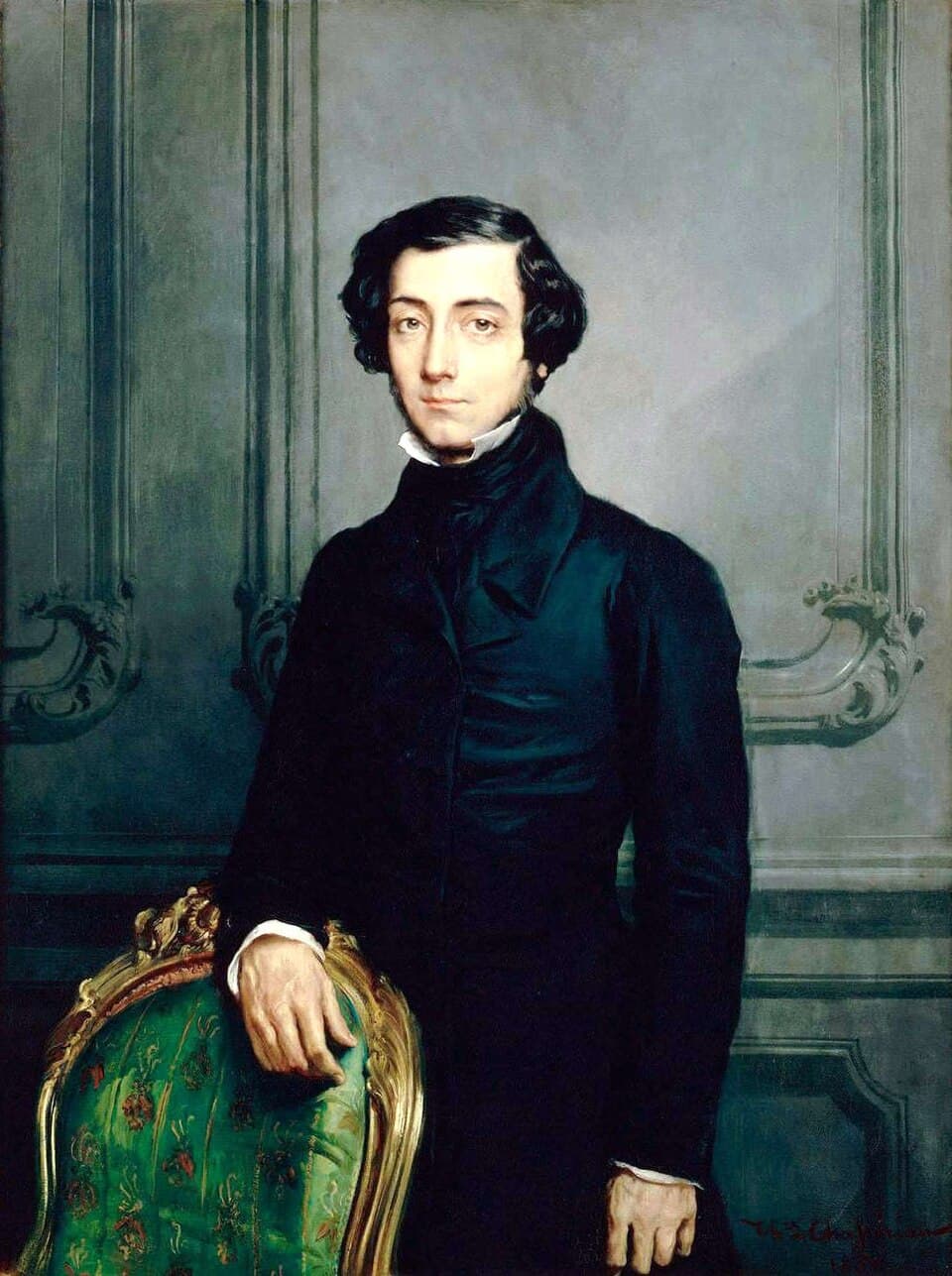
Cannes, winter 1858. In a villa bathed in light too gentle for a man who knows he is ill, Alexis de Tocqueville receives visitors, a shawl over his shoulders and scattered sheets on his table. He speaks quietly, but each sentence seems as weighed as a clause in a law.
—How did a young magistrate of twenty-six find himself crossing the Atlantic to visit prisons?
The pretext was official and narrow: the government had entrusted me and my friend Beaumont with studying the American penitentiary system. That is what was expected of us in 1831 — bars, cells, discipline records. But I had brought my notebook, and a notebook, you see, does not confine itself to jails. For nine months I traveled across this new continent, from village assemblies to the forests of Ohio, and I understood that prison walls were but a detail in an immense edifice. I wrote down in the evening, by candlelight, what the day had shown me: a people governing themselves without a master. I set out to count bars; I returned with an entire society under my arm.
I set out to count bars; I returned with an entire society under my arm.
—What surprised you most about this America you discovered along the roads?
What struck me was not the novelty of things, but the novelty of minds. In Europe, the citizen expects the state to provide; there, everyone believed themselves personally accountable for the common fate. Americans have applied new ideas to political science, and have created new terms, or given new meaning to old ones. I recorded this in my travel diary with a kind of astonishment. Consider decentralization: power does not descend from a throne; it rises from communes, counties, countless associations. I saw simple men debating schools and roads as our ministers debate empires. It was this personal responsibility, diffuse and tenacious, that held the whole edifice together.
—You devoted ten years of your life to a single book. What did you really seek to convey in Democracy in America?
I wanted to warn, not flatter. Equality of conditions is a rising tide; no king, no nobility — and I was born a Norman, into an old family — will stop it. The question was no longer should we have democracy, but which democracy we want. In the first volume, published in 1835, I depicted American liberty; in the second, in 1840, its perils. For I believe that democratic peoples sincerely love liberty — left to themselves, they seek it, love it, and depart from it only with regret — but they love equality with an even more violent passion. And if we are not careful, they will consent to servitude as long as it is equal for all.
—You often speak of a new danger, unique to egalitarian societies. Which one worries you so much?
I call it the tyranny of the majority, and it is an oppression of a new kind. Under ancient despotisms, the tyrant struck bodies; here, the majority enshrouds souls. It does not say “Think like me or you will die” — it says “Think like me or you will be a stranger among men.” The individual falls silent not from fear of the executioner, but from fear of solitude. Add to this the specter of an immense, tutelary state that, under the pretext of providing for everything, infantilizes citizens into a herd of timid animals. That is the democratic despotism I dread: gentle, foresighted, and extinguishing liberty without ever breaking it.
The majority no longer says “Think like me or you will die,” but “Think like me or you will be a stranger among men.”
—You are an aristocrat by birth who made a career under regimes that toppled one another. How did you stay upright in these storms?
Imagine a man who changes sovereigns as others change seasonal clothes. I saw Charles X fall in 1830, the July Monarchy prosper, then crumble in turn in 1848. Born into a family that the guillotine had bereaved, I could have clung to the past; I chose to face the future. I sat in the Assembly as a representative from Manche, I even briefly held the portfolio of Foreign Affairs in 1849. I was at ease in no camp: too liberal for the Legitimists, too distrustful of the crowd for the ardent republicans. But I held one thing above all: that liberty should never be sacrificed to order, nor order to liberty.
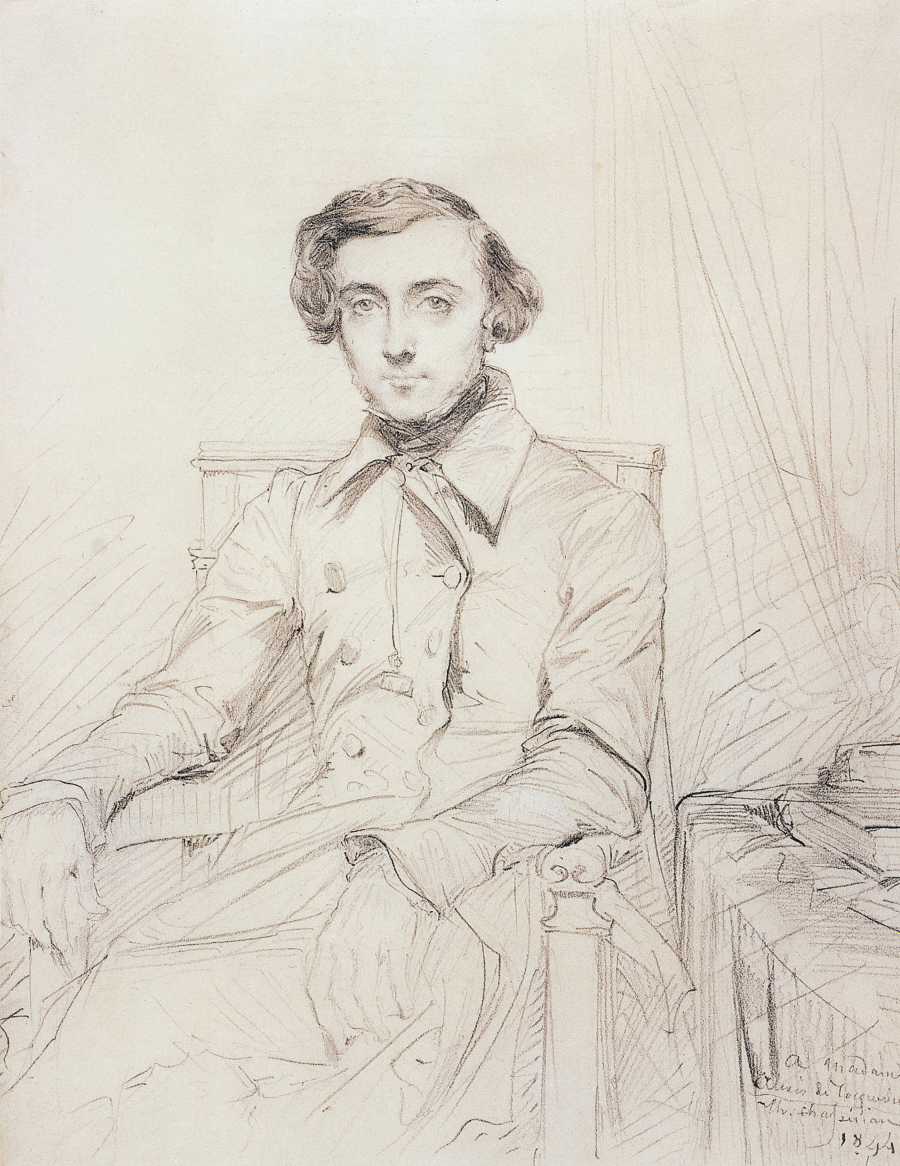
—What would you say about the coup d'état of December 1851, which swept away the Republic you served?
For me, it was the bitter confirmation of all I had foreseen. Louis-Napoléon seized power in 1851, and the nation, weary of its own storms, bowed its head almost with relief. That is what tears me apart: not that a man takes the crown, but that a people hands it to him out of fatigue with their own liberty. I recorded those days in my Souvenirs, without complacency, for others or for myself — for the historian who does not examine himself lies. Retired from public life, I understood that my office was no longer to govern, but to warn the generations who would read me. A pen is sometimes worth more than a minister's chair.
What tears me apart is not that a man takes the crown, but that a people hands it to him out of fatigue with their own liberty.
—In your last major book, you go back to the origins of the Revolution. What discovery surprised you most as you dug through those old archives?
That the Revolution had not created centralization: it had inherited it, then perfected it. People think 1789 was an absolute rupture; yet, combing through the old records of the intendants, I saw the modern state already fully erected under the wig of the Old Regime. The Old Regime and the Revolution, published in 1856, was born of this astonishment. The absolute monarchy had patiently emptied intermediary bodies, ruined local liberties; the Revolution had only to pick up this inheritance and cap it with the liberty bonnet. As I wrote to Beaumont: the French Revolution wanted to destroy all vestiges of the Middle Ages, but it could not completely succeed. One does not make a clean slate of history.
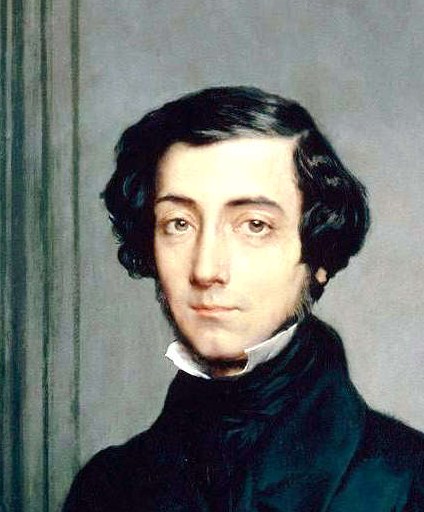
—Why insist so much on this continuity between the France of yesterday and that of today?
Because nations, like men, drag their childhood all their lives. What characterizes the feudal regime above all is that the hierarchy, instead of stopping at officers and nobles, descends to the peasants and perpetuates itself there — I wrote that because this ancient hierarchy left furrows in our souls that no decree has filled. My contemporaries imagine themselves new, freed from the past; I answer that they are molded by it. Understanding the Old Regime is not yielding to an aristocrat's nostalgia; it is offering France a mirror to see where its habits of obedience come from. One only heals ills whose root one knows.
—Illness has been with you for a long time. How does a man work when he knows his time is limited?
Consumption has been eating away at me since 1837, and each winter it claims its due. But I have learned to steal hours in the morning, when my breath is still clear. In my château at Tocqueville, in Normandy, or in my Parisian study, I sit at my table after a coffee and a little bread, and I work as long as the light allows. The pen scratches, the inkwell empties; these are my only weapons now. The body betrays, granted — but the mind, for its part, has not yet asked for mercy. I have always thought that a man is measured less by what he accomplishes in strength than by what he saves in weakness.
The body betrays, granted — but the mind, for its part, has not yet asked for mercy.
—If you could imagine being read a century from now, what would you like those readers to remember of you?
What a strange favor that would be — to speak to men I will not see, from this villa in Cannes where the sea soothes me more than physicians. If I were to bequeath them a thought, it would be neither a doctrine nor a system, but a fruitful anxiety: that equality, without liberty, leads to a quiet servitude, and that liberty demands vigilance every day. Let them not take my word for it; let them observe for themselves, notebook in hand, as I once did on the roads of America. I have spent my life fearing for liberty; let that fear at least be transmitted, for it is worth a thousand certainties.
I have spent my life fearing for liberty; let that fear at least be transmitted.
This imaginary interview was generated by artificial intelligence from sources documented in Alexis de Tocqueville's profile. It dramatises what the figure might have said based on what we know about them, but does not constitute attested historical testimony. For primary sources and factual documentation, refer to the full profile.