Imaginary interview with Alfred Dreyfus
by Charactorium · Alfred Dreyfus (1859 — 1935) · Military · 5 min read
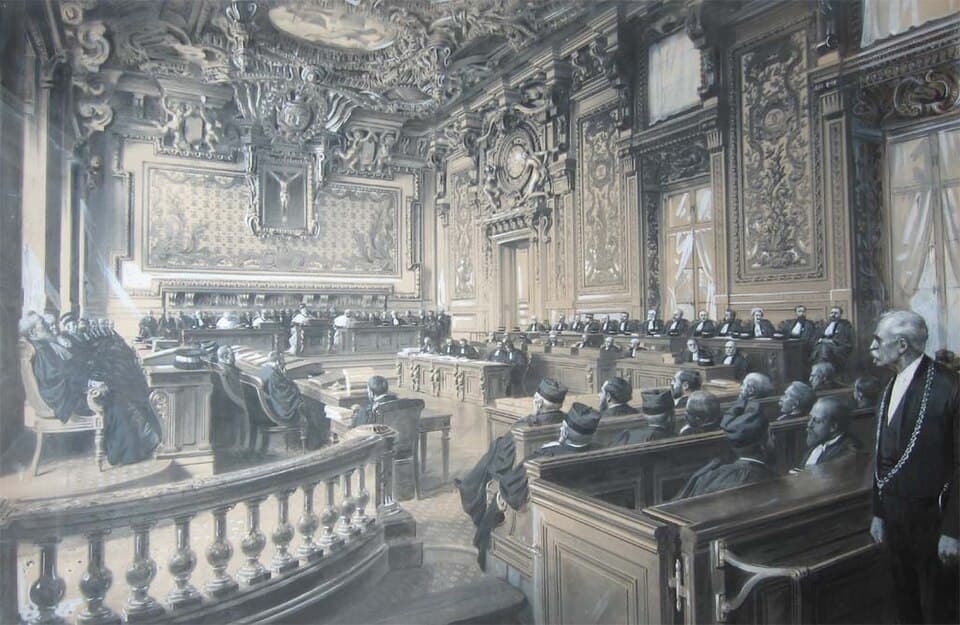
Paris, early 1930s. In a discreet apartment, an old man with an officer's bearing receives a visitor, straight as a ramrod despite his age. His voice is calm, almost administrative, but beneath the reserve, the wound of a captain whom France broke and then rehabilitated still shows. He agrees to revisit, one last time, the Affair that bears his name.
—How did you learn, on that morning in 1894, that you were being accused?
It was October 1894. I was summoned under the pretext of an inspection, and instead of an exercise, a major dictated a letter to me while watching my hand, my pen, my fingers. At first I understood nothing. Then came the charge: a bordereau, a thin sheet of onionskin paper intercepted, which announced the delivery of documents to Germany. The entire accusation rested on a similarity of handwriting—mine, they claimed. An artillery officer, polytechnician, Alsatian, of Jewish faith: I was the ideal culprit before I even opened my mouth. I still see that file they were waving, that torn and re-glued paper, and I measure the abyss between the flimsiness of the evidence and the enormity of the verdict they drew from it.
The entire accusation rested on a similarity of handwriting—mine, they claimed.
—What did you offer, from the moment of your arrest, to those who judged you?
One thing only, which I never stopped repeating: the truth. To the Minister of War, I wrote from my cell words that I could say again today without changing a syllable: “I vigorously protest the accusation brought against me. I am innocent and I demand that justice be done to me. My honor as a French officer is at stake.” That was my entire plea, and it was pathetic in the face of a machine that had already decided. A soldier has no weapons against the suspicion of his own; he has only his word, and I had been denied the right to be believed. That day I understood that being innocent is not enough: you still have to be heard.
That day I understood that being innocent is not enough: you still have to be heard.
—What remains in you of the degradation ceremony, in January 1895?
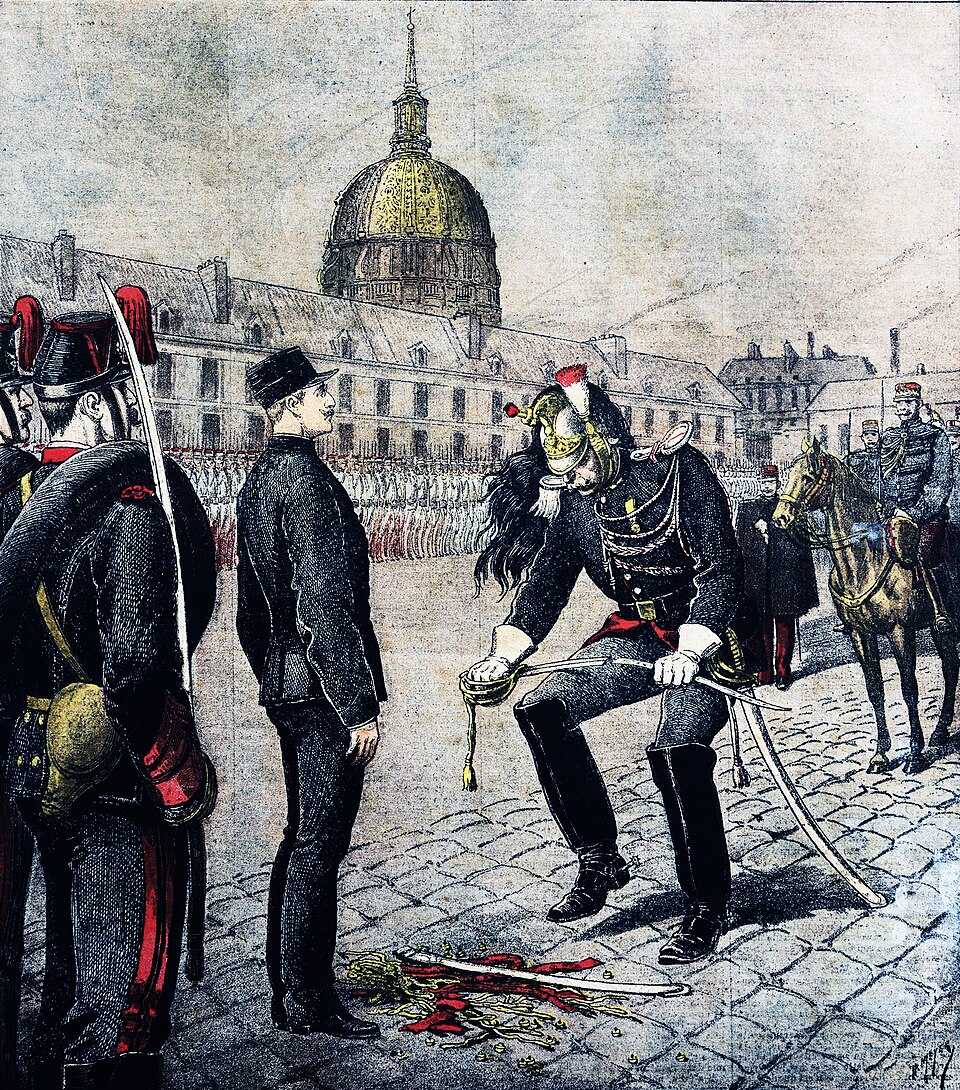
A courtyard of the École Militaire, the cold, thousands of eyes, and a crowd beyond the gates that was howling. An adjutant tore off my stripes, my buttons, broke my saber over his knee, stripped the uniform I had worn with pride of everything that made it mine. The military degradation was designed for that: to turn a man into an example, to publicly empty him of his rank. I walked before the troops shouting my innocence, and all that was heard were insults. That morning they took away my epaulettes; it took twelve years for them to be returned. Of the whole Affair, it is that scene that comes back most often in my nights.
That morning they took away my epaulettes; it took twelve years for them to be returned.
—Do you remember your arrival on Devil's Island?
One does not get used to a place whose very name is a sentence. Devil's Island, off the coast of French Guiana, was nothing but a rock beaten by heat and fevers, where I was kept alone, without a face to talk to. At night, my legs were locked in iron shackles attached to the bed, under the pretext of surveillance. Four years like that, counting the waves and the hours, knowing almost nothing of what was being played out for me in France. I clung to the thought of my wife, Lucie, my children, to the certainty that the truth would one day emerge. Without that stubborn certainty, I do not think I would have survived the silence.
—How did you hold on, in that isolation, in the face of despair?
Through writing, above all. I had only paper, a rationed pen, and my wife's address. My letters and the pages I kept became my only link to the world of the living. Later, when I gathered my memories, I tried to say what those years had been: they taught me, as I wrote, “the depth of hatred and injustice,” but also the strength of those who fight for the truth. The penal colony did not teach me about the evil of others; it taught me how far one can descend into suffering without renouncing oneself. I got up each morning as an officer, for lack of being able to be anything else.
The penal colony taught me how far one can descend into suffering without renouncing oneself.
—While you were in prison, others fought for you. What do you owe Colonel Picquart?
Everything, or almost, and I did not know him. Colonel Picquart, head of intelligence, was not my friend—some even say he did not like me. But he was an honest man, and examining another intercepted letter, he recognized the handwriting of the real traitor: Major Esterhazy, an officer crippled by debt, who was actually selling our secrets. He could have kept silent; his career demanded it. He spoke, and the army, rather than admit its error, sidelined him and covered for the guilty. That is what I took a long time to understand: I was not merely condemned by mistake; they were determined to keep me guilty to save the honor of an institution.
I was not merely condemned by mistake; they were determined to keep me guilty.
—And Émile Zola's intervention, what does it represent for you?
A turning point. On January 13, 1898, Zola published in L'Aurore his open letter to the President of the Republic, that famous J'accuse which named, one by one, those responsible for my misfortune. A writer, a stranger to the army, risked his freedom for a captain he had never seen—and he was condemned for it. The press, until then so quick to lynch me, became the arena of a real battle. I did not know at the time the impact of his gesture, locked away on my rock; I measured it later. One man had turned my name from a shame into a cause. All of France was now torn between Dreyfusards and anti-Dreyfusards.
—In 1906, the Court of Cassation finally exonerates you. What did you feel?
On July 12, 1906, the judgment was clear: my appeal was accepted, my rehabilitation pronounced, my innocence recognized for all the facts imputed to me. Twelve years after the bordereau, the Court of Cassation made amends. I was reinstated in the army with the rank of major, and the Legion of Honour was returned to me in that same courtyard of the École Militaire where I had been broken. You would think it was a triumph; it was above all a grave, almost silent relief. Justice had finally spoken, but it had cost me my youth, my health, years stolen from my family. One does not give a man back his time; one only gives him back his name.
One does not give a man back his time; one only gives him back his name.
—Why did you take up the uniform again in 1914, after everything the army had put you through?
Because I never stopped being French, nor being a soldier. When war broke out in 1914, I was fifty-five years old and had the right to stay home. I chose to serve, as an artillery officer, even under the shells of the Chemin des Dames and Verdun. Many were surprised: how could I still wear the colors of an institution that had thrown me into a penal colony? But I never confused France with the men who, in its name, had betrayed me. The uniform that had been torn from me in 1895, I was determined to wear again, freely, for the fatherland and no longer to defend myself. It was my way of closing the Affair: through duty, in silence.
—If you imagined that you would be read a century from now, what would you want people to remember of your story?
I distrust lessons; I am only an officer they wanted to sacrifice. But if I am still read, I would wish that people remember not so much the man, but the principle: that a nation can be wrong, lie to itself, be blinded by prejudice—anti-Semitism was at the heart of my misfortune—and that then a few righteous people, a Picquart, a Zola, unknown people, are needed to bring it back to reason. My name has become an Affair, that is to say much greater than myself. For my part, I wanted only one simple and stubborn thing: that justice be done to me. If that word still means something to those who read me, then my suffering will not have been in vain.
A nation can be wrong, be blinded by prejudice—and then a few righteous people are needed to bring it back to reason.
This imaginary interview was generated by artificial intelligence from sources documented in Alfred Dreyfus's profile. It dramatises what the figure might have said based on what we know about them, but does not constitute attested historical testimony. For primary sources and factual documentation, refer to the full profile.