Kids interview Alfred Dreyfus
by Charactorium · Alfred Dreyfus (1859 — 1935) · Military · 5 min read
That morning, two fifth-graders came, notebook in hand, to meet an old gentleman in uniform. They were twelve years old, full of questions, and a little nervous. He looked at them gently: it had been a long time since anyone had asked him to tell his story.
—How old were you when you were arrested, and how did it make you feel?
I was thirty-five years old, my child. I was a captain of artillery, proud of my uniform. And one morning in 1894, I was told that I had sold secrets to Germany. Me! Imagine being accused of something you never did, and no one believing you. The only 'proof' was a letter, the bordereau, whose handwriting resembled mine a little. A little. I wrote to the minister: 'I am innocent and I ask that justice be done.' But they had already decided. You know, the hardest part wasn't the prison that followed. It was seeing that they wouldn't even listen to me.
—What was it like the day they tore off your stripes in front of everyone?
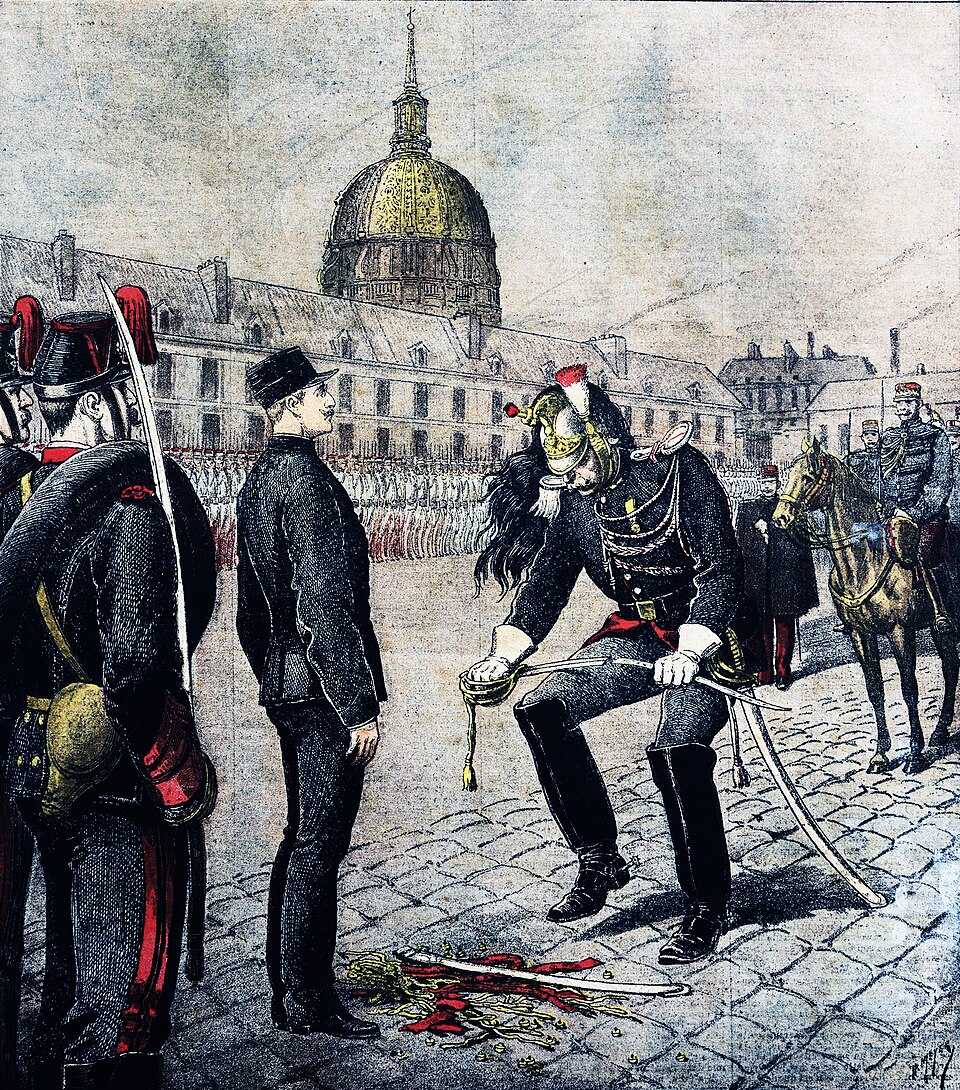
It was in January 1895, in a large courtyard, in front of rows of soldiers and a crowd. An officer tore off my epaulettes, the buttons from my jacket, then broke my sword over his knee. Imagine: everything that showed I was an officer, on the ground, in pieces. They called it military degradation, a ceremony designed specifically to humiliate. I walked shouting that I was innocent, and the crowd screamed against me. I was cold, but above all I was ashamed of a fault I had never committed. I had to wait until 1906 for them to finally give me back those stripes.
—Where did they send you afterwards? Was it far?
Very far, on the other side of the ocean: Devil's Island, in French Guiana, a tiny land crushed by heat. I stayed there four years, almost always alone. Imagine a hut, the sea all around, and no one to talk to. At night, they sometimes shackled my legs with iron fetters. I knew nothing of what was happening in France to defend me. I wrote letters to my wife Lucie to keep from going mad. Later, I said those years taught me 'the depth of hatred and injustice.' But also the strength of those who fought for me, back there, without my knowing.
—Were you afraid, alone at night there?
Yes, my child, I was afraid. At night, in Guiana, you hear sounds you don't know: insects, the sea, the wind in the trees. And I was alone, not knowing if I had been forgotten forever. Sometimes I wondered if I would ever see my children again. But do you know what kept me going? The idea that truth always rises in the end, like an air bubble under water. I kept telling myself I had done nothing wrong. And very far away, in France, people I didn't even know were beginning to fight for me. I didn't know it yet, but I wasn't so alone.
—But then, who really did the spying?
Another officer, a man deep in debt who really was selling secrets: Major Esterhazy. In 1896, a courageous colonel, Picquart, discovered the truth by comparing handwriting. Can you imagine his relief? Well, no. The army refused to admit its mistake. Worse: to keep me guilty, a certain Colonel Henry outright forged a document against me, what they called the Colonel Henry forgery. They preferred to protect the army's honor rather than free an innocent man. That hurt me most: they knew, and they kept silent anyway.
—Is it true that a famous writer defended you in the newspaper?
Yes! And that changed everything. On January 13, 1898, a great writer, Émile Zola, published a letter in the newspaper L'Aurore. The title was two words: J'accuse (I accuse). Imagine a street where people snatch newspapers from each other, where they argue loudly in cafés. Zola accused those who had condemned me of lying. He risked a lot: he was sentenced to prison for it. But his letter woke up France. Thousands of people who didn't know me began demanding the truth.
A man with a pen had made more noise than an army.
—So were people all in agreement about you, or not?
Oh no, not at all! France split in two. On one side, the Dreyfusards, those who believed in my innocence and defended justice. On the other, the anti-Dreyfusards, who wanted to protect the army at all costs — and many, alas, hated me simply because I was Jewish. That is called anti-Semitism, the hatred of people of Jewish faith. Imagine entire families arguing at the dinner table, friends who stopped speaking. A whole country divided because of me, a simple captain. It saddened me: I never wanted to be a symbol. I just wanted them to acknowledge that I had done nothing.
—And in the end, did they finally say you were innocent?
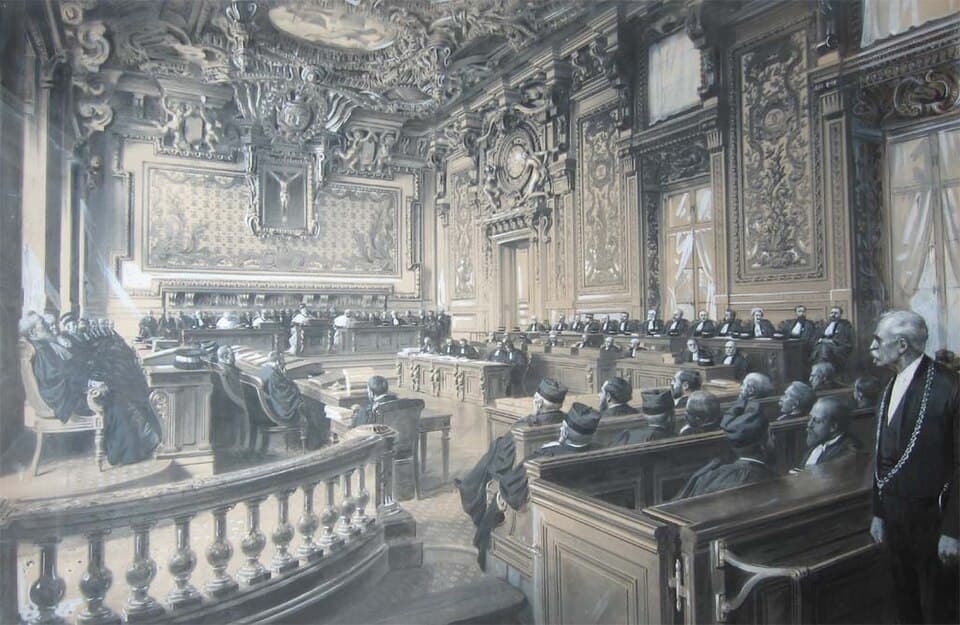
Yes, my child, but we had to be patient: twelve long years. In 1906, the Court of Cassation, the highest court in France, declared that I was innocent of everything. I was reinstated in the army with the rank of Major. Imagine what it feels like, after so many years, to finally hear: you did nothing wrong. Those trials had shown me 'the strength of those who fight for truth and justice.' I was no longer angry, just very tired, and relieved. Justice had taken time, an enormous amount of time. But it came. That's why you must never stop believing.
—After all that, you still wanted to defend France in the war?
Yes, and some found that strange. When the First World War broke out in 1914, I was fifty-five. I could have stayed home, said France had hurt me too much. But no. I re-enlisted as an artillery officer. You know, you can be disappointed by unjust men without ceasing to love your country. France, for me, was not the few officers who had lied to me. It was also all those who had fought for my truth. So I put the uniform back on, the same uniform that had been torn from me twenty years earlier. And this time, I wore it with my head held high.
You can be disappointed by unjust men without ceasing to love your country.
—If we remember one thing from your story, what would it be?
That no one should ever be condemned without proof, nor hated for who they are. My story, the Dreyfus Affair, divided France for twelve years. But it also showed something beautiful: people like Zola and Picquart risked their careers and their freedom to defend a man they didn't know. Just because it was right. If one day you see someone being unjustly accused, don't be afraid to speak the truth, even if you are alone at first. That's how everything changed for me: one spoke, then ten, then a thousand.
Courage spreads: one speaks, then ten, then a thousand.
This imaginary interview was generated by artificial intelligence from sources documented in Alfred Dreyfus's profile. It dramatises what the figure might have said based on what we know about them, but does not constitute attested historical testimony. For primary sources and factual documentation, refer to the full profile.