Imaginary dialogue between Richard Cœur de Lion and Eleanor of Aquitaine
by Charactorium · Eleanor of Aquitaine (1124 — 1204) · Politics · 5 min read
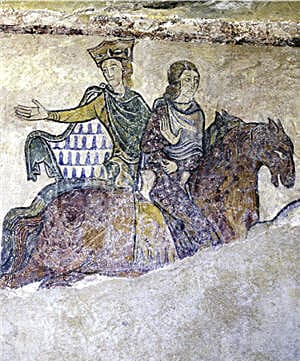
It is at Fontevraud Abbey, in this autumn of 1194, that Richard finds his mother emerging from a chapel where the wax of candles still perfumes the cold air. Recently freed from his German captivity thanks to the ransom that Eleanor raised to the last penny, the king comes to sit beside her — a woman in her seventies who governed the empire in his absence. They know each other better than anyone — the mother and her favorite son, bound by power as much as by blood. Richard comes not as a king, but as a son who wants at last to hear the stories that were kept from him as a child.
—Mother, you wore two crowns before mine. When you left Louis in 1152 to marry my father, what had you understood that others did not?
I understood, Richard, that a Duchess of Aquitaine does not let herself be reduced to the shadow of a husband who prayed more than he ruled. Married at fifteen to Louis, I was queen of France, yes, but my lands were worth more than all his royal domain. When the annulment was pronounced, I did not flee: I chose. Your father, Henry, was young, ardent, and he carried the future. By marrying him, I united Aquitaine with Anjou and Normandy — an empire no king of France could equal. Some said I had lost myself; in truth, I had found myself. A woman who possesses the land possesses the right to choose who will govern at her side.
A woman who possesses the land possesses the right to choose who will govern at her side.
—At my court, they whispered that you had ridden armed to Antioch during the crusade. You, my mother, a warrior?
Chroniclers love to embroider, my son, and even more when a woman disconcerts them. I took the cross with Louis in 1147 and marched to the Holy Land with my Aquitaine vassals. That I wore the gear, paraded like an Amazon to the scandalized eyes of the clergy — that is what troubled them so. They could not bear that a queen stand in the front rank rather than behind, spinning wool. In Antioch, I discussed politics with my uncle Raymond while Louis saw only prayers and rout. They punished my clairvoyance with rumors. But you, who have warred in the East, know that an army is governed as much by the head as by the sword.
They could not bear that a queen stand in the front rank rather than behind.
—In 1173, you supported our revolt against my father. You knew the price: sixteen years locked up in Rouen. Why did you pay it for us?
Because your father, Richard, wanted to keep everything in his clenched fist and leave nothing to his sons. You, Henry the Young, Geoffrey — you were kings without kingdoms, heirs kept on a leash. I saw that, and I could not bear to see you treated as vassals in your own lands. Yes, I took your side against my husband: they called it treason. I paid for it with my freedom, confined in Rouen and elsewhere for sixteen years during which they even took away my right to ride. But I regret nothing. A mother who sees her sons dispossessed and stays silent is not a queen: she is a servant. I preferred prison to that silence.
A mother who sees her sons dispossessed and stays silent is not a queen: she is a servant.
—During those long years of captivity, what sustained you, mother, when the walls closed in and no one knew if you would see the light again?
The certainty that I would outlive you all, my son, my jailers, and my own bitterness. They held me behind walls, but they never took what I carried within me: the memory of my lands, the tally of my vassals, the patient thread of my alliances. I prayed, yes, but I also calculated. I knew your father was aging, that time worked for me. When one is born Duchess of Aquitaine, one learns that patience is a weapon as sharp as the sword. Bars do not stop a thought that governs. I waited, and the day came when the doors were opened again — to serve you.
Bars do not stop a thought that governs.
—They say your court of Poitiers was more brilliant than all others. The troubadours, fin'amor... What did you want to build there, you who so loved the songs of the South?
I wanted, Richard, for my land of oc to shine by means other than arms. In Poitiers, I welcomed the troubadours, those poets who sang of love as an art and the lady as a sovereign. You yourself composed verses, my son — it is from me that you inherited that taste. A court is measured not only by the number of its lances, but by the beauty it cultivates. I had manuscripts copied, books illuminated, and honored those who wielded language with finesse. While the northern clergy judged me frivolous, I wove a culture that radiated across all Christendom. Force passes; a beautiful verse lingers in memory longer than a castle.
Force passes; a beautiful verse lingers longer than a castle.
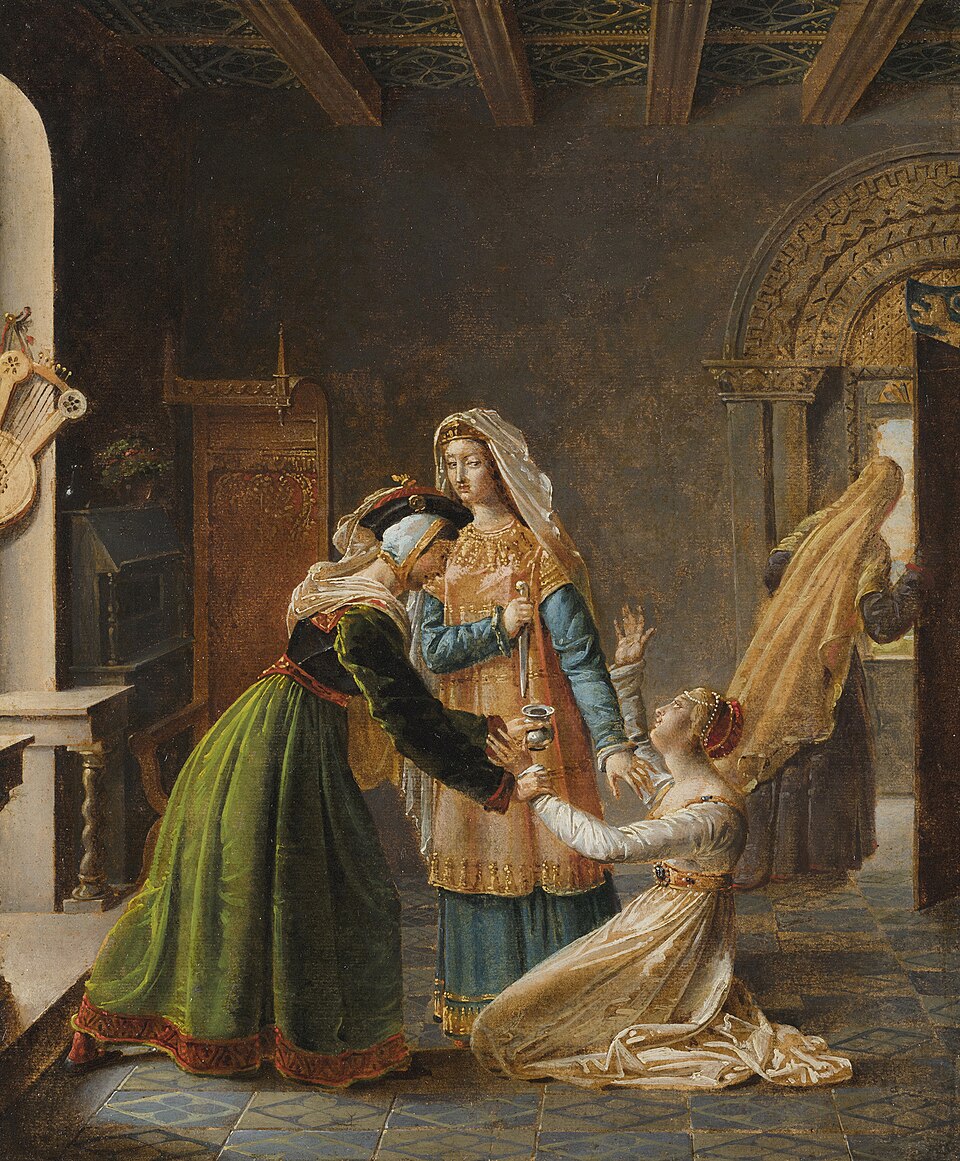
—During my captivity in Germany, it was you who held the kingdom and raised my ransom. What did you endure, mother, to bring me back?
Everything, my son — I endured everything and demanded everything. When I learned that the emperor held you, I traveled the kingdom like a young woman, raising money from churches, towns, and reluctant barons. I pressured, threatened, begged — I who never beg. At over seventy, I crossed lands to carry the ransom myself to Germany and bring you back alive. While you languished, I kept John in check, who already dreamed of your crown. Do you think anyone other than your mother would have moved heaven and earth like that? A queen can govern by calculation; a mother knows no limits.
A queen can govern by calculation; a mother knows no limits.
—You reign today more in my name than I reign myself. Are you not weary, mother, still bearing the weight of the empire at your age?
Weary? I will be in the grave, Richard, not before. As long as you ride afar to defend your lands, someone must watch over the inheritance your father and I assembled stone by stone. Aquitaine, Anjou, Normandy, England — it is a fragile edifice that the slightest absence threatens to crack. Your barons await only a sign of weakness to rise. So I govern, I sign, I appease, I threaten as needed. My body has aged, yes; but my judgment has never been surer. One does not bequeath an empire to sons without first showing them its weight. I bear this weight so that you do not have to bear it alone.
I will be weary in the grave, not before.
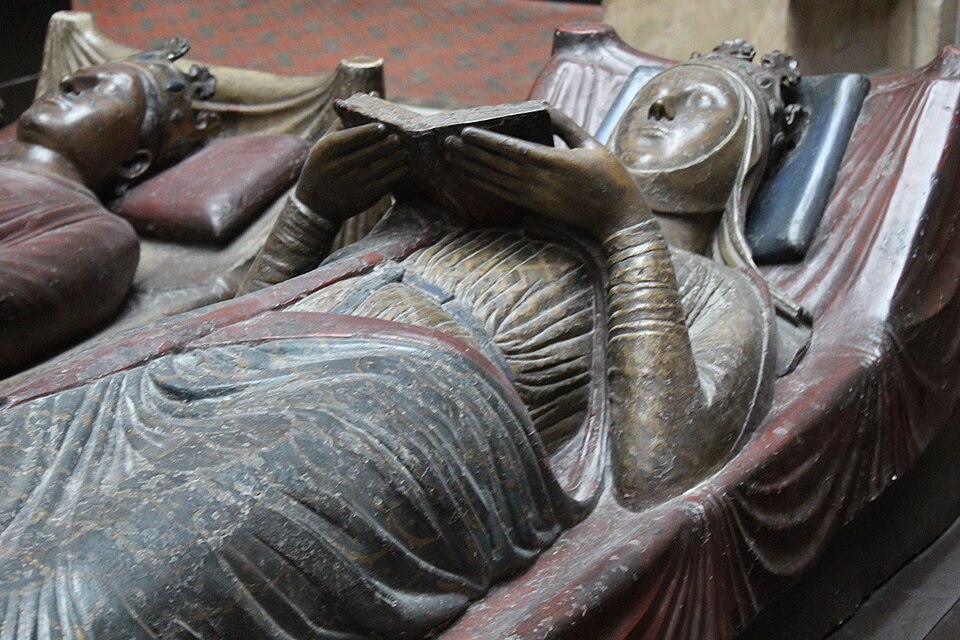
—You have known two kingdoms, France and England, two such different husbands. In hindsight, which of the two truly let you rule?
Neither let me rule, my son — I ruled because I took it. Louis was gentle and pious; he feared me more than he understood me; by his side, I suffocated under incense. Your father, Henry, was my equal in ambition, and that is why we loved and then tore each other apart so much. With him, I built an empire, but he could not bear that I wanted a share of it. Both wanted to reduce me to the role of wife. The truth, Richard, is that I never truly ruled except through you, my sons, and through my own lands of Aquitaine. A woman's power, in this century, is always won by roundabout paths.
Neither let me: I ruled because I took it.
—When you speak of the Holy Land, mother, do you keep regret for having gone — or pride in having seen what few queens have seen?
Pride, without hesitation. They reproached me so much for that journey that I ended up cherishing it as a part of myself they wanted to tear away. I saw Antioch, its palaces, the splendor of the East that no northern castle equals. I saw lands where Christians and others mingled in a world larger than our Western quarrels. Louis lost his army there through stubbornness; I gained a measure of the world. When you left on crusade in turn, my son, I thought you would find there what had dazzled me. Regret I leave to the clerics who never left their cloister. Seeing the world is never a fault.
Seeing the world is never a fault.
—Of all you have built — the lands, the alliances, the songs of Poitiers — what would you like to be remembered for, mother?
Let it be remembered, Richard, that a woman stood up to two kings and an entire century without ever bending her back. Lands are retaken, alliances undone, ransoms spent — but what one dared to be remains. I was duchess before I was queen, and it is from that land of Aquitaine that I drew my strength when crowns tried to take it away. I loved poets, raised kings, governed empires, and outlived those who thought me finished. If one thing of me must be kept, let it be this: I never asked permission to rule. You, my son, keep Aquitaine close to your heart — that is where mine beats.
I never asked permission to rule.

This imaginary interview was generated by artificial intelligence from sources documented in Eleanor of Aquitaine's profile. It dramatises what the figure might have said based on what we know about them, but does not constitute attested historical testimony. For primary sources and factual documentation, refer to the full profile.