Imaginary interview with Eleanor of Aquitaine
by Charactorium · Eleanor of Aquitaine (1124 — 1204) · Politics · 6 min read
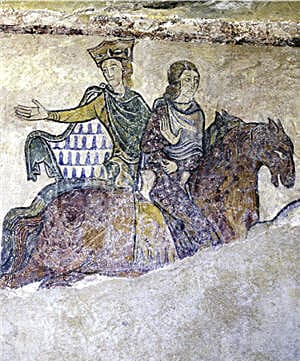
Fontevraud, in the year of grace 1203. In the dimness of the abbey where she has chosen to end her days, an old lady of nearly eighty receives her visitor, her back straight despite her age. Queen twice crowned, mother of kings, she agrees to unroll the thread of a life that reshaped the West.
—How does one remember becoming queen of France so young?
I was married in 1137, at fifteen, to Louis, the son of the king of France, and the scepter fell into my hands almost before I understood what it weighed. I brought as dowry a duchy larger than the entire royal domain: Bordeaux, where I was born, Poitiers, where my heart remained, and those lands of Aquitaine that no northern king knew how to govern as I did. Louis was pious, almost a monk under his crown; I had grown up among troubadours and sunshine. Queen of France I was by title, but Duchess of Aquitaine I remained in my blood. That difference, believe me, was my whole story.
Queen of France by title, but Duchess of Aquitaine in my blood.
—What would you say about the annulment that moved you from one throne to another?
The Church decided in 1152: Louis and I were too closely related, they said, and our union was dissolved by the holy authority of the bishops. The truth is that I had given him only daughters, and a king without a male heir is a naked king. As soon as I was free, I married Henry of Anjou, that fiery young man who would soon be Henry II of England. At thirty-two, I girded on a second crown. People whispered that I had plotted it all; I leave the chroniclers to their suspicions. God judges intentions; men see only the weddings. But understand this: in two marriages, I had moved Aquitaine from the house of France to that of Anjou, and redrawn the map of the known world.
In two marriages, I had redrawn the map of the known world.
—Do you remember the great voyage to the Holy Land alongside Louis?
The crusade! We left in 1147, the cross sewn on our shoulders, to bring aid to the Christians of the East. I had gathered my Aquitanian vassals, and it was said everywhere that I had equipped myself like a warrior, ready to ride at the head. Should that scandalize? A duchess leads her host as a lord leads his. The road was cruel: the mountains of Asia devoured our men. Then came Antioch, where my uncle Raymond received me with a tenderness the court deemed too warm. Louis wanted to leave; I wanted to stay. That was the first fracture between us. Jerusalem eluded us, and our marriage began to die there, under the Levantine sun.
A duchess leads her host as a lord leads his.
—Why did your conduct on crusade cause such scandal among the clergy?
Because a woman who speaks loudly in the council of barons disturbs the order that God, they say, intended. They reproached me for my ladies-in-waiting, my chests, my silk crimson robes worn even under the walls of Antioch. Above all, they reproached me for having an opinion where only embroidered silence was expected. The monks who wielded the pen after us wrote that woman leads man astray, like Eve in the garden — old refrain. I never fought the Church, understand me well: I heard mass every morning and I revere the sacred order. But between obeying my confessor and bending before every timid baron, there is an abyss where I planted my banner.
They reproached me for having an opinion where only embroidered silence was expected.
—How did you come to support your own sons against their father, King Henry?
In 1173, my sons rose against Henry, and I rose with them. They call it treason; I saw justice. Henry held Aquitaine like a jailer holds his key, without ever understanding its heart. He had stifled Thomas Becket on the steps of his own cathedral; a man who respects neither archbishop nor altar would he respect his wife? My boys, especially Richard, were to inherit living lands, not a carcass. I took their side as a she-wolf takes her cubs' side. The revolt failed. Henry had me seized, and the wheel of my life turned. But I do not regret having, once, chosen my blood over my crown.
I took my sons' side as a she-wolf takes her cubs' side.
—What were those long years when the king held you prisoner?
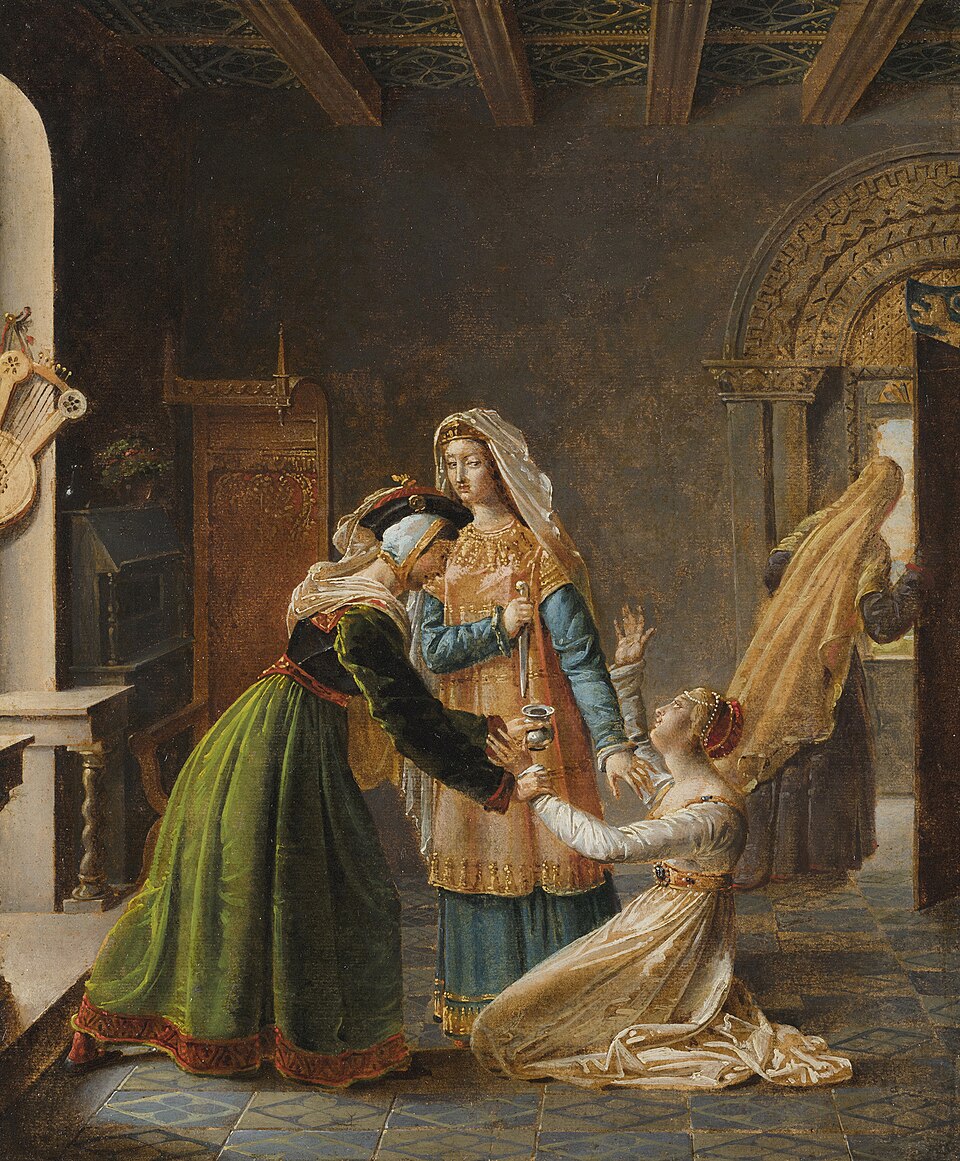
Sixteen winters, more or less, behind the walls of Rouen Castle and elsewhere in England. Henry kept me as one keeps a treasure too dangerous to spend and too precious to lose. I had a chapel, ladies, sometimes an illuminated psalter to while away the hours — but the bolt was the bolt, and a queen in a cage remains a queen in a cage. I prayed much; I also counted. For captivity teaches patience, and patience is the weapon of the old. I knew that Henry was aging, that his sons do not forgive, and that my hour would return. It did. At his death, in 1189, my door was opened, and from then on it was I who held the keys.
Captivity teaches patience, and patience is the weapon of the old.
—They say your court at Poitiers shone with a singular brilliance. What did you make flourish there?
At Poitiers, I wanted another kind of power, one that does not cut but sings. The troubadours of Aquitaine came there like bees to the hive, and there was sung fin'amor, that art of loving where the lady rules and the knight serves. My own ancestor, William, was the first of these poets; the gift came to me from afar. I protected these versifiers, commissioned manuscripts whose illuminations were worth a treasure, opened my great hall to evening songs after the feast. They thought it was feminine frivolity. It was politics: a court that is admired is a court that is less feared in battle and that one dreams of imitating.
A court that is admired is a court that one dreams of imitating.
—Why did you cling so to that southern language and poetry when you ruled over the North?
Because one governs not only with fief and homage, but with what makes the hearts of peoples beat. In the North, they spoke Latin and feudal law to me; in the South, they sang me love in the langue d'oc, and there my subjects recognized me as their duchess, not a foreign queen. Courtly poetry was not a toy: it said that a woman could be sovereign instead of booty. I wore the crown, certainly, but also an inheritance from Bordeaux to Poitiers that no marriage ever tore from me. Keeping Aquitaine alive in its songs was keeping it mine.
Poetry said that a woman could be sovereign instead of booty.
—How did you govern when Richard himself left for the crusade?
When Richard took the cross and went off to the East, around 1190, it was I who held the kingdom in my old hand. Regent at over sixty, I traveled the roads of England and the continent, age having robbed me neither of judgment nor voice. I raised the monstrous ransom that had to be paid when he was captured on his return — a treasure raised across the whole land, which I myself saw to leading to his jailers. I had learned in my captivity what a captive is worth; I would not let mine rot. Keeping the Plantagenet inheritance united, that is what occupied my last strength, while John, the younger, already eyed the crown.
Age had robbed me neither of judgment nor voice.
—At your age, what drove you still to ride to defend your lineage?
In 1202, an octogenarian, I took to the road again — not out of love for the journey, but to prevent my grandson Arthur of Brittany from snatching from John what I had to save. I was surprised, besieged, and John had to rush to deliver me. You find that unreasonable for a woman my age? Know that an inheritance is not guarded from an armchair. I had seen too many kingdoms torn apart for lack of a firm hand in the succession. Soon I will retire under the veil, here at Fontevraud, where I will be laid near my men. But as long as a breath animates me, I watch. The grave will wait; the living, they do not wait.
An inheritance is not guarded from an armchair.
—On the threshold of this abbey, how do you view such a long life?
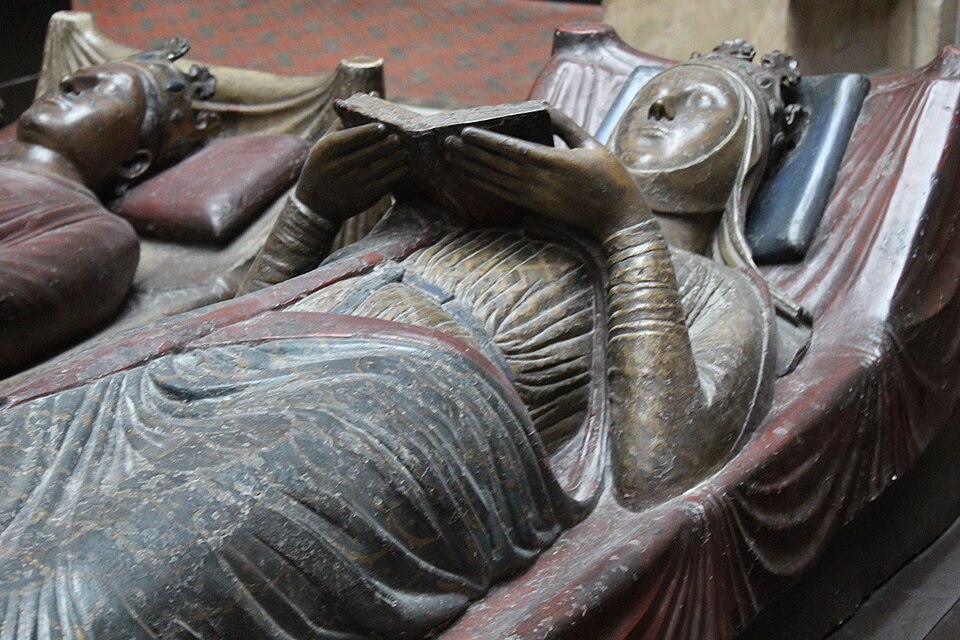
Eighty years, or nearly: an age that God grants to few, and which allowed me to see born and die more kings than many serve. I have been queen twice, prisoner for sixteen years, regent of an empire, mother of Richard and John. Here, at Fontevraud, among the tapestries and the chanting of nuns, I finally return the sword to its sheath. I have not lived as a saint, I know, and I leave to the Church the care of weighing my soul. But I have held my duchy, defended my blood, and made my land sing. Let that be carved on my stone, and let the chroniclers say the rest. A Duchess of Aquitaine asks pardon only of God.
A Duchess of Aquitaine asks pardon only of God.

This imaginary interview was generated by artificial intelligence from sources documented in Eleanor of Aquitaine's profile. It dramatises what the figure might have said based on what we know about them, but does not constitute attested historical testimony. For primary sources and factual documentation, refer to the full profile.